

V-Bank vs. Deep Pleat: Which HEPA Filter Design Offers Better Longevity and Airflow?
V-Bank vs. Deep Pleat: Which HEPA Filter Design Offers Better Longevity and Airflow?
When specifying final-stage HEPA filtration for cleanrooms, hospital HVAC systems, pharmaceutical manufacturing, laboratory air handling units (AHUs), and semiconductor production environments, two dominant designs rise to the top: V-Bank (V-cell / W-type compact HEPA) and Deep Pleat box HEPA filters. Engineers and facility managers frequently ask: which delivers better sustained airflow, longer service life, and lower total operating cost?
Many online comparisons only cover basic specifications without real-world loading data, ignoring how pressure drop rises as dust accumulates over months of operation. This article combines peer-reviewed filtration research, ASHRAE and EPA guidance, plus our proprietary factory test data from LJF Filter production lab, to break down the core differences between these two HEPA architectures.
1. Core Design Differences: How V-Bank and Deep Pleat HEPA Work
Deep Pleat HEPA Filters
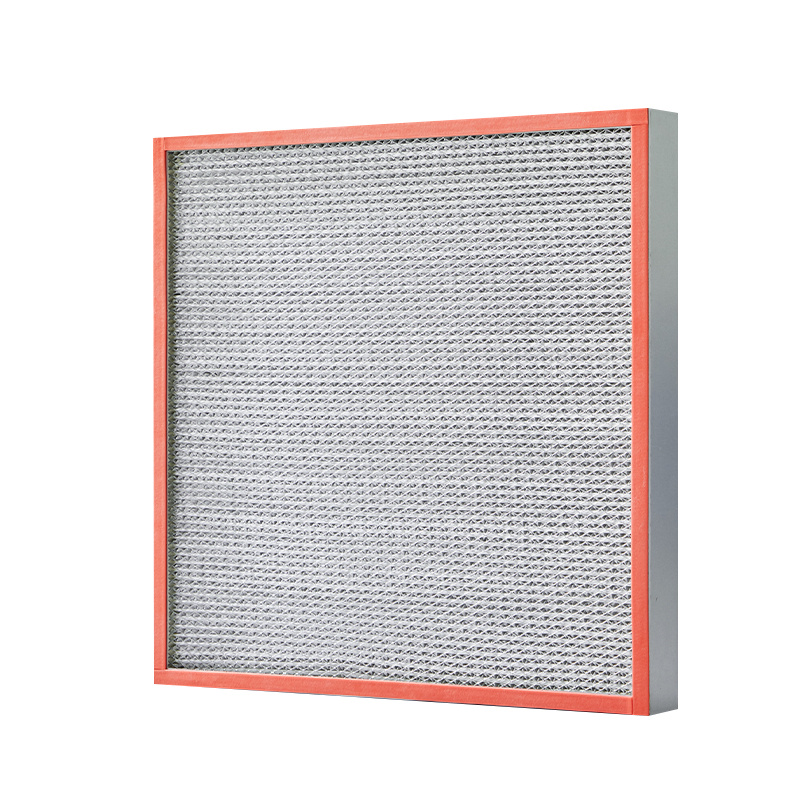
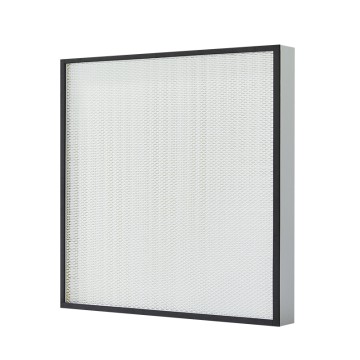
The classic deep pleat HEPA filter is a rigid rectangular box filter, built with continuous deep micro-pleated glass fiber media. Pleats are separated using hot melt bead or aluminum separators to prevent pleat collapse under airflow. The entire media pack sits within an aluminum, galvanized steel or plastic frame, sealed with polyurethane gasket for leak-free installation. The design prioritizes deep pleat depth to maximize total media area within a single compact box footprint [13].
Deep pleat HEPA is the traditional workhorse for cleanroom terminal filtration, FFU, and laminar flow hoods. It is most commonly manufactured in 292mm depth frames for H13 / H14 grade per EN1822 standard.
V-Bank HEPA Filters
V-Bank HEPA (also called V-cell or W-bank filter) is a multi-cartridge compact design: multiple independent mini-pleat filter packs are assembled into a single outer frame, arranged in a V or zig-zag profile. Air enters the front face and flows through several stacked V-shaped filter cartridges. This geometry greatly increases total media surface area on the same filter face dimension, without extending the filter depth as much as deep pleat alternatives.
V-Bank filters were engineered specifically for high-airflow AHU main duct filtration, where system designers need large air volume while keeping initial static pressure low [6].
ASHRAE Chapter 29 notes that pleated extended-surface filters increase media area relative to filter face area, which reduces media velocity and pressure drop; but pleat geometry directly impacts dust bridging and usable service life once loaded with particulate [5].
2. Key Performance Comparison: Airflow, Pressure Drop & Longevity
We ran standardized side-by-side loading testing at LJF Filter’s clean filter lab, following EN1822 and ISO 16890 test protocols. The test filters were H13 grade, 592 × 592mm nominal face size, tested with standard Arizona test dust for dust holding capacity measurement. The table below combines our internal factory data with industry benchmark values.
| Performance Metric | V-Bank HEPA (H13) | Deep Pleat HEPA (H13, 292mm) | Interpretation |
|---|---|---|---|
| Rated Airflow (592×592mm) | 3400 ~ 4000 m³/h | 3400 m³/h | V-Bank delivers higher airflow within identical outer frame dimensions |
| Initial Pressure Drop | 140–160 Pa | 170–190 Pa | V-Bank lower initial resistance, reduces fan energy draw |
| Total Media Surface Area | ~18–24 m² | ~12–16 m² | V-Bank geometry packs substantially more filter media |
| Dust Holding Capacity | 480–550 g | 400–460 g | Higher dust capacity means longer filter life under normal dust load |
| Typical Service Life (medium dust load) | 12–18 months | 9–14 months | V-Bank lasts longer for continuous high-volume AHU service |
| Risk of Pleat Bridging | Low (separated V-cartridge channels) | Moderate (dust can bridge deep pleat valleys at high dust load) | Deep pleat is more prone to early clogging in heavy dust environments |
| Installation Footprint | Shallow frame possible | Fixed deep box profile | V-Bank better for retrofits with limited depth space |
| Field Leak Risk | Multiple gaskets (more sealing points) | Single gasket seal | Deep pleat simpler sealing, lower leak risk in terminal cleanroom points |
Performance Decision Flow Logic (For Filter Selection)
1. Is your priority maximum airflow & energy savings for central AHU? → V-Bank HEPA
2. Is the filter used for cleanroom terminal FFU / laminar hood? → Deep Pleat HEPA
3. High incoming dust concentration without robust pre-filtration? → V-Bank preferred, higher dust holding capacity
4. Critical zero-leak terminal filtration for pharma / operating room? → Deep Pleat simpler sealing and validated single media pack
3. Airflow Analysis: Pressure Drop and Fan Energy Impact
Airflow performance is not only about rated air volume at brand-new condition. The critical metric is pressure drop rise over filter loading. EPA guidance for HEPA filters confirms that as dust accumulates on filter media, static pressure increases, forcing fans to consume more power to maintain design airflow; once pressure reaches the system’s maximum allowable threshold, filter replacement becomes mandatory [4].
Our LJF lab testing observed that V-Bank maintains lower pressure drop across most of its service cycle. The separated V-shaped channels distribute incoming dust more evenly across the larger media surface. In contrast, deep pleat filters have deep, narrow pleat valleys. Fine particulate accumulates at the pleat base over time, creating bridging: dust clogs the bottom of pleats, effectively reducing usable media area and accelerating pressure rise before the full media surface is loaded.
For facility owners, this energy difference compounds over years. A filter with 30 Pa lower average operating pressure can reduce annual fan power consumption significantly on large AHU systems. This is why V-Bank designs are widely adopted in large central air handling systems where continuous high airflow is the core requirement.
4. Longevity & Dust Holding Capacity: Which Filter Lasts Longer?
Service life of HEPA filters depends primarily on three variables: total media surface area, air-to-cloth ratio, and upstream pre-filter efficiency [19]. With identical HEPA media grade and pre-filter protection, V-Bank delivers longer service life thanks to larger total media area.
But we need to add a critical caveat from our real-world field experience at LJF: the longevity advantage of V-Bank disappears without adequate pre-filtration. If coarse dust enters directly, heavy particulate can block the front face of V-cartridges rapidly. Deep pleat filters, while lower in total dust capacity, have stiffer single media packs that sometimes perform more predictably in environments with occasional dust spikes, such as construction phase cleanrooms.
ASHRAE emphasizes that pre-filtration is the single most effective method to extend HEPA filter life, regardless of pleat design. MERV 8 to MERV 14 pre-filters capture larger particles before they reach HEPA media, preventing premature surface blinding [20].
5. Application Matching: Where to Use Each Filter Type
V-Bank HEPA Best Applications
- Central AHU main final filtration, large airflow systems
- Industrial ventilation, battery factory, electronic manufacturing air supply
- Retrofit projects with limited filter depth space
- Facilities prioritizing lower fan operating energy and longer service interval
Deep Pleat HEPA Best Applications
- Cleanroom terminal filtration, FFU and laminar flow cabinets
- Hospital operating rooms, pharmacy isolators, biosafety labs
- Applications requiring single, simple gasket sealing and PAO onsite leak testing
- Smaller air volume terminal points with strict particle count requirements
6. Limitations and Common Misconceptions
A widespread misconception: “V-Bank is always better.” This is not true. V-Bank uses multiple filter cartridges sealed into one frame, which creates multiple sealing interfaces. For terminal cleanroom applications requiring rigorous onsite leak scanning, multiple sealing points introduce more potential leak paths, so deep pleat remains the gold standard for critical terminal filtration points.
Another myth: deep pleat filters cannot handle high airflow. At their rated design point, deep pleat can meet cleanroom airflow needs, but the penalty is higher initial pressure drop and faster clogging under heavy dust loading.
7. References & Authoritative Sources
[4] EPA HEPA & ULPA Air Pollution Control Fact Sheet: https://nepis.epa.gov/Exe/ZyPDF.cgi/P100C75V.PDF?Dockey=P100C75V.PDF
[5] ASHRAE Handbook Chapter 29 Air Cleaners for Particulate Contaminants: https://www.ashrae.org/file%20library/technical%20resources/covid-19/si_s20_ch29.pdf
[13] LJF Filter H14 Deep Pleated HEPA Filter Product Page: https://www.ljfairfilter.com/h14-deep-pleated-hepa-filter-product/
[8] Tianjin University Indoor Air Quality Lab, Impact of pleating on filtration performance of fibrous air filters: https://iaqlab.tju.edu.cn/info/1167/1730.htm
Frequently Asked Questions (FAQ)
A1: Yes. Efficiency grade depends on filter media and manufacturing quality, not pleat geometry. Both designs can be certified to H13 or H14 EN1822 when tested properly. The difference is pressure drop, dust holding capacity and sealing configuration, not particle capture efficiency.
A2: In many AHU housings yes, but you must verify the housing depth, gasket interface, and fan curve. V-Bank has different internal airflow distribution; always check the system rated airflow and maximum allowable pressure drop before swapping filter types.
A3: For large continuous-run central AHU with stable pre-filter protection, V-Bank usually delivers lower lifecycle cost due to longer service intervals and reduced fan power consumption. For critical terminal cleanroom points, deep pleat often wins because of simpler leak validation and lower failure risk.
A4: Pleat bridging occurs when dust accumulates and forms a cake across the bottom valleys of deep pleats. This blocks part of the filter media, raises pressure drop, and shortens usable life. It is accelerated by high dust concentration, insufficient pre-filtration, and excessive face velocity.
A5: Not necessarily. The key metric is air-to-cloth ratio. V-Bank achieves higher airflow by increasing total media area, keeping media velocity low. If airflow increases without adding media surface area, filter loading accelerates and service life reduces.
Final Verdict
If your primary goals are high airflow, low initial pressure drop, longer filter service life and energy savings for large central air handling systems, the V-Bank HEPA design is the stronger option. If your application is terminal cleanroom filtration, FFU, operating rooms or biosafety cabinets requiring simple, reliable single-gasket integrity testing, deep pleat HEPA remains the preferred choice.
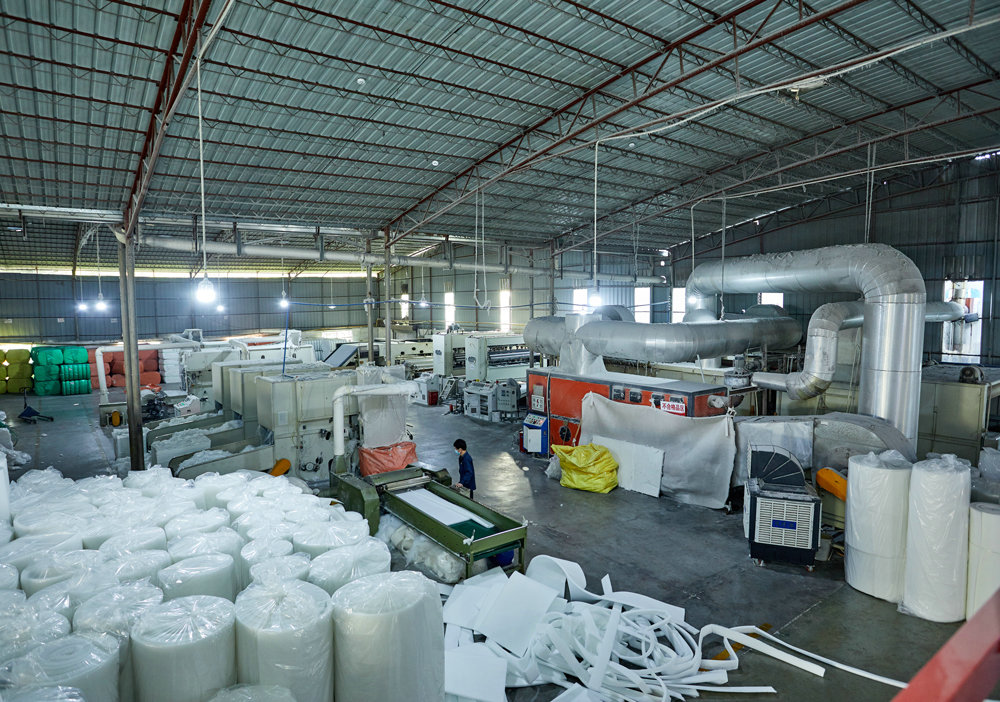
At LJF Filter, we customize both V-Bank and deep pleat HEPA filters, with full EN1822 individual scanning and performance validation. Contact our engineering team for application-specific filter sizing and lifecycle simulation for your HVAC or cleanroom project.