
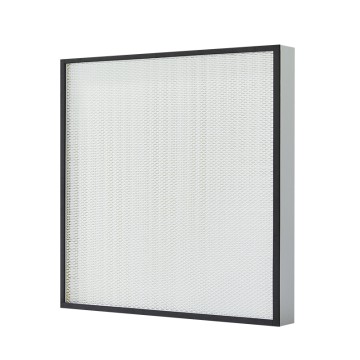


Spray Booth Air Filter pleated filter structure
Pleated filter structure has become one of the most widely adopted design approaches in modern spray booth air filtration, addressing many of the core limitations that flat panel configurations present in high-overspray finishing environments. By folding continuous media into a series of evenly spaced, parallel ridges, this layout dramatically increases the total surface area available for particle capture within the same standard filter frame footprint. More media surface directly translates to lower average air velocity across the entire filter face, which lets fine paint mist and pigment particles settle gently onto fiber surfaces instead of being pushed straight through the media by high-velocity airflow. This basic geometric advantage creates measurable improvements in filtration efficiency, dust holding capacity, and overall service life that make pleated designs particularly well suited for the demanding conditions inside industrial spray booths.
Many finishing teams first notice the difference pleated structures make when they track pressure drop behavior across full filter service cycles. Flat filters with the same nominal frame size tend to show a steep, rapid rise in static pressure shortly after overspray loading begins, as their limited surface area clogs quickly at the entry face. Pleated configurations, by contrast, spread incoming contaminant loads across a far larger media area, so pressure builds slowly and gradually over a much longer operating window. This extended, stable low-resistance performance keeps booth airflow consistent for weeks, eliminating the sudden shifts in downdraft or crossflow velocity that cause floating overspray, finish defects, and unplanned maintenance interruptions.
Core Geometric Design Principles for Spray Booth Applications
The spacing between individual pleats directly defines how effectively the structure performs under heavy overspray loads. If pleats are packed too tightly together, the narrow gaps between adjacent folds will quickly fill with wet paint residue, creating solid bridges of dried overspray that block entire sections of the media face. This defeats the entire purpose of the pleated layout, as large portions of the extended surface area become completely inaccessible to incoming airflow. Optimized pleat spacing for spray booth use leaves enough open room between folds to let large, wet paint particles drift deep into the pleat channels without sticking to adjacent media walls, ensuring nearly 100 percent of the extended surface area remains active and available for contaminant capture throughout the filter’s service life.
Pleat height also plays a critical role in balancing total media area and structural stability. Taller pleats add more total surface area to the filter, but they also create longer unsupported sections of media that can flex or deform under the constant pull of exhaust airflow. In worst-case scenarios, media with excessively tall pleats can collapse inward during operation, closing off gaps between folds and creating sudden, unexpected spikes in system resistance. Well-engineered pleated structures for spray booth use match pleat height to the stiffness of the selected media, ensuring every fold maintains its exact shape and spacing even when partially saturated with heavy, wet overspray. This consistent geometry preserves uniform airflow distribution across every part of the filter bank, preventing dead zones where overspray can accumulate and bypass filtration.
Performance Advantages in Overspray-Heavy Workflows
The extended surface area of a properly designed pleated structure drastically reduces the risk of surface blinding, one of the most common failure modes for Spray Booth Filters. When air velocity at the media face stays low, wet paint particles do not slam into the fiber surface and form a dense, impermeable paint cake within a few shifts of heavy use. Instead, particles settle gradually across the entire depth of the pleat channels, working their way slowly into the fiber matrix without creating an immediate solid barrier to airflow. This progressive loading pattern lets the filter hold far more total overspray mass before reaching terminal pressure drop, extending service intervals significantly and cutting down on the number of unplanned filter swaps that pull technicians away from painting tasks.
Pleated layouts also deliver more consistent particle capture efficiency across the full filter lifecycle. Flat filters often see their efficiency shift dramatically as they load, with new media letting fine pigment particles pass through easily, and fully loaded media creating so much backpressure that unfiltered air finds leak paths around the filter frame. A well-built pleated filter maintains steady, predictable efficiency from the moment it is installed until it reaches the end of its usable life. The large, evenly distributed media surface creates uniform flow conditions that do not change drastically as particles are captured, so operators never see unexpected spikes in airborne contaminant levels inside the booth or in the exhaust stream. This stability makes it far easier for facilities to maintain consistent compliance with workplace safety and environmental emission standards.
Installation and Maintenance Best Practices for Pleated Filters
Correct orientation during installation is critical to unlocking the full performance potential of a pleated filter structure. The open, leading edge of the pleat channels must face directly toward the incoming airstream, so overspray particles can travel straight into the full depth of each fold. If the filter is installed backward, the sharp, closed edge of the pleats faces the airflow, causing wet paint to build up in narrow, tight corners that clog rapidly and reduce total available surface area. Most experienced finishing technicians mark airflow direction clearly on filter mounting frames to eliminate this common mistake, ensuring every new filter is seated the right way on the first try.
Even distribution of pleated filters across the entire filter bank prevents uneven loading that can undermine performance. When some pleated panels are spaced too far apart or left unsealed, nearby filters end up drawing a disproportionate share of total airflow, saturating weeks earlier than the rest of the bank. Teams that take the time to ensure every panel sits flush against its mounting frame, with no gaps for unfiltered air to bypass, create a perfectly uniform airflow pattern that lets every pleat in every filter contribute equally to overspray capture. This careful setup ensures the entire filter bank reaches full saturation at roughly the same time, eliminating partial changeouts that waste unused filter capacity and introduce unnecessary debris into the booth environment.
When implemented correctly, a well-designed pleated filter structure transforms spray booth air filtration performance, turning a routine consumable component into one of the most reliable contributors to consistent finish quality, extended uptime, and safer working conditions for industrial finishing teams.