
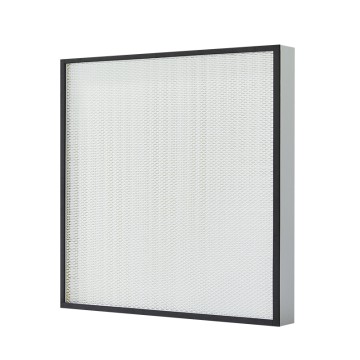

Spray Booth Air Filter high dust holding capacity
High dust holding capacity stands as one of the most defining performance traits for spray booth air filters operating in high-volume finishing environments. Unlike general-purpose air filtration systems that only capture light ambient dust, spray Booth Filters must continuously trap massive volumes of wet paint mist, dry overspray particles, pigment fines, and airborne solvent residues without collapsing or restricting airflow prematurely. Filters built with high dust holding capacity do not simply stop particles at their surface; they distribute captured contaminants across a large internal media volume, extending service intervals and preserving consistent airflow velocity across the entire booth workspace. This directly translates to fewer unplanned maintenance stops, more stable finish quality, and reduced risk of overspray bypass that could compromise both operator safety and final coating results.
Many facilities underestimate how much low dust holding capacity filters disrupt daily painting workflows. When media clogs at the surface within just a few shifts, exhaust system static pressure spikes rapidly, forcing fans to work harder to maintain design downdraft speed. As airflow slows below the recommended threshold, overspray no longer gets pulled away from wet paint surfaces fast enough, creating floating particle clouds that settle on fresh coats and generate avoidable rework. These frequent, unexpected filter changes also pull technicians away from painting tasks, extending lead times and introducing unnecessary debris into the booth environment every time the system is opened for service.
Media Structure That Drives High Dust Holding Performance
Progressive density fiber construction forms the foundation of exceptional dust holding performance. This design arranges filter fibers in gradually increasing density layers, starting with a highly open, coarse fiber matrix at the air entry face, then moving through progressively tighter, finer fiber layers as air travels deeper into the media. Large, heavy paint particles get trapped in the open front layers, while smaller sub-micron pigment particles are captured further inside the structure. This staggered arrangement prevents the entire filter face from plugging over within hours of heavy use, allowing the full depth of the media to contribute to contaminant storage rather than wasting most of the internal volume on empty space.
The physical thickness of the media also plays a critical role in total contaminant storage. Thinner filter sheets can only hold a limited volume of overspray before their internal void spaces fill completely, even when made from high-quality raw materials. Deep, extended media beds create far more empty interstitial space for particles to settle, giving captured paint mist room to spread and solidify without creating an immediate barrier to airflow. This depth also allows the filter to accommodate uneven loading patterns that naturally occur in spray booths, where higher concentrations of overspray drift toward specific zones near the painter’s workstation.
Operational Benefits Beyond Longer Service Intervals
Filters with strong dust holding characteristics maintain far more stable airflow resistance across their entire service life. Standard filters with low storage capacity see their pressure differential climb steeply after only a small amount of particle loading, forcing facility teams to constantly adjust fan speed or damper settings to keep booth airflow within specification. High dust holding capacity media, by contrast, shows a slow, gradual rise in pressure drop that stays well within the exhaust system’s design parameters for most of the filter’s usable life. This stability creates a consistent, predictable working environment where painters never have to compensate for sudden shifts in booth airflow behavior.
This extended, stable performance also reduces fire risk in spray booth exhaust systems. When filters load unevenly and become saturated quickly, pools of wet paint residue can accumulate on the filter surface, creating hot spots that become ignition hazards under sustained exhaust airflow. High dust holding capacity media distributes captured overspray evenly across the entire media volume, preventing thick, heavy layers of wet paint from building up on the filter face. This more uniform loading pattern also makes it far easier to monitor filter condition through regular static pressure checks, giving operators clear, advance warning before media reaches full saturation and needs to be replaced.
Best Practices to Maximize Dust Holding Potential
Even the highest-performance media will fail to reach its full rated dust holding capacity if installed incorrectly. Sealing every edge of the filter completely against its mounting frame prevents unfiltered overspray from slipping past the media and building up on the downstream side of the filter bank. These bypassed particles can form thick, sticky paint deposits that block airflow in isolated sections, creating uneven loading that causes some filter panels to saturate weeks earlier than others. Taking the extra time to ensure every filter sits flush against its frame eliminates this common failure point and ensures the entire surface area of every panel contributes to contaminant capture.
Matching filter change schedules to actual pressure differential readings, rather than following a rigid calendar-based routine, also unlocks far more usable dust holding capacity. Many facilities replace filters far earlier than necessary simply to follow a fixed weekly or biweekly schedule, discarding media that still holds massive unused contaminant storage volume. By logging static pressure readings at the same point in the workday across multiple shifts, teams can identify the exact pressure threshold where booth airflow begins to fall outside specification, and schedule filter swaps only when that threshold is reached. This approach lets operators extract every possible hour of service from the filter’s designed dust holding capacity, without ever risking compromised booth performance or finish quality.
Over time, prioritizing high dust holding capacity in spray booth air filtration creates cascading improvements across every part of the finishing operation. Reduced maintenance interruptions, more consistent airflow, fewer finish defects, and lower long-term operational risk all combine to turn a seemingly simple filter characteristic into one of the most impactful investments a finishing facility can make.