

Spray Booth Air Filter early clogging solutions
Early clogging in Spray Booth Air Filters cuts down normal service life, disrupts consistent airflow, and forces teams to deal with unexpected replacements that eat into production time and create unplanned workflow gaps. Many teams treat this issue as unavoidable, but most cases stem from preventable upstream conditions, small setup mistakes, or unoptimized maintenance habits that are easy to correct with targeted, practical adjustments. These field-proven solutions address the root causes of early clogging, rather than just treating the symptoms after filters are already saturated.
Optimize multi-stage filtration layer configuration
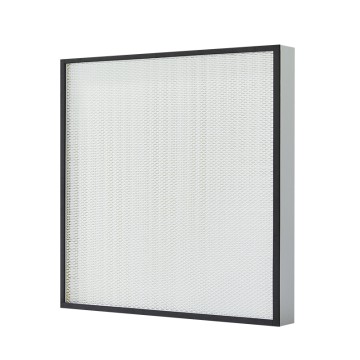
The most common cause of early filter clogging is relying on a single filter layer to capture every type of airborne contaminant in the spray booth. When all the dust, overspray, and fine coating particles hit one single filter layer at once, the media surface clogs up extremely fast, even during normal production volumes. A properly layered filtration setup spreads the contaminant load across multiple stages, so larger particles are captured in the first layers, and only the finest remaining particles reach the final high-efficiency filter. This layered approach drastically extends the total time before the final filter experiences full saturation.
Make sure each filtration stage is selected to match the specific particle size range it is designed to capture. The first stage should handle large, heavy dust and wet overspray particles, the middle stage captures mid-sized dried paint fragments, and only the very last stage targets the ultra-fine airborne particles that remain. When stages are mismatched, for example using a fine high-efficiency filter as the first line of defense, large particles will clog the fine media almost immediately, leading to extremely short service life.
Check that no filtration stage is installed backwards, with the wrong side facing the incoming airflow. Almost all spray booth Filter Media is designed with a progressive density structure, where the more open, porous side faces the incoming air, and the denser fine-fiber side sits further downstream. If the filter is flipped around, dense fine fibers are the first point of contact for large wet overspray particles, and the surface will form a solid impermeable paint skin in a very short period of time.
Eliminate unfiltered contaminant bypass
Even the highest quality filter setup will clog far earlier than expected if unfiltered air and contaminants are leaking around the edges of the filter frame, instead of passing straight through the media. These gaps can form from warped filter frames, worn out sealing gaskets, loose mounting clips, or minor misalignment during installation. Contaminants sneak through these small openings, circulate inside the booth’s internal airflow loop, and end up depositing unevenly across the downstream filter surfaces, creating localized heavy clogging spots that spread quickly.
Inspect every filter mounting point regularly for small gaps, peeling gaskets, or bent frame edges that no longer sit flush against the booth housing. Even a tiny gap a few millimeters wide can let a huge volume of unfiltered contaminant-laden air bypass the filter bank over the course of a single production shift. Sealing these gaps completely stops this hidden contaminant leak, and ensures 100 percent of the booth’s intake air actually passes through the full filtration sequence as intended.
Check the booth’s intake vent and external air intake path for unplanned openings that can pull in large volumes of unfiltered outdoor dust, construction debris, or workshop floor sweepings. Many teams overlook these openings, and heavy bursts of coarse debris get pulled straight into the filter bank all at once, creating sudden, unexpected clogging that no normal filter service schedule can account for. Sealing these unplanned intake points removes one of the most common hidden triggers for sudden, early filter failure.
Adjust booth airflow and overspray capture performance
Unbalanced airflow that pushes far too much air through one small section of the filter bank will cause that localized section to clog many times faster than the rest of the filter. When air speed through a small area of filter media is far higher than the design specification, wet overspray particles get driven deep into the fiber structure instead of getting captured on the surface, and they quickly fill up all the empty pore space in that section of the media. This creates a hard, impermeable clog that spreads across the rest of the filter as airflow gets pushed into adjacent sections.
Verify that airflow is evenly distributed across the entire face of the filter bank, with no high-speed dead zones or areas where air is barely moving at all. You can spot uneven distribution by taking simple air speed readings at multiple points across the filter face, and adjusting dampers or fan speed settings to bring all readings within a consistent, narrow range. This even load spreads contaminant capture evenly across the entire filter surface, so no single section gets overloaded and clogged far ahead of the rest.
Make sure your primary overspray capture system upstream of the filters is operating at full design efficiency. If water curtain systems have uneven spray coverage, dry paint arrestors are loaded past their holding capacity, or exhaust fan performance has dropped over time, huge volumes of uncaptured wet overspray will travel straight to the main filter bank. These sticky wet particles stick directly to filter fibers, dry into a solid paint film, and clog the entire surface in a tiny fraction of the filter’s expected service life. Restoring full performance to this upstream pre-capture system removes the vast majority of heavy wet overspray before it ever reaches your main filters.
Refine maintenance and operating habits
Avoid waiting until filters are visibly caked with thick dried paint before you perform basic cleaning or maintenance. Wet uncured overspray on the filter surface can be gently removed while it is still soft, but once it dries and hardens into a solid rigid film, it permanently blocks all air flow through that section of media, and no amount of cleaning will restore it. Building a regular light maintenance schedule that removes soft fresh contaminants before they cure drastically extends usable filter life, and prevents premature irreversible clogging.
Never use high-pressure compressed air held very close to the filter surface to blast away accumulated contaminants. This kind of aggressive cleaning rips apart the fine internal fiber structure of the filter media, creates open holes and thin weak spots, and pushes contaminants deep into the inner layers of the filter where they cannot be removed. This damages the filter’s capture efficiency, and remaining loose particles inside the media will quickly cause re-clogging the moment the booth goes back into full operation. Gentle, low-pressure airflow applied at an even distance across the full filter face removes surface contaminants safely, without breaking down the media structure.
Adjust your painting workflow to minimize unnecessary overspray drift that travels far outside the target part and ends up pulled straight into the filter bank. Small adjustments to spray gun angle, distance from the part, and coating application pressure can drastically cut down the total volume of free-floating overspray in the booth air. Less overspray drifting through the air means far fewer sticky particles reaching the filters, which naturally slows down the whole clogging process and lets every filter set reach its full, intended service life.