





Spray Booth Air Filter ceiling mounting type
Spray Booth Air Filter Ceiling Mounting Type
Piston Airflow Fundamentals for Ceiling Filter Installation
Piston airflow forms the core operating logic for ceiling-mounted spray booth air filters. This airflow pattern moves in a steady, uniform vertical column from the entire ceiling plane down to the booth floor, carrying overspray particles away from the painting zone without creating disruptive eddies. When the airflow maintains consistent velocity across the full ceiling area, it prevents paint mist from lingering around freshly coated surfaces, reducing the risk of uneven finishes and dust contamination. This airflow design is especially valuable in scenarios where heavily contaminated air needs to be removed efficiently, as it directs all captured particles toward the exhaust system without leaving dead zones in the working space.
Uniform Pressure Distribution Across Filter Mat Surfaces
Even pressure distribution above the full ceiling filter mat is critical to delivering stable performance. When supply air enters the plenum space above the filter, it must spread evenly across every section of the mat to avoid localized high or low velocity spots. If supply air jet velocity remains too high while the pressure difference across the filter mat stays low, uneven velocity distribution will appear along the filter surface, breaking the consistent piston flow effect. Operators often adjust plenum depth and internal baffle layouts to balance air pressure, ensuring every square meter of the ceiling filter contributes equally to airflow delivery. This balanced pressure setup also extends the service life of the entire filter set, as no single section bears excessive dust loading earlier than others.
Practical Installation and Performance Optimization Tips
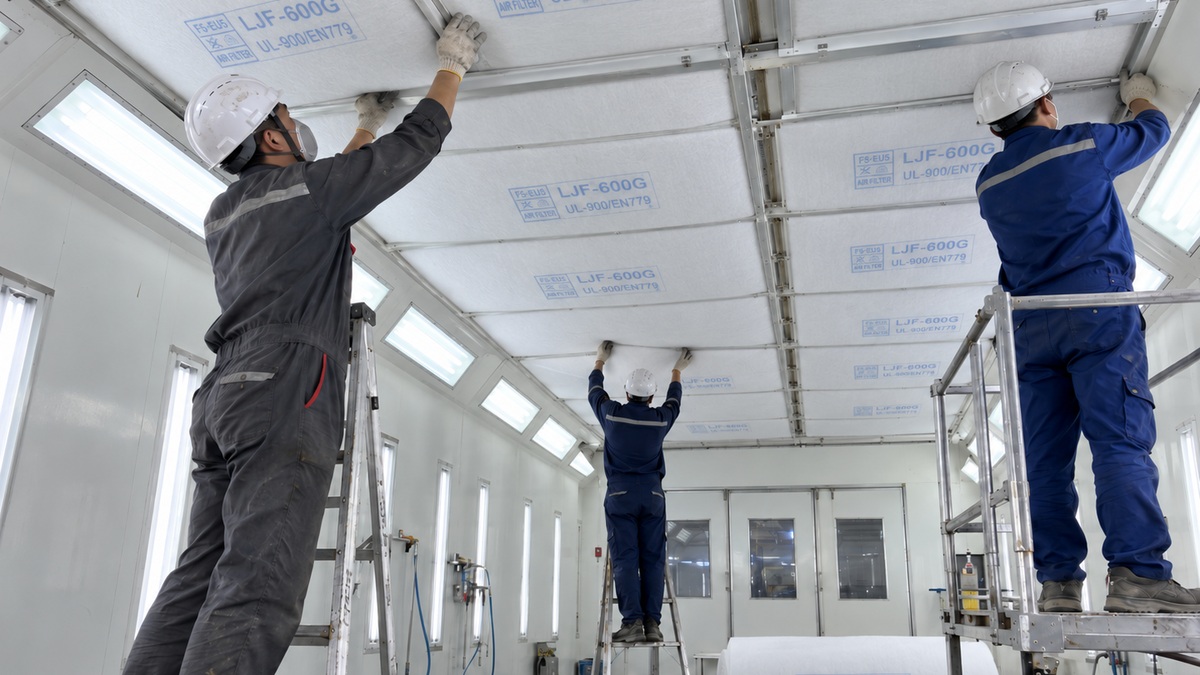
Ceiling filter mounting requires careful alignment to seal every gap between adjacent filter panels, preventing unfiltered air from bypassing the media into the painting zone. Installation teams usually check the frame flatness before placing any filter mat, making sure no warped edges create hidden leaks that compromise air cleanliness. Regular inspection of pressure drop across the filter layer helps maintenance teams schedule replacement at the right time, before airflow uniformity begins to degrade. Many facilities also track downstream air particle counts to verify that the ceiling-mounted system continues meeting the required cleanliness standards for high-quality spray finishing work.