


G3 vs. G4 Pre-Filters: How to Choose the Right Initial Filtration for Industrial Systems
Pre-filters are the least glamorous component in any industrial air filtration system — and one of the most expensive to get wrong. Choose too coarse, and your main filter loads up prematurely, driving up pressure drop, fan energy, and replacement frequency. Choose too fine, and the pre-filter itself becomes the bottleneck: it clogs faster, its pressure drop climbs rapidly, and the effective protection period shrinks. According to a controlled two-stage filtration study published in Separation and Purification Technology, the G4 pre-filter achieves the highest overall performance index (T**), outperforming both the lower-efficiency G3 by higher capture efficiency and the higher-efficiency M5 by a longer effective protection period[reference:0].
This article focuses on the two most common pre-filter grades in industrial systems — G3 (EN 779) and G4 (EN 779) — and provides a practical framework for deciding which one belongs in your system.
What Are G3 and G4 Pre-Filters? A Quick Primer
G3 and G4 classifications originate from the European standard EN 779:2012, which categorized coarse and fine filters by their average arrestance of synthetic dust. Under this standard, a G3 filter captures 80% to less than 90% of synthetic dust by weight, while a G4 filter captures 90% or more[reference:1].
Since EN 779 has been superseded by ISO 16890:2017, the classification system has changed significantly. ISO 16890 evaluates filters by their fractional efficiency against particulate matter in three size ranges: ePM1, ePM2.5, and ePM10. Under ISO 16890, both G3 and G4 filters fall into the ISO Coarse category — meaning their reported efficiency for fine particles (PM2.5 and PM1) is often too low to classify[reference:2].
This is a critical point: the EN 779 label on a G3 or G4 filter tells you about its arrestance for test dust, not its real-world performance against fine particulate matter. ISO Coarse filters typically achieve less than 15% estimated efficacy against the particle sizes most relevant to human health and sensitive processes[reference:3].
That does not make G3 and G4 filters poor choices. It means their role is protective — they are the first line of defense, capturing bulk contaminants before they reach the expensive downstream filters that actually determine your system's air quality.
G3 vs. G4: Head-to-Head Comparison
| Parameter | G3 Pre-Filter | G4 Pre-Filter |
|---|---|---|
| EN 779 Average Arrestance | 80% ≤ Aₘ < 90% | 90% ≤ Aₘ |
| ISO 16890 Classification | ISO Coarse | ISO Coarse |
| Typical Initial Pressure Drop | 28–35 Pa | 35–70 Pa |
| Recommended Final Pressure Drop | 150–250 Pa | 250 Pa |
| Dust Holding Capacity (typical) | ~400 g/m² | ~550–580 g/m² |
| Typical Media Weight | 150 g/m² | 200–250 g/m² |
| Best For | Light dust loads; cost-sensitive installations; pre-protection for low-value main filters | Moderate to heavy dust loads; extending main filter life; paint booth intake filtration; systems where downtime is expensive |
| MERV Equivalent | MERV 5–6 | MERV 7–8 |
Note: Pressure drop and dust holding capacity figures are representative values from manufacturer specifications. Actual performance depends on media type, face velocity, and operating conditions. Data sourced from EN 779 and ISO 16890 classification tables and industry product specifications[reference:4][reference:5].
Why G4 Often Wins in Real Industrial Systems
The intuitive argument for G3 is straightforward: lower pressure drop means less fan energy. That argument holds only if the dust load is light and the G3 filter can run for a full service interval without saturating. In most industrial environments — paint booths, manufacturing halls, food processing plants — it does not.
The M5 Paradox: Why "Better" Isn't Always Better
Research from the Hong Kong University of Science and Technology compared G3, G4, and M5 pre-filters in a two-stage system with an HEPA-class main filter. The results were counterintuitive. The M5 pre-filter, despite having the highest capture efficiency, protected the main filter the least effectively over time — because its own pressure drop increased the fastest, shortening its effective protection window. The G4 pre-filter struck the optimal balance, maintaining slow pressure drop growth across the entire system while still capturing a meaningful share of the dust load[reference:6].
Real-World Energy Savings: The BMW Case
Energy consumption in filtration systems is dominated by fan power, which rises with pressure drop. A documented case study at BMW's Leipzig paint shop in Germany illustrates the financial stakes. The plant replaced its pre-filter elements with higher-performance filters that delivered lower pressure drops relative to their separation efficiency. The result: 700 MWh of electricity saved per year, equivalent to approximately 365 tonnes of CO₂ reduction[reference:7].
The lesson is not that every facility should install premium pre-filters. It is that the pre-filter stage is where the greatest energy savings potential often lies, precisely because it handles the bulk of the dust load and its pressure drop dominates the system's total resistance for most of the service interval.
Extending Main Filter Life
Independent case studies consistently show that optimising the pre-filtration stage extends the life of downstream filters by a factor of three or more. A Camfil field study on a food industry installation found that upgrading pre-filters to higher-efficiency models extended the pre-filtration stage service life to 12 months and produced annual energy savings of €2,860 per air handling unit[reference:8]. For facilities where main filter replacement involves production downtime — pharmaceutical cleanrooms, semiconductor fabs, large paint booths — this protection translates directly into avoided operating cost.
When to Choose G3 Instead of G4
G3 is not obsolete. It remains the correct choice in specific scenarios:
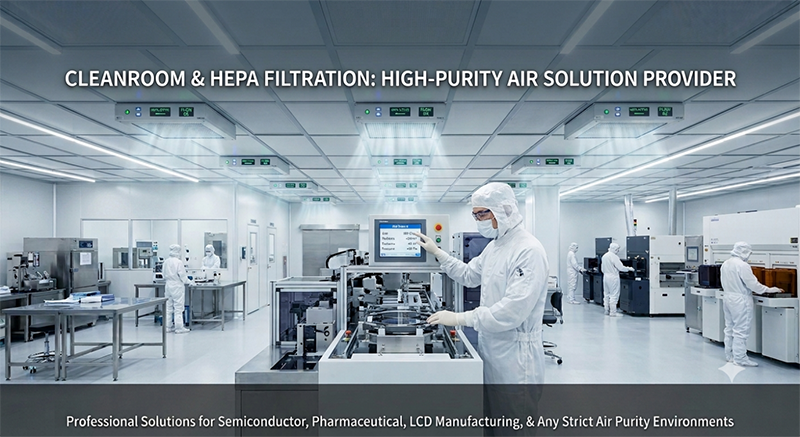
- Very light dust loads: Cleanroom makeup air in unpolluted environments, or systems with extremely low particulate loading where a G3 filter will never approach its final pressure drop before scheduled replacement.
- Cost-critical applications with frequent maintenance access: If your maintenance team can replace pre-filters cheaply and frequently, the lower initial cost of G3 media may offset the higher replacement frequency.
- Upstream of an intermediate filter: In a three-stage system (G3 → M5/F7 → HEPA), the G3 serves as a coarse guard, and the M5 or F7 stage handles fine particle protection. Adding a G4 in this position offers marginal benefit relative to the additional pressure drop.
- Retrofit constraints: If the existing fan cannot handle the higher initial pressure drop of a G4 filter (typically 35–70 Pa versus 28–35 Pa for G3), upgrading may require fan modification or a different media configuration.
Selection Decision Framework
| System Condition | Recommended Pre-Filter Grade | Rationale |
|---|---|---|
| Heavy dust load (paint overspray, woodworking, textile) | G4 | Higher dust holding capacity (550–580 g/m² vs. ~400 g/m²) prevents premature clogging |
| Moderate dust load (general manufacturing, food processing) | G4 | Optimal balance of efficiency and service life; best T** value in two-stage studies |
| Light dust load (office HVAC, clean makeup air) | G3 | Lower pressure drop; G4 adds cost and fan load without meaningful protection benefit |
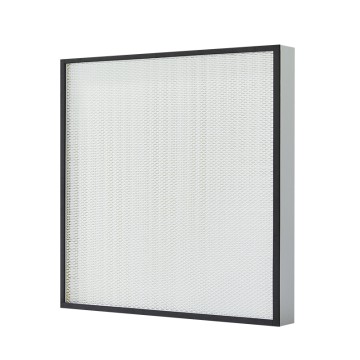
| Main filter is HEPA/ULPA (high replacement cost) | G4 | Maximise main filter protection; G4 extends HEPA life more effectively than G3 |
| Fan capacity is constrained | G3 or low-ΔP G4 | Verify initial and final pressure drop against fan curve; consider extended-surface G4 media |
| Outdoor air intake in polluted environment | G4 | Higher arrestance captures more ambient particulate before it reaches finer stages |
Media Selection: The Variable Most Buyers Ignore
The G3/G4 grade tells you the filter's tested performance with a specific synthetic dust under EN 779 conditions. It does not tell you how the media will behave in your system. Two G4 filters from different manufacturers can have radically different pressure drop profiles, dust holding capacities, and service lives depending on:
- Media weight and fibre structure: A 150 g/m² synthetic media will behave very differently from a 250 g/m² laminated or progressive-density media, even if both are classified as G4.
- Pleat geometry: Deeper pleats with wider spacing hold more dust before face-loading; tighter pleats offer more surface area but can bridge and clog faster in high-dust streams.
- Frame and support: A flimsy frame can deform under pressure, causing bypass and defeating the filter entirely.
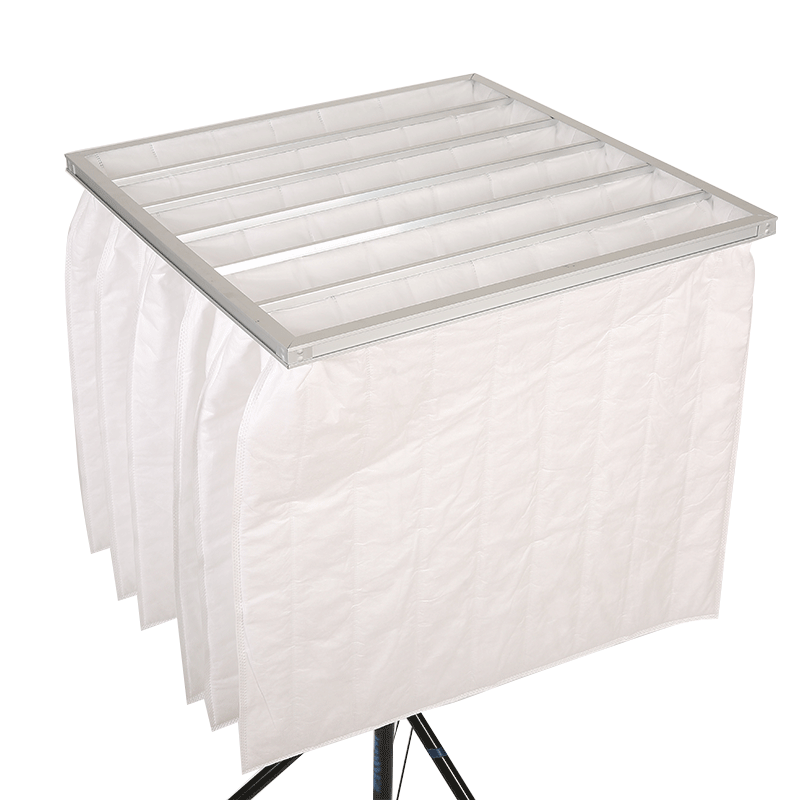
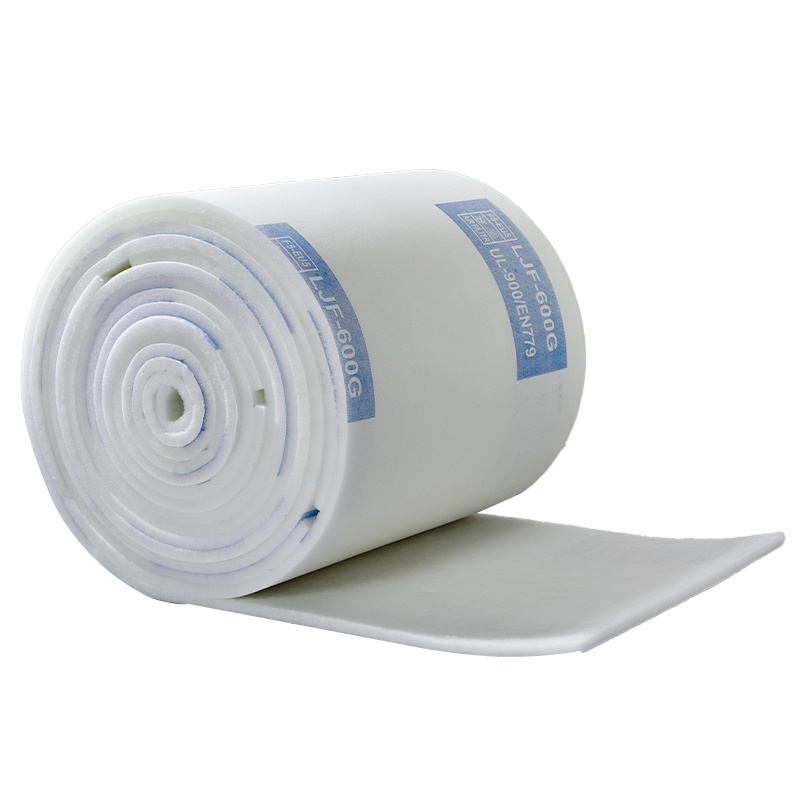
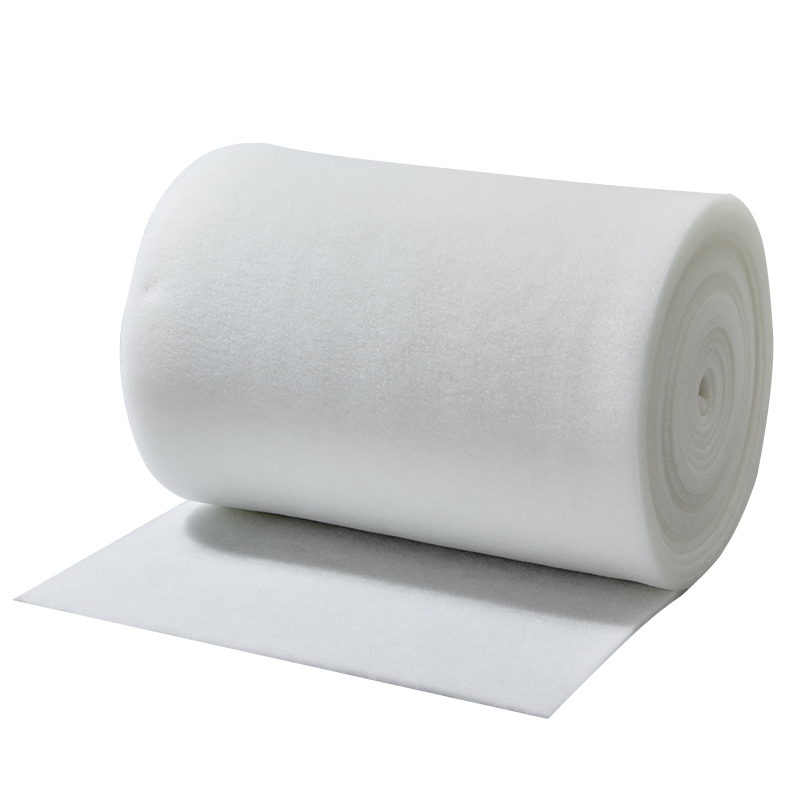
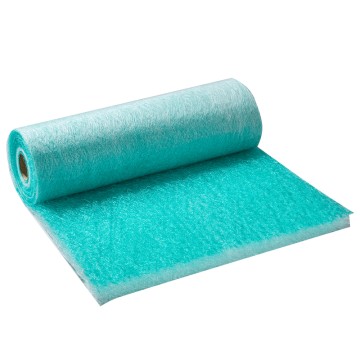
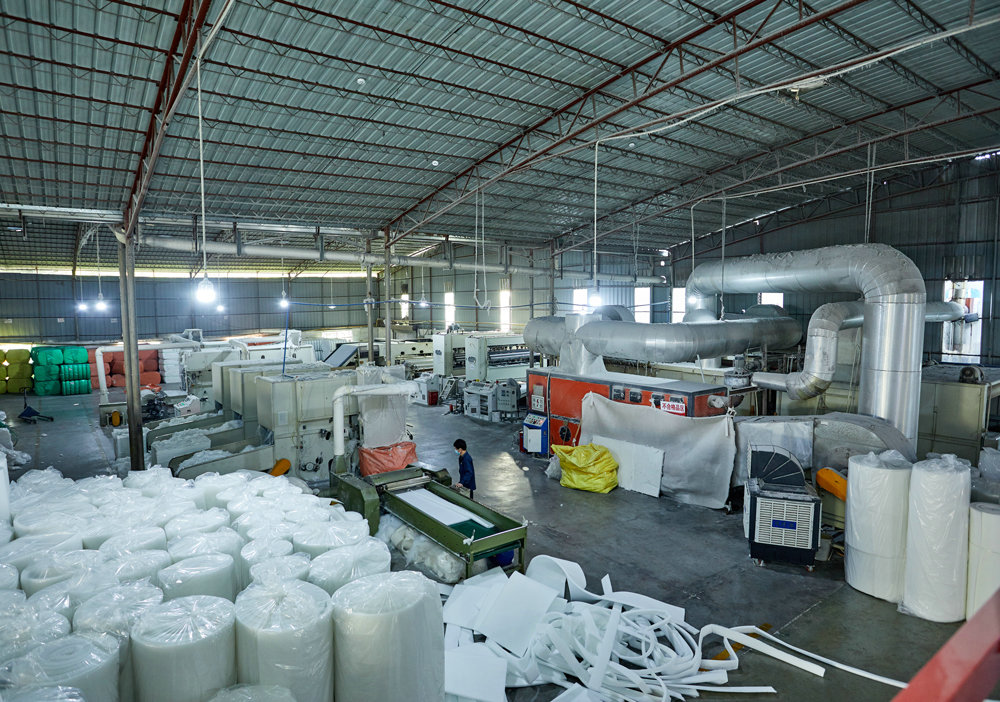
At LJF Air Filter, our pre-filter media is available in G3 and G4 grades with dust holding capacities from 450 g/m² to 580 g/m², specifically engineered for high-dust-load industrial applications. We manufacture in polyester synthetic fibre with customisable thickness, pleat count, and frame configuration to match your system's pressure drop budget and service interval requirements[reference:9]. If you are specifying a pre-filter for a paint booth, manufacturing hall, or large HVAC system, our G3/G4 pre-filter media page provides full technical specifications and customisation options.
The Bottom Line
For most industrial systems with moderate to heavy dust loading, G4 is the better default choice. It captures more dust per unit of pressure drop over its service life, protects main filters more effectively, and — counterintuitively — often costs less to operate than a G3 filter because it lasts longer and maintains lower system-wide pressure drop for more of its service interval. Choose G3 when dust loads are genuinely light, when fan capacity is constrained, or when the pre-filter is part of a three-stage system where an intermediate filter handles fine particle protection.
The most important step is not choosing between G3 and G4 in isolation, but evaluating how the pre-filter will behave in your specific system — with your dust load, your face velocity, and your main filter's loading characteristics. Manufacturer data sheets are a starting point; real-world performance is what determines total cost of ownership.
Frequently Asked Questions
1. What is the main difference between G3 and G4 pre-filters?
Under EN 779:2012, G3 filters capture 80–90% of synthetic test dust by weight, while G4 filters capture 90% or more. In practice, G4 filters have higher dust holding capacity (typically 550–580 g/m² versus ~400 g/m² for G3) and provide better protection for downstream filters, at the cost of a slightly higher initial pressure drop (35–70 Pa versus 28–35 Pa). Under ISO 16890, both are classified as ISO Coarse.
2. Can I replace a G3 filter with a G4 without modifying my system?
In most cases, yes — but verify your fan curve first. A G4 filter typically has a higher initial and final pressure drop than a G3. If your fan is already operating near its maximum static pressure, the additional resistance may reduce airflow. Check the filter's rated initial pressure drop at your system's face velocity and confirm it falls within your fan's operating range.
3. Which grade is better for paint booth intake filtration?
G4 is generally preferred for paint booth intake filtration because it captures more overspray and ambient particulate before it reaches the ceiling filter or final-stage filter. For lightly loaded cross-draft booths in clean environments, G3 may suffice. For high-production booths with heavy overspray, G4 or a combination of G3 pre-filtration followed by G4 protection is recommended.
4. How often should I replace G3 or G4 pre-filters?
Replacement frequency depends on dust load and operating hours. A common benchmark is to replace when pressure drop reaches 150–250 Pa (the recommended final pressure drop for most G3/G4 filters) or at scheduled intervals of 3–6 months. In high-dust environments, monthly inspection is advisable. Using a differential pressure gauge or IoT sensor to monitor real-time loading is the most reliable approach.
5. Does a higher MERV rating always mean better pre-filtration?
No. MERV 7–8 (G4 equivalent) represents the practical upper limit for pre-filtration in most systems. Going to MERV 9–10 (M5 equivalent) increases capture efficiency but shortens the pre-filter's effective protection period because its own pressure drop rises faster — as demonstrated in peer-reviewed two-stage filtration research. For most industrial applications, G4 offers the best balance of protection and service life.