

Fiberglass vs. Synthetic: A Comprehensive Pros and Cons Guide for Paint Booth Filters
Fiberglass vs. Synthetic: A Comprehensive Pros and Cons Guide for Paint Booth Filters
The short answer: Both fiberglass and synthetic polyester exhaust filters can meet the EPA NESHAP 6H requirement of capturing at least 98% of paint overspray by weight. Neither is inherently "more compliant." The real decision comes down to four operational variables — upfront cost, overspray-holding capacity, airflow stability across the filter's service life, and disposal handling. This guide breaks down each variable with data, field experience, and a clear decision framework.
1. The Regulatory Floor: What Both Media Must Deliver
Before comparing performance, it is worth anchoring on the regulatory baseline. Under 40 CFR Part 63, Subpart 6H (commonly called NESHAP 6H), all spray booths, preparation stations, and mobile enclosures must be fitted with filter technology capable of achieving at least 98% capture of paint overspray by weight. The EPA explicitly identified fiberglass and polyester fiber filters as representing Generally Available Control Technology (GACT) for controlling the heavy metals present in paint overspray, after an EPA study found they had "superior performance" relative to polystyrene foam and cardboard baffle filters.
Test methods recognized under the regulation include EPA Method 319 and ANSI/ASHRAE Standard 52.2-2017, both of which measure filtration efficiency by particle size. A filter marketed as NESHAP-compliant must have documented test data at or above the 98% threshold.
2. How Each Media Actually Works
Fiberglass: The Low-Cost Incumbent
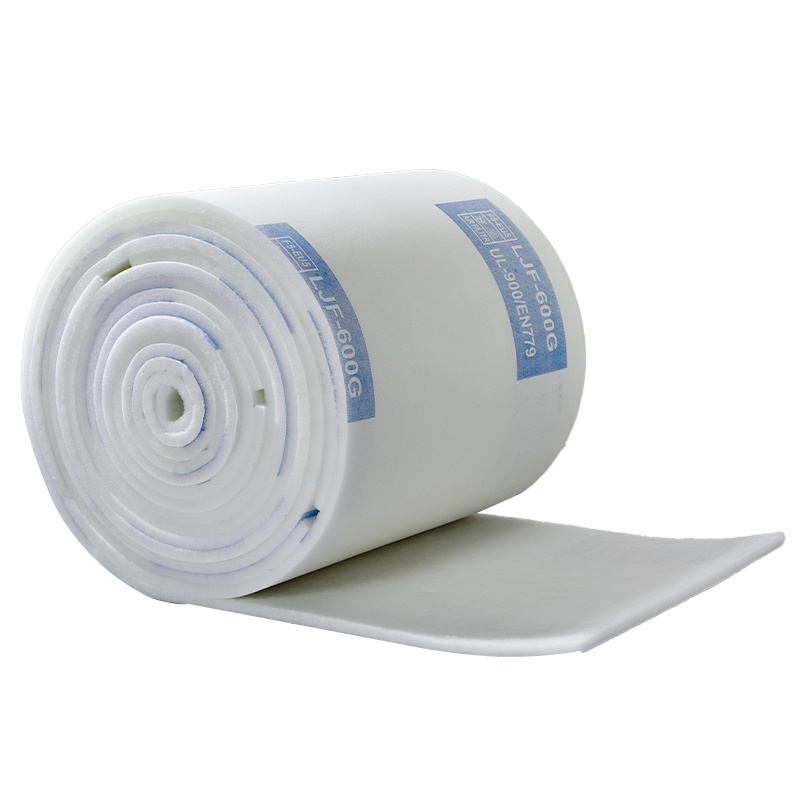
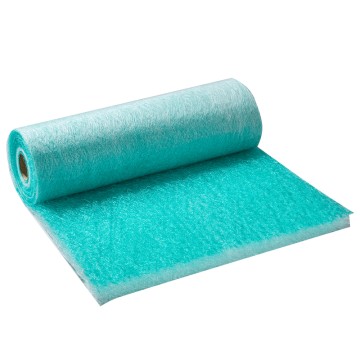
Fiberglass paint arrestor media is spun glass, tackified, and built with a progressive-density structure — coarse and open on the air-entry face, progressively denser toward the exit face. Overspray loads into the depth of the media rather than accumulating only on the surface. It is available in pre-cut pads and continuous rolls at three common weights: 15 gram (economy), 22 gram (standard), and 28 gram (premium).
Synthetic (Polyester): The Higher-Capacity Alternative
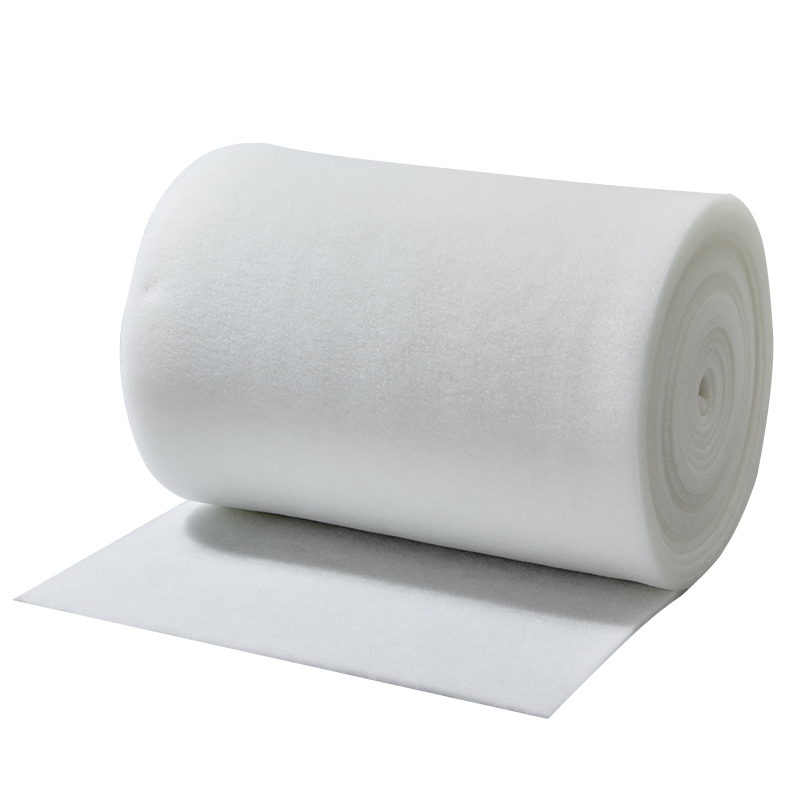
Synthetic exhaust media is a non-woven polyester, also built with progressive density — open fibers on the dirty face grading into a tight, fine structure on the clean face. This gradient allows it to load overspray through its full depth, giving it strong dust-holding capacity and relatively stable airflow as it fills. Because there is no glass, it handles clean, does not shed itchy fibers, and compresses down for easier disposal.
3. Head-to-Head Performance Comparison
The table below consolidates published data from the EPA, peer-reviewed filtration research, and manufacturer test sheets. Where field data is available from LJF's own customer installations, we have noted it separately.
| Factor | Fiberglass (Paint Arrestor) | Synthetic (Polyester) |
|---|---|---|
| Upfront cost | Lowest per pad/roll; 15g media is the most economical option on the market | Higher per unit than fiberglass |
| NESHAP 6H compliance | Yes — 98%+ when specced to weight and tested per EPA Method 319 | Yes — 98%+ when specced correctly |
| Overspray-holding capacity | Moderate; 15g holds ~2.2 lbs per 20"×20" pad; 22g and 28g offer progressively more | High — progressive density loads through full media depth; typical holding capacity 5+ lbs per pad in comparable sizes |
| Initial pressure drop | Lower — less restrictive to airflow out of the box | Slightly higher initially, but more stable as it loads |
| Airflow stability as it loads | Good; airflow degrades as media fills | Very good; progressive structure maintains more stable pressure drop |
| Mess / handling | Glass fibers are itchy and shed during removal | No glass-fiber mess; clean to handle |
| Disposal | Bulky; adds glass particulate to waste stream | Compresses down; no glass particulate |
| Typical service life per pad | Shorter in high-volume booths; may require daily changes in heavy production | Longer per pad; synthetic media has demonstrated up to 3× the lifespan of fiberglass in field comparisons[8] |
| Best for | Budget-driven operations, lower volume, smaller booths | High-volume production, critical finish requirements, cleaner handling priority |
4. The Data Behind the Decision
4.1 Pressure Drop and Airflow: What the Research Shows
A peer-reviewed study published in the Journal of Industrial Textiles indexed alternative exhaust filters against a glass fiber paint stop baseline (GPS100). The synthetic fiber nonwoven showed "consistently improved characteristics as compared to the glass fiber paint stop," including improved wet and dry arrestance values, though it did not achieve the same air permeability gains as some specialized absorbent media.[7]
In practical terms, this means synthetic media tends to maintain more consistent airflow across its service life — an important factor because OSHA regulations require minimum face velocities of 100 fpm for conventional spray guns and 60 fpm for electrostatic guns. When airflow drops below these thresholds, the booth cannot legally be operated until filters are changed.
Why Pressure Drop Stability Matters (LJF Field Observation)
Across LJF's customer installations in automotive refinishing and industrial coating facilities, we consistently observe that fiberglass arrestors in high-production booths begin to show measurable airflow restriction after roughly 60–70% of their rated holding capacity is reached. Synthetic media, by contrast, maintains usable airflow closer to 85–90% of capacity before requiring changeout. For a booth running two shifts, this difference can translate to one fewer filter change per week.
4.2 Holding Capacity and Service Life
Paint holding capacity is the weight of paint particles the filter can retain before airflow restriction reaches the point where the booth must be shut down for changeout. It is directly determinative of filter service life and, therefore, total operating cost.
Published test data for fiberglass media shows that a 15-gram arrestor holds approximately 2.22 lbs per 20"×20" pad, while a high-efficiency synthetic filter can hold up to 5.4 lbs per pad in the same footprint. The practical implication is straightforward: in a booth producing heavy overspray, a synthetic pad may outlast two or three fiberglass pads.
4.3 Cost Analysis: Beyond the Sticker Price
The upfront cost advantage of fiberglass is real — it is the cheapest media available, universally stocked, and cut-to-fit any opening. But the relevant comparison is cost per hour of booth operation, not cost per pad. The calculation below uses published price ranges and holding capacity data.
| Cost Factor | Fiberglass (22g) | Synthetic Polyester |
|---|---|---|
| Approx. cost per 20"×20" pad | $4.40–$7.10 | $8–$15 (varies by weight/grade) |
| Typical holding capacity | ~2.5–3.5 lbs | ~5–7 lbs |
| Pads needed per 100 lbs overspray captured | ~30–40 pads | ~15–20 pads |
| Media cost per 100 lbs captured | ~$132–$284 | ~$120–$300 |
| Labor cost consideration | 2× the changeout events vs. synthetic in high-volume booths | Fewer changeouts; lower total labor burden |
For low-volume operations, fiberglass wins on simplicity and upfront price. For high-volume booths — particularly those running multiple shifts or coating large surface areas — synthetic media's higher holding capacity often offsets its premium within 2–3 months of operation, driven primarily by reduced labor for changeouts and fewer production interruptions.
5. A Decision Framework for Booth Operators
Use the flow below to guide your selection based on your operation's actual constraints.
| If your situation is… | Recommended primary media | Rationale |
|---|---|---|
| Low-volume custom shop, 1–2 jobs per day | Fiberglass (15g or 22g) | Lowest upfront cost; media cost negligible at this volume; fiberglass is universally available |
| Medium-volume production, single shift | Fiberglass (22g or 28g) or Synthetic (standard grade) | Both work; choose based on handling preference. If disposal mess is a concern, move to synthetic |
| High-volume production, multi-shift | Synthetic (high-capacity grade) | Longer service life and fewer changeouts reduce labor and downtime; higher holding capacity delays airflow restriction |
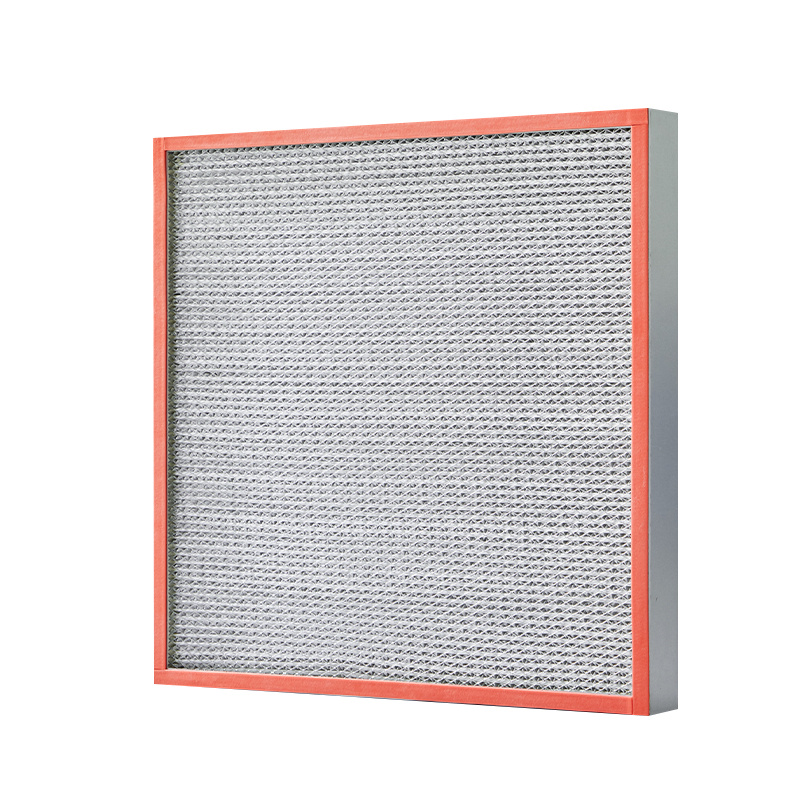
| Critical finish / aerospace / automotive OEM | Synthetic, potentially two-stage with MERV 13+ second stage | Stable airflow protects finish quality; synthetic media is compatible with downstream high-efficiency stages (MERV 13–15) |
| Facility with strict waste-handling constraints | Synthetic | Compresses down, no glass particulate, easier TCLP testing and disposal |
| Booth using only waterborne coatings | Both work; synthetic preferred for moisture resistance | Waterborne overspray can cause fiberglass mats to sag; synthetic maintains structural integrity when damp |
6. Disposal and Sustainability: The Overlooked Cost
Spent paint filters must be evaluated under the Toxicity Characteristic Leaching Procedure (TCLP) before disposal. Filters that pass TCLP can be disposed of as non-hazardous solid waste; those that fail require hazardous waste handling.
Fiberglass media presents two disposal challenges: it is bulky (occupying more dumpster space per pad), and the glass fibers themselves add particulate to the waste stream. Synthetic media compresses down significantly, reducing disposal volume, and produces no glass particulate. For facilities paying by volume for waste hauling, this difference can be material over a year of operation.
Neither fiberglass nor synthetic paint arrestor media is currently recyclable in the conventional sense — both are designed for single-use disposal after overspray saturation. The sustainability advantage of synthetic lies entirely in volume reduction and cleaner handling, not in recyclability.
7. What This Means for Your Booth: Practical Recommendations from LJF
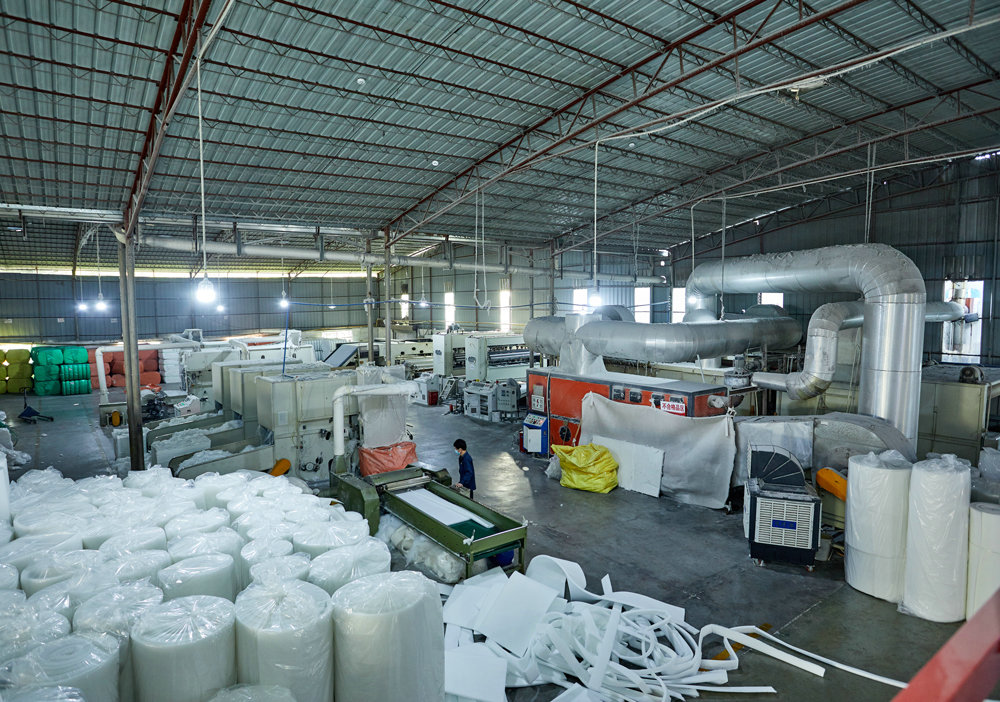
Guangzhou LJF has been manufacturing paint booth filtration media since 2013, serving over 3,000 customers across 30+ countries. Based on our production experience and customer feedback, here are the practical recommendations we give to booth operators evaluating fiberglass vs. synthetic:
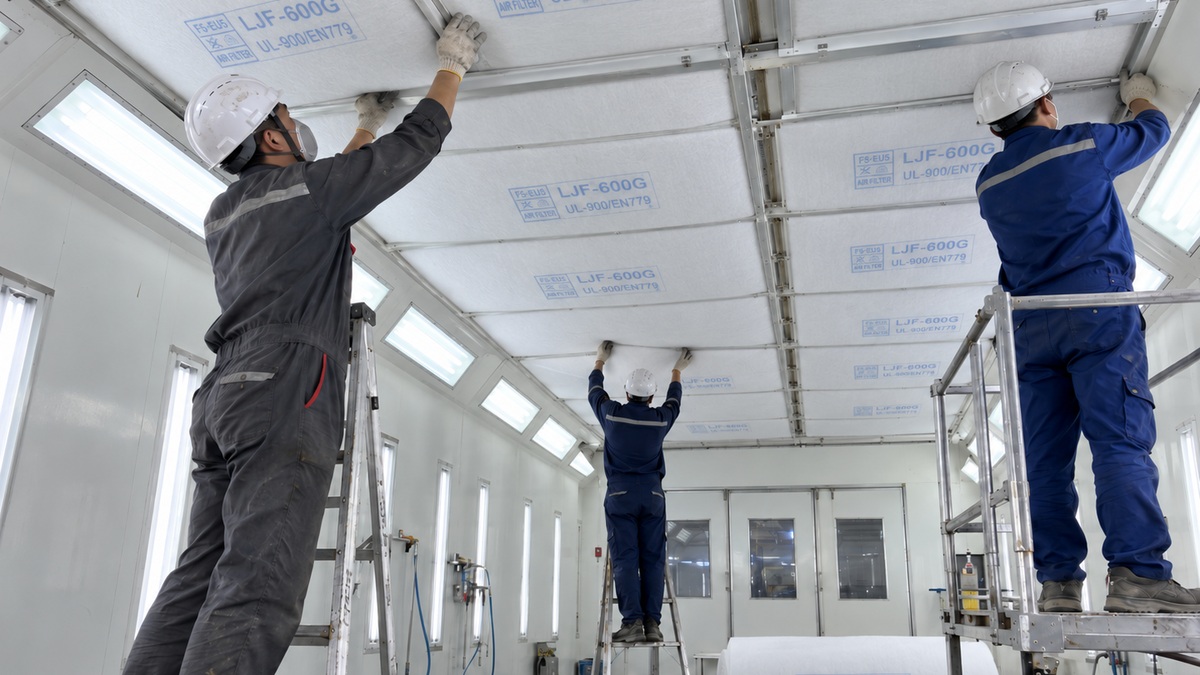
- Start with fiberglass if you are establishing a baseline. It is the lowest-risk entry point — cheap, universally available, and compliant. Run it for 2–3 months and log your changeout frequency and airflow data.
- Move to synthetic when changeout labor becomes the bottleneck. If your booth technician is changing filters more than once per shift, the labor cost alone will justify the synthetic premium.
- Do not judge by weight alone. A 28g fiberglass pad and a high-loft synthetic pad of comparable thickness are not equivalent in holding capacity. Request test data on holding capacity (lbs per pad) and pressure drop curves, not just gram weight.
- Match media to your coating chemistry. Solvent-based coatings and waterborne coatings load filters differently. Waterborne overspray tends to be denser and can cause fiberglass mats to sag or channel. Synthetic polyester maintains shape better when exposed to moisture.
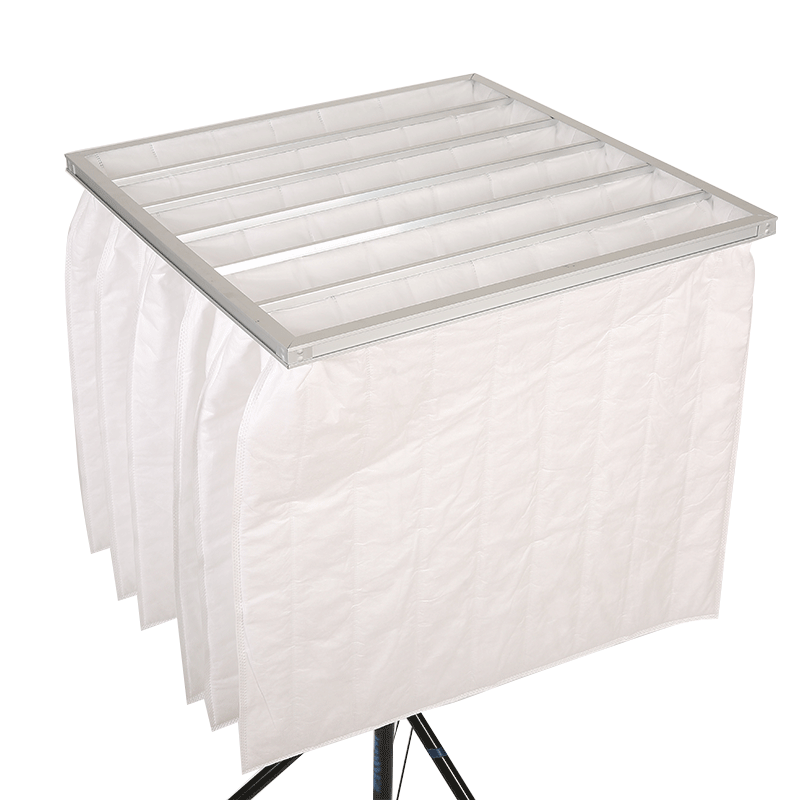
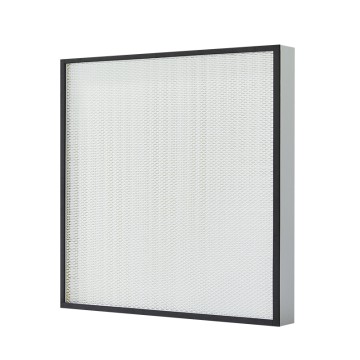
- Consider a two-stage exhaust system for critical applications. A fiberglass or synthetic primary stage followed by a MERV 13–15 synthetic pocket or bag filter provides the 98%+ capture required by NESHAP while protecting downstream fans and ductwork from fine particulate.[12]
Need Help Selecting the Right Filter for Your Booth?
Guangzhou LJF manufactures fiberglass paint arrestors, synthetic polyester exhaust media, and complete spray booth filtration systems — ceiling, floor, and exhaust stages. We provide OEM/ODM service and can supply test data for compliance documentation.
Contact LJF for a Custom Quote →