Leave Your Message
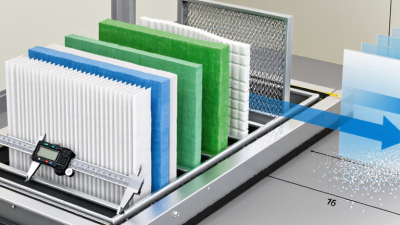
When you're looking for the best paint arrestor filter manufacturer in China, price tags and pretty product photos only get you so far. You want someone who actually knows their stuff—real experience with catching paint mist, managing airflow, testing pressure drop, and keeping fiber quality consistent. So before you commit, dig into their factory records, material specs, production inspections, and performance data. Honestly, it's the little things that make the difference. You know, if that frame seal gets loose, it can really drag down your booth's efficiency — and next thing you know, you're doing more maintenance work.
Michael Chen, an industrial air-filtration engineer who’s spent more than fifteen years on factory projects, puts it this way: “A good paint arrestor filter has to balance capture efficiency, airflow stability, service life, and safe replacement.” And honestly, that’s exactly what you see in automotive, furniture, metal finishing, and industrial coating work. So when you’re choosing a supplier, look for one that offers clear technical support, batch traceability, cutting options, and samples you can actually evaluate. I mean, when a claim doesn't come with test evidence, it really deserves a closer look. And honestly? Performance comes first.
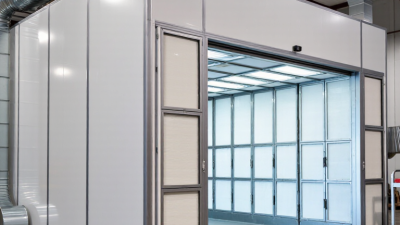
A qualified Paint Booth Ceiling Filter Supplier China should really know their stuff when it comes to ceiling filtration, final-stage protection, and clean-air distribution. That said, no manufacturer is perfect — even a seasoned supplier can run into variations in fiber density, transport conditions, or installation quality. That weakness? It deserves an honest conversation—not another glossy brochure hiding it. So here’s what we’re going to walk through: manufacturing capability, technical docs, customization options, quality control, and after-sales support. These are the things that actually help buyers spot a dependable partner, instead of just falling for slick marketing. And when you choose thoughtfully, it helps protect coating quality, worker comfort, equipment cleanliness, and those long-term operating costs.
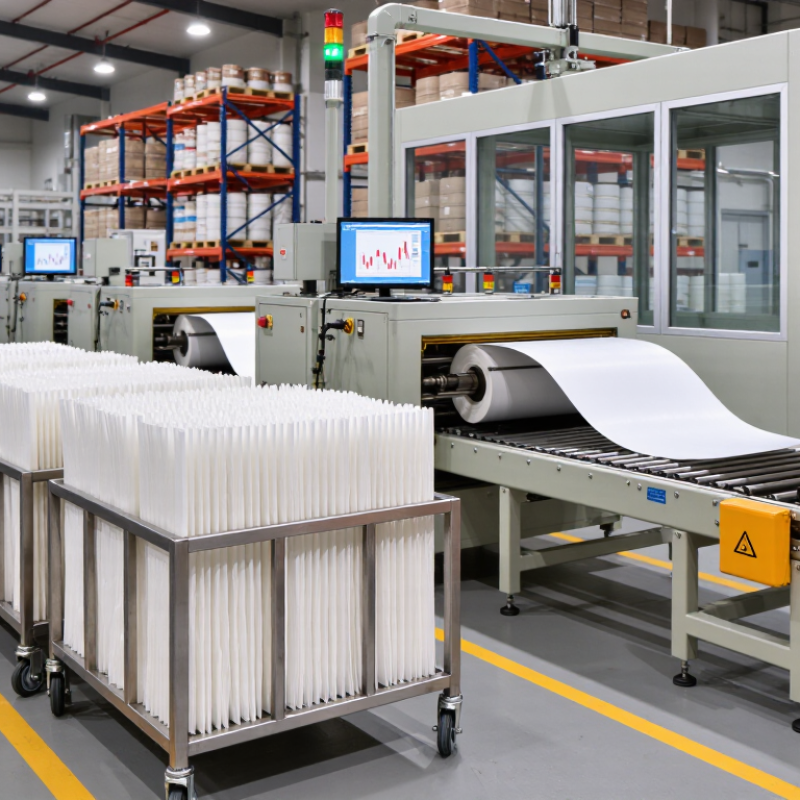
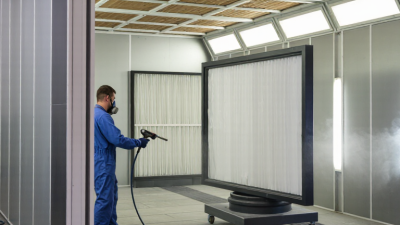
A paint arrestor filter is a porous panel or roll that captures airborne paint droplets before they reach exhaust equipment. It protects ductwork, fans, and surrounding work areas from sticky overspray buildup. In a spray booth, the filter sits behind the intake or exhaust screen, depending on booth design. Without proper filtration, deposits can reduce airflow and increase cleaning frequency. That affects production.
In practical booth maintenance, filter choice depends on coating type, spray volume, and air speed. Fiberglass and polyester media can perform differently under the same conditions. A dense filter may capture more paint, but it can restrict airflow sooner. Technicians should check pressure readings, surface loading, and coating buildup each shift. A simple visual check helps. Replace the media when airflow drops or the surface becomes heavily loaded. Do not guess.
A reliable paint stop filter manufacturer should provide fiber details, resistance data, and clear replacement guidance. Ask for batch traceability and testing information before approving a regular supply. Installation also matters; gaps around the frame can let overspray bypass the media. Loose clamps are a small problem with expensive consequences. Filter performance may still vary when humidity, paint viscosity, or operator technique changes. That part deserves honest review.
| Evaluation Dimension | Typical Industry Data | Why It Matters |
|---|---|---|
| Primary Function | Captures airborne paint overspray before it reaches exhaust ductwork, fans, and the surrounding environment. | Reduces contamination, protects ventilation equipment, and supports cleaner booth operation. |
| Common Filter Media | Fiberglass, polyester synthetic media, pleated paper, and cardboard labyrinth media. | Media selection affects paint-holding capacity, airflow resistance, disposal method, and operating cost. |
| Fiberglass Media Thickness | Commonly about 25–100 mm, depending on booth design and overspray load. | Thicker, progressively layered media generally provides more depth-loading capacity. |
| Synthetic Media Thickness | Frequently available in approximately 20–50 mm configurations. | Useful where a washable, tear-resistant, or low-lint media construction is preferred. |
| Typical Face Velocity | Approximately 0.5–1.5 m/s for many dry paint-booth arrestor applications; the exact value depends on the media and booth design. | Excessive velocity can increase pressure drop and reduce capture performance, while insufficient velocity may affect booth airflow balance. |
| Initial Pressure Drop | Often within roughly 20–80 Pa when clean, subject to media type, thickness, area, and test velocity. | Lower initial resistance can reduce fan energy consumption and help maintain stable airflow. |
| Replacement Pressure Drop | A site-specific limit is normally established by the booth manufacturer; many systems use a differential-pressure alarm before airflow becomes unacceptable. | Replacing filters based on pressure drop is more consistent than using appearance alone. |
| Paint-Holding Capacity | Varies substantially with media weight, depth, structure, coating type, spray volume, and booth airflow. | Higher capacity can extend service life and reduce labor and disposal frequency. |
| Suitable Coating Types | Commonly used for many liquid-paint overspray applications; coating chemistry must be checked for compatibility. | Solvent-based, water-based, high-solid, and catalyzed coatings can impose different safety and disposal requirements. |
| Temperature Consideration | Maximum operating temperature depends on the media binder and construction; product-specific technical data should be checked before use. | Temperature limits are important in heated booths, curing areas, and applications involving hot exhaust air. |
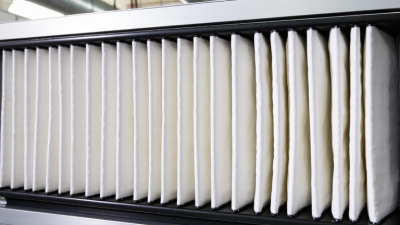
| Filter Configuration | Available as rolls, pads, panels, pockets, pleated elements, or modular replacement sections. | Correct dimensions and sealing reduce bypass leakage and simplify installation. |
| Typical Efficiency Description | Paint arrestors are generally selected for overspray capture rather than fine-particle HEPA filtration. Efficiency claims must state the test method and particle size. | A single percentage without test conditions is not sufficient for comparing products accurately. |
| Maintenance Indicator | Use visual loading checks together with differential-pressure monitoring and scheduled booth inspections. | Timely replacement helps maintain airflow, finish quality, worker protection, and equipment cleanliness. |
| Fire and Safety Considerations | Accumulated overspray can create a combustible or hazardous waste concern, depending on the coating and local regulations. | Proper grounding, ventilation, inspection, storage, and disposal procedures are essential. |
| Selection Criteria for a Reliable Supplier | Documented specifications, consistent media weight and thickness, dimensional accuracy, batch traceability, packaging protection, and technical support. | These factors help ensure repeatable performance instead of relying only on price or an unverified efficiency claim. |
Note: The numerical ranges shown are typical industry reference values, not universal specifications. Final selection should be based on the paint booth design, coating chemistry, airflow rate, pressure-drop limit, safety requirements, and the filter supplier’s verified technical data.
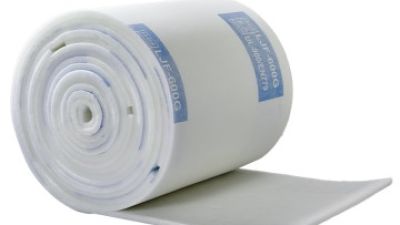
The LJF-600G spray booth ceiling filter media is designed for industrial painting environments that require reliable particulate control and stable airflow. Its polymer-based filtration structure is strengthened through thermal bonding, helping retain overspray particles while maintaining the mechanical integrity of the media during extended operation. Installed in the ceiling or supply-air section of a spray booth, it supports cleaner working conditions and helps reduce the risk of airborne contaminants reaching freshly coated surfaces.
When selecting a China-based supplier, buyers should evaluate more than the initial purchase price. Important factors include filtration efficiency, media thickness, airflow resistance, dimensional consistency, cutting accuracy, packaging, and production quality control. A dependable supplier should also provide clear technical specifications, sample verification, batch traceability, and responsive support for installation or replacement requirements. The LJF-600G can be considered for workshops and industrial facilities seeking a practical balance between particle retention, service life, and operating performance. Regular inspection and timely replacement remain essential to prevent pressure buildup and preserve effective booth ventilation.
Layered fibers slow wet paint droplets as air passes through. Larger droplets hit fibers directly. Fine particles follow airflow and contact nearby fibers. They remain trapped inside the media.
They reduce sticky buildup on booth walls, exhaust ducts, and downstream equipment. This helps maintain cleaner airflow paths. Protection is not unlimited.
Heavy spraying loads the fibers with wet paint. Air then meets more resistance. A clean filter may show low pressure initially. Conditions can change within one production shift.
Inspect the filter surface daily. Check airflow, color, and pressure readings during each shift. Record coating type and operating hours. Small records often reveal the real replacement pattern.
No. A filter may look acceptable while hiding deep paint loading. Replace it before airflow becomes visibly weak. Appearance can mislead.
Request airflow data, pressure-drop curves, and test conditions. Ask which paint type was used. Independent reports and batch records are useful. Clear replacement guidance matters too.
No. Fiberglass depth media, synthetic layers, and pocket structures behave differently. Water-based and solvent-based coatings may require different compatibility checks. The cheapest media may not perform best.
Request a small production batch before placing a large order. Inspect the first and last pieces. Check fiber density, bonding, frame strength, packaging, and storage conditions. Certificates help, but repeatable results matter more.
Filter performance depends on airflow volume and face velocity. A laboratory chart may not represent real booth conditions. Compare pressure rise after several operating hours. My first estimate could be wrong.
A paint arrestor filter is a vital component in spray-painting and coating systems because it captures airborne overspray before it reaches exhaust ducts, fans, and the surrounding environment. By using layered or pleated filter media, it retains paint particles while allowing air to pass through, helping maintain airflow, reduce maintenance, and support a cleaner, more efficient workspace. High-performance media may include fiberglass, polyester, paper, or composite materials, selected according to coating type, particle load, and operating conditions.
When evaluating the Best Paint Arrestor Filter Manufacturer In China, buyers should consider material consistency, filtration efficiency, pressure-drop control, dimensional accuracy, production capacity, and quality testing procedures. A reliable manufacturer should provide clear technical specifications, stable batch performance, sample testing, and practical support for selecting the appropriate filter format. The right product depends on spray volume, paint characteristics, equipment design, replacement frequency, and required air-cleaning performance. Careful comparison of these factors can help users achieve dependable filtration and better long-term operating value.