Leave Your Message
0%

Choosing the Top G4 Panel Pre Filter Suppliers China Factory requires more than comparing price lists. Buyers must assess filtration performance, fiber consistency, frame strength, and delivery reliability. G4 filters are commonly used as coarse pre-filters in air-handling units, commercial buildings, hospitals, and industrial ventilation systems. They protect finer filters from dust loading and premature replacement.

Industry data supports this demand. Grand View Research identifies rising indoor-air-quality requirements as a major driver of the global air-filtration market. MarketsandMarkets also links market growth with expanding HVAC installations, energy-efficiency projects, and stricter building ventilation expectations. However, market reports do not replace factory verification. A supplier may publish impressive airflow figures, yet provide limited test evidence.

This guide examines leading Chinese manufacturers through practical checkpoints. These include ISO 16890 or EN 779-related testing, pressure-drop data, dust-holding capacity, galvanized or aluminum frames, stitching quality, and batch traceability. EN 779 classified G4 as a coarse filter grade, while ISO 16890 now provides a newer performance framework. Buyers should confirm which standard supports each claim.

Look closely at the details. Does the filter remain rigid after transport? Are dimensions accurate within the agreed tolerance? Can the factory provide samples, test reports, and replacement schedules? These questions matter during procurement.

No supplier list is perfect. Factory capacity can change. Export experience can vary. Therefore, this Top G4 Panel Pre Filter Suppliers China Factory guide combines technical evidence, manufacturing experience, and commercial reliability. It also highlights Panel Filter selection mistakes that are easy to overlook, especially when low cost hides higher maintenance expenses.

Top G4 Panel Pre Filter Suppliers China Factory Guide

G4 Panel Pre-Filter Basics and Performance Standards

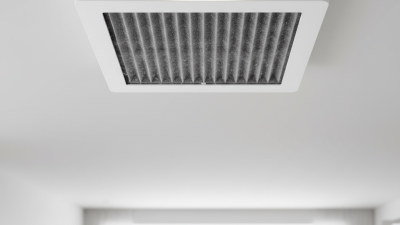
G4 panel pre-filters are coarse filters used in ventilation and air-conditioning systems. They capture larger dust, lint, hair, and some airborne debris before finer filters. In older EN 779 classifications, G4 generally indicated 90–less than 95% average synthetic dust arrestance. However, EN 779 has been withdrawn in many markets. Buyers should request current ISO 16890 test data instead of relying on the G4 label alone.

Performance depends on more than the filter grade. Check the initial pressure drop at the stated airflow, final pressure drop, dust-holding capacity, and sealing quality. A 592 × 592 mm panel may fit the frame but still bypass air around a weak gasket. During inspection, look for even pleat spacing, firm stitching, and a rigid frame. Small gaps matter. Factory test reports should identify the test method, airflow, sample size, and measured resistance.

A reliable supplier should explain material choices and replacement intervals clearly. Synthetic media often handles humid conditions better than untreated fiber, but actual results vary. Cleanable metal panels may suit special applications, while disposable panels simplify maintenance. Do not treat a G4 panel as a substitute for a Hepa Panel Filter. It is a protective first stage, not a final high-efficiency solution. In practice, replacement timing is often imperfect; real dust loads can differ sharply from laboratory figures. Recording pressure readings monthly can reveal this difference.

Key Features to Compare Among Chinese G4 Filter Suppliers

When comparing Chinese G4 panel pre-filter suppliers, start with the Filter Media. Synthetic fiber is common and easy to replace. Cotton-blend media may capture dust differently, but performance can vary between batches. Ask for the media weight, thickness, airflow direction, and tested pressure drop. A clean filter should not restrict ventilation too quickly. It should also remain stable inside a metal, cardboard, or plastic frame.

Frame quality deserves close attention. Check corner joints, wire backing, gasket fit, and actual dimensions. A two-millimeter gap can allow bypass air in a busy air-handling unit. Request a sample before placing a large order. Review test reports, production photos, inspection records, and batch labels. Reliable suppliers should explain their testing methods clearly. They should also confirm packaging, moisture protection, replacement intervals, and delivery capacity. G4 classifications may follow different testing practices, so compare test conditions, not only printed ratings.

Tips: Compare three samples side by side. Measure thickness, weigh the media, and record pressure drop at the same airflow. Ask whether the supplier can repeat the same specification next season. A low quotation can be useful, but it may hide weaker frames or inconsistent media. I have learned that paperwork alone is not enough. Physical inspection still matters. Some suppliers answer quickly, yet their technical details remain incomplete. That is a warning worth discussing before payment.

How China Factories Manufacture G4 Panel Pre-Filters

China factories manufacture G4 panel pre-filters through controlled material selection, cutting, assembly, and inspection. Most production lines use synthetic, non-woven filter media with progressive density. This structure captures larger dust while keeping airflow resistance moderate. Workers cut the media to specified dimensions, then fit it into a galvanized steel, aluminum, or cardboard frame. Some factories add wire mesh to improve support during operation.

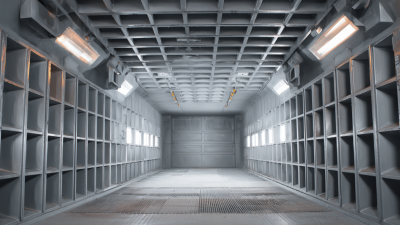
The bonding stage needs close attention. Uneven adhesive can leave gaps along the frame. That problem may not appear immediately, but dust bypass can reduce filtration performance. Factories usually check frame size, media thickness, pleat stability, and sealing quality. Airflow resistance and dust-holding performance may also be tested with sampling equipment. Compared with Spray Booth Panel Filters, G4 filters normally target coarse particles rather than fine paint mist. Specifications must match the air-handling unit, not just the purchase drawing. Small errors matter.

Tips: Ask for the media grade, frame material, initial resistance, and test method before ordering. Request sample approval with actual dimensions. Also inspect packaging, because crushed corners can damage the seal. Some factories improve consistency through automated cutting, but manual assembly still appears in custom orders. It can be useful, yet it deserves closer inspection. A reliable supplier should provide batch records, inspection photos, and clear replacement guidance.

Materials, Sizes, and Customization Options Explained

Top G4 Panel Pre Filter Suppliers China Factory Guide

G4 panel pre-filters commonly use synthetic nonwoven media, fiberglass, or layered cotton blends. Synthetic media handles moisture better. Fiberglass can provide stable dust loading, but it may need careful handling. ISO 16890 replaced the older EN 779 classification and requires efficiency reporting by particle size. Therefore, a reliable supplier should show ePM10 or coarse results, not only “G4.” ASHRAE Standard 52.2 also emphasizes tested efficiency and pressure drop, not marketing descriptions.

Common sizes include 592 × 592 × 46 mm and 592 × 592 × 96 mm. Custom dimensions are possible. Factories can adjust frame depth, gasket position, wire-mesh support, and pocket thickness. Galvanized steel suits humid air-handling units. Cardboard frames cost less and reduce weight. However, they may weaken in damp rooms. That detail is easy to miss. Request airflow, initial resistance, dust-holding capacity, and final resistance from the supplier. The 2023 ASHRAE HVAC Applications guidance links filter selection with fan energy, so a thicker filter is not automatically better.

Tips: Compare test data under the same airflow. Check whether dimensions describe the face or the actual filter. Ask for batch inspection photos. A low price can hide high resistance. It happens. Review replacement intervals using local dust conditions, because published laboratory results may not match a busy factory.

Top G4 Panel Pre Filter Suppliers China Factory Guide - Materials, Sizes, and Customization Options Explained
Data Dimension Typical Specification Common Options Selection and Customization Notes
Filter Classification and Performance
Filter class G4 coarse filter under the former EN 779 classification Many current products are also reported under ISO 16890, normally with an applicable coarse or ePM10 declaration EN 779 G4 and ISO 16890 classifications are not directly interchangeable. Request the applicable test report and the declared standard before comparison.
Primary function Prefiltration of coarse dust, lint, insects, and larger airborne particles Suitable for air-handling units, ventilation cabinets, fan-filter assemblies, and equipment intake sections Use a finer final filter downstream when smaller particles or higher indoor-air cleanliness is required.
Typical airflow direction Usually installed with the filter media facing the incoming air Front-loading, side-loading, or slide-in arrangements Confirm the airflow arrow, gasket position, service clearance, and holding-frame design before production.
Initial pressure drop Commonly about 30–80 Pa at the rated airflow for a clean Panel Filter Actual values vary with media area, face velocity, pleat depth, and test method Use the supplier’s pressure-drop curve rather than comparing a single pressure value without its airflow condition.
Recommended replacement point Often controlled by a project-defined final pressure drop, commonly around 150–250 Pa May also be based on fan capacity, energy consumption, visual inspection, or a differential-pressure switch The correct replacement point depends on the air system and should be confirmed by the equipment operator or project specification.
Materials and Construction
Filter media Progressively structured synthetic or polyester fiber media Thermally bonded nonwoven media, resin-treated media, washable mesh, or low-lint media Specify fiber type, basis weight, dust-holding capacity, flame behavior, and whether the media is disposable or cleanable.
Frame materials Galvanized steel, aluminum, rigid plastic, or moisture-resistant board Corrosion-resistant coated steel, anodized aluminum, stainless steel, or recycled plastic Metal frames are commonly selected for strength and repeated handling; plastic or board frames may reduce weight and cost.
Support structure Expanded metal, wire backing, retaining grid, or molded support surface Single-side support, dual-side support, reinforced face, or no backing for low-velocity applications Use downstream support when airflow reversal, vibration, or high dust loading could deform the media.
Gasket and sealing Optional polyurethane, EPDM, neoprene, or foam gasket Face gasket, header gasket, perimeter gasket, or gasket-free slide-in fit Provide the gasket location and thickness so the filter seals correctly against the holding frame and avoids bypass air.
Moisture resistance Standard synthetic media generally tolerates normal ventilation humidity Hydrophobic media, water-resistant frame treatment, drainable construction, or corrosion-resistant hardware For outdoor-air intakes or wet environments, confirm water resistance separately from filtration efficiency.
Fire and safety properties Dependent on the media, frame, adhesive, and complete filter assembly Project-specific flame-retardant media or documented fire-performance testing Do not assume a fire rating from the filter class. Request documentation for the complete assembly when required.
Sizes and Configuration
Common face dimensions Approximately 287 × 287 mm to 610 × 610 mm are frequently used panel sizes Metric, inch-based, and equipment-specific dimensions Measure the actual opening, frame stop, and available clearance. Nominal size and finished size may differ.
Custom face size Available to the equipment opening within the manufacturer’s production limits Custom length, width, corner treatment, cut-outs, and stepped or split panels Provide finished outside dimensions, tolerance, airflow direction, and the required sealing surface on the drawing.
Typical thickness About 20–100 mm for flat or lightly pleated panel designs 25 mm, 46 mm, 50 mm, 75 mm, and 100 mm configurations are commonly specified Thicker or deeper media generally provides more media area, but the housing must have sufficient installation depth.
Panel style Flat panel, compact pleated panel, or wire-supported panel Single header, double header, framed pad, washable panel, or slide-in cassette Choose the style according to face velocity, service access, rigidity requirements, and available holding-frame space.
Dimensional tolerance Typically controlled by the filter supplier’s production specification Standard tolerance or tighter tolerance by approved technical drawing Agree on finished-size tolerance before tooling or mass production; excessive compression can reduce airflow and damage the gasket.
Customization and Procurement Requirements
Color and finish Natural galvanized finish, mill aluminum, black, white, or neutral gray Powder coating, anodizing, corrosion-resistant coating, or project color matching Specify coating type, color reference, surface preparation, and corrosion environment when appearance or durability is important.
Labeling and traceability Filter class, dimensions, airflow arrow, production date, and batch information Barcodes, QR codes, carton labels, private technical labels, and installation instructions Labels should remain readable after handling and should not cover the airflow indicator or sealing surface.
Packaging Moisture-protective inner wrapping with cartons or palletized outer packaging Individual packing, bulk packing, corner protection, export cartons, or container-load optimization Specify carton dimensions, stacking limits, humidity protection, and packing orientation for long-distance transport.
Quality documents Product specification sheet, dimensional inspection record, and batch traceability Pressure-drop data, efficiency test report, material declaration, safety data, and certificate of conformity Request documents based on the declared standard and the final filter construction, not only on the G4 label.
Sampling and approval Pre-production sample or first-article sample before bulk delivery Approved drawing, sample sign-off, inspection checklist, and retained reference sample Verify dimensions, frame rigidity, gasket position, media appearance, airflow direction, and packaging before approving production.
Key order information Quantity, finished dimensions, thickness, airflow, filter class, frame, media, gasket, and delivery destination Additional requirements for humidity, fire performance, labeling, packaging, and inspection A complete technical specification reduces quotation differences and helps ensure that replacement filters fit the existing system.
Practical Supplier Comparison Checklist
Compare on an equal basis Use the same dimensions, airflow, test standard, face velocity, media area, and pressure-drop condition Compare clean-filter data, final pressure-drop assumptions, service life, and total delivered cost A lower unit price may not represent lower operating cost if the filter has higher resistance, shorter service life, or poor dimensional fit.
Recommended acceptance checks Verify dimensions, materials, workmanship, airflow arrow, gasket, packaging, and documentation Visual inspection, sample measurement, pressure-drop verification, and batch sampling The final acceptance plan should reflect the application risk, order volume, and contractual specification.

Quality Control and Certification Checks for Suppliers

Top G4 Panel Pre Filter Suppliers China Factory Guide

Quality control starts with the test method, not a supplier’s brochure. G4 is an older EN 779 classification, and ISO 16890 has replaced it. Ask factories to state the current ISO 16890 performance class beside any G4 claim. Pleated Panel Air Filters should show airflow, pressure drop, and dust-loading results from a traceable laboratory.

Request certificates with matching model numbers, test dates, and factory addresses. ISO 9001 supports process control, but it does not prove filter efficiency. Check the laboratory’s accreditation and test scope. Under ISO 16890, verify the initial pressure drop at the proposed air volume. A low reading can hide weak media or excessive leakage. Inspect media pleats, galvanized frames, sealant lines, and gasket compression on sample units.

Physical checks reveal problems quickly. Measure the frame diagonally. Unequal corners can cause bypass air. Review batch records, raw-material certificates, and final inspection photos. The 2023 Global Status Report for Buildings and Construction reports that buildings consume about 30% of global final energy. Poorly controlled filters may increase fan energy through unnecessary resistance. That connection deserves attention. Yet supplier documents can still be incomplete. Require independent retesting before a large order, especially when certificates use outdated G4 terminology. WHO’s 2021 air-quality guidelines set PM2.5 at 5 μg/m³ annually, but a pre-filter cannot achieve that level alone. Its role is to protect downstream filtration and maintain stable airflow.

Pricing, Minimum Orders, and Production Lead Times

China factory pricing for G4 panel filters varies with size, frame, media, and order volume. Typical export quotations range from US$1.20 to US$4.80 per piece for standard synthetic-media units. Custom aluminum frames cost more. Many factories set minimum orders between 300 and 1,000 pieces. Small trial orders may be accepted, but unit pricing usually rises by 15% to 30%.

Production normally takes 10 to 18 working days after artwork approval and deposit payment. Custom dimensions can add seven days. A practical purchasing check should confirm EN 779 classification, pressure-drop data, gasket material, and carton protection. EN 779 identifies G4 as a coarse filter class, but it does not replace complete performance testing. The U.S. EPA reports that indoor pollutant levels can be two to five times higher than outdoor levels. Therefore, an Air Filter Pre Filter needs stable airflow, not only a low purchase price. Factory data sheets should show initial resistance and dust-holding capacity. Some quotations omit these details. That deserves caution.

Tips: Request three samples from different production batches. Measure the frame diagonals, media depth, and sealing fit. Ask for test records linked to the exact model. Compare landed cost, not factory price alone. Freight, inspection, and replacement waste can change the result. A 500-piece order may look economical, yet storage can become expensive. Recheck your forecast.

How to Select and Work With a Reliable China Factory

Selecting a reliable China factory starts with technical clarity, not the lowest quotation. G4 is a legacy EN 779 classification, while ISO 16890 reports performance through ePM particle-size fractions. Ask the supplier to explain both systems in writing. This prevents misleading comparisons between similar-looking filters.

The IEA Energy Efficiency 2023 report states that buildings consume about 30% of global final energy. Filter resistance therefore deserves attention. Request pressure-drop data at your actual airflow, not only at a laboratory reference point. A competent factory should provide batch test records, filter dimensions, frame material, media weight, dust-holding capacity, and packaging photographs. Check whether testing follows ISO 16890 or another recognized method. Documents matter.

Ask for three production samples from different batches. Inspect pleat spacing, adhesive coverage, corner joints, and gasket compression by hand. Small defects become bypass leakage in real equipment. Require a written inspection plan and an agreed replacement procedure before placing an order. Factory audits should include raw-material storage, cutting accuracy, assembly areas, and final packing. A clean showroom proves little.

I would not trust a perfect sample alone. That assumption often fails during mass production. Confirm lead times, minimum order quantities, payment stages, and export documents in one purchase specification. Keep one sealed reference sample for future comparison. Independent laboratory verification may add cost, but it can expose pressure-drop or efficiency claims that internal reports overlook.

M6 F6 Synthetic Pocket Filters from China: Factory-Direct Quality for Efficient Air Filtration

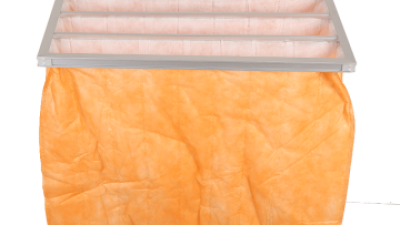
M6 and F6 synthetic pocket filters from China provide a practical solution for efficient air filtration in commercial, industrial, and ventilation applications. Manufactured with durable synthetic fiber media, these pocket-style filters are designed to capture airborne dust and common particulate matter while maintaining stable airflow. Their flexible construction supports easy installation in compatible air-handling units, making them suitable for offices, workshops, shopping facilities, and other environments that require consistent air quality management.

Working directly with experienced Chinese factories allows buyers to access dependable products at competitive prices while maintaining control over specifications, packaging, and order quantities. Suppliers can provide different dimensions, pocket depths, frame materials, and filtration configurations to match particular equipment requirements. Factory-direct sourcing also helps streamline communication, reduce unnecessary distribution layers, and support more efficient procurement.

Quality-focused manufacturers commonly use standardized production procedures, careful material selection, and inspection processes to promote reliable performance from batch to batch. Buyers can request product samples, technical data, customized labeling, and export-ready packaging before placing larger orders. With an extensive supplier network and flexible manufacturing capabilities, M6 and F6 synthetic pocket filters offer a convenient option for businesses seeking efficient filtration products directly from China.

FAQS

What does a G4 panel pre-filter remove?

It captures larger dust, lint, hair, and some airborne debris. Small gaps matter.

Is the G4 label enough for selecting a filter?

No. G4 comes from an older classification system. Request current ISO 16890 results and test details.

Which performance figures should buyers check?

Check airflow, initial pressure drop, final pressure drop, dust-holding capacity, and sealing quality.

Can a correctly sized filter still leak air?

Yes. A 592 × 592 millimeter panel may fit poorly. Weak gaskets can create bypass leakage.

What physical details should inspectors examine?

Look for even pleats, firm stitching, rigid frames, sealed corners, and compressed gaskets. Measure the frame diagonally.

Which filter material suits humid conditions?

Synthetic media often performs better in humidity than untreated fiber. Actual results still vary.

How should a buyer evaluate a factory’s documents?

Match certificates with model numbers, test dates, factory addresses, and laboratory accreditation. Documents matter.

How can buyers check mass-production consistency?

Request samples from three batches. Inspect pleat spacing, adhesive coverage, corner joints, and gasket compression.

How often should a G4 panel be replaced?

Use pressure readings and real dust loads, not laboratory figures alone. Monthly records can reveal the right interval.

Can a G4 panel provide final high-efficiency air cleaning?

No. It protects downstream filtration and supports stable airflow. It cannot achieve fine-particle targets alone.

Conclusion

This guide to Top G4 Panel Pre Filter Suppliers China Factory explains the fundamentals of G4 panel pre-filters, including their role in protecting HVAC systems and maintaining stable airflow. It outlines key performance considerations such as filtration efficiency, pressure drop, dust-holding capacity, frame strength, and service life, helping buyers compare suppliers more effectively. The article also describes common manufacturing steps, from material preparation and pleating or layering to frame assembly, sealing, inspection, and packaging.

Readers will learn how to evaluate synthetic or glass-fiber media, standard and customized sizes, frame materials, and mounting options. It also highlights important quality checks, documentation, certifications, sampling procedures, and production consistency. Practical guidance is provided on comparing prices, minimum order quantities, lead times, and communication standards. Finally, the guide offers a structured approach to selecting and cooperating with a reliable Chinese factory through clear specifications, sample approval, inspection plans, and long-term performance reviews.


LJF Technical Team

LJF Technical Team

IN Guangzhou LJF Purification Equipment Co., Ltd. With a strong expertise in the air purification industry, she plays a pivotal role in promoting the company’s innovative products and services. Emma regularly contributes to the company’s blog, where she shares insightful articles that not only......
Previous What Filters Do You Need for a Paint Spray Booth?