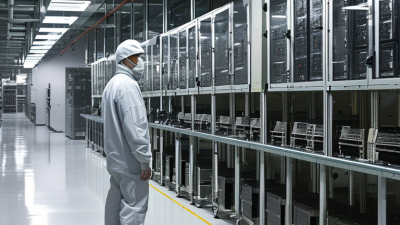
Semiconductor manufacturing really comes down to controlled air, stable processes, and contamination performance you can actually measure. A qualified Hepa Filter Supplier China For Semiconductor Manufacturing can support cleanrooms, mini-environments, and those critical production zones. But the right supplier? They should get particle control, airflow resistance, pressure stability, and replacement planning—not just talk about it.
Good, experienced suppliers don’t just sell filter panels. They look at room classifications, air volume needs, installation conditions, and equipment interfaces. Their technical teams should hand over test data, material specs, and traceable quality records. Filters might use dependable glass-fiber media, sturdy frames, and carefully sealed gaskets. And honestly, small gaps can cause big problems.
Real production experience matters. A supplier who knows semiconductor facilities can spot issues before delivery. Think uneven airflow, bad sealing, too much pressure drop, or dimensions that just don’t fit. Factory inspections, sample testing, and documented procedures help build confidence. Independent verification is still worth doing when performance is critical.
No supplier is perfect. That matters.
So a responsible evaluation should compare efficiency, service response, customization ability, and lifecycle cost. The cheapest Hepa Filter may end up increasing fan energy use or maintenance frequency. The highest-rated product may also be unsuitable if it isn’t installed properly. This article looks at how to assess a Hepa Filter Supplier China For Semiconductor Manufacturing using practical, evidence-based criteria. It covers product consistency, technical communication, quality control, and after-sales support. Readers should also verify current specs with qualified engineers and run site-specific validation before approval. Reliable results require cooperation between the supplier, the cleanroom team, and the equipment manufacturer.
Semiconductor Cleanroom Air Standards: ISO 14644-1 Classes 1–5
Top HEPA Supplier China For Semiconductor Manufacturing
Semiconductor cleanrooms depend on controlled particle levels, not visual cleanliness. ISO 14644-1 classifies air by airborne particle concentration and particle size. Classes 1 through 5 represent increasingly practical contamination limits. ISO Class 1 allows only 10 particles per cubic meter at 0.1 micrometers. ISO Class 5 permits up to 3,520 particles at 0.5 micrometers. These numbers shape filter selection, airflow design, and monitoring plans.
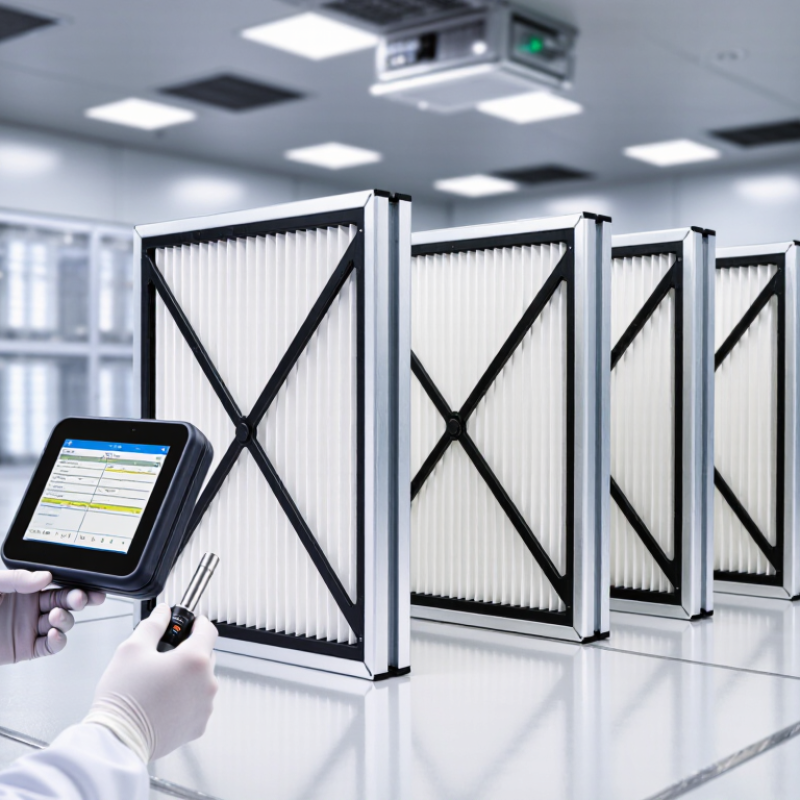
Hepa Filters are important, but they do not create compliance alone. A reliable supplier should provide tested efficiency data, factory inspection records, gasket details, and traceable materials. In a semiconductor cleanroom, technicians may inspect a filter face at 0.3 micrometers using a calibrated aerosol photometer. They also check leaks, airflow velocity, pressure differences, and recovery time after disturbances. Installation quality matters greatly. One damaged seal can undermine an entire ceiling system.
Experience often reveals the uncomfortable part. A cleanroom may pass acceptance testing and still drift during production. Doors open frequently. Operators move carts. Maintenance introduces risk. Even small changes in fan speed can affect pressure stability. Supplier recommendations should therefore match the room’s class, ceiling layout, terminal units, and operating condition. Paper compliance is not enough. I would also question any quotation that hides testing methods or omits replacement guidance. Mistakes happen, but undocumented mistakes become expensive contamination events.
Semiconductor Cleanroom Air Standards: ISO 14644-1 Classes 1–5
The chart shows the maximum permitted concentration of airborne particles ≥0.5 μm per cubic meter for ISO 14644-1 cleanroom Classes 1–5. Lower ISO class numbers indicate stricter particle-control requirements. The logarithmic scale highlights the large difference in cleanliness levels required for semiconductor manufacturing.
HEPA Filter Performance: 99.97% Efficiency at 0.3 Microns
Top HEPA Supplier China for Semiconductor Manufacturing
In semiconductor cleanrooms, HEPA performance begins with measurable control. The U.S. Environmental Protection Agency states that true HEPA filters remove at least 99.97% of particles measuring 0.3 microns. This particle size is commonly used as the most penetrating particle size, not the largest particle captured. Small details matter.
A qualified China-based HEPA supplier should provide factory test results, filter-grade records, and traceable serial documentation. Testing should follow recognized procedures, including IEST-RP-CC001 and relevant ISO 14644 cleanroom requirements. A 99.97% rating alone does not prove installation performance. Airflow velocity, gasket compression, leakage testing, and pressure-drop readings can change results inside a working fab.
The U.S. Department of Energy identifies filtration, airflow, and maintenance as key factors in maintaining controlled environments. For semiconductor production, filters must support stable airflow while limiting contamination and energy waste. A good supplier can show scan-test data, resistance curves, and replacement guidance. It should also explain how each result was obtained.
Not every certificate tells the whole story. A supplier may meet the laboratory target but miss field conditions. That gap deserves attention. During acceptance testing, technicians should inspect frame joints, ceiling seals, and particle counts at operating airflow. Practical experience often reveals weaknesses that paperwork hides. Real reliability is demonstrated on site.
Top HEPA Supplier China For Semiconductor Manufacturing - HEPA Filter Performance: 99.97% Efficiency at 0.3 Microns
| Performance Dimension | Reference Value | Semiconductor Manufacturing Relevance |
| Particle Removal Efficiency | ≥99.97% at 0.3 μm for the commonly referenced HEPA performance level | Helps control fine airborne particles that may affect wafer surfaces, photolithography, and precision assembly. |
| EN 1822 Filter Classification | H13: ≥99.95% overall efficiency; H14: ≥99.995% overall efficiency at the most penetrating particle size (MPPS) | Provides a standardized basis for specifying high-efficiency terminal filters in controlled environments. |
| Test Particle Reference | 0.3 μm is a widely used reference particle size for HEPA performance claims | Supports consistent comparison of filter efficiency; EN 1822 testing is based on MPPS rather than only one fixed particle size. |
| Airflow Application | Designed for stable, low-turbulence airflow in cleanroom supply systems | Supports uniform particle control above process tools, mini-environments, and critical work zones. |
| Common Filter Media
| Microfine glass-fiber media or other qualified high-efficiency media | The media structure provides fine-particle capture while allowing the required cleanroom airflow. |
| Leak-Test Requirement | Installed filters should be checked for media, frame, gasket, and seal leakage | A correctly tested installation confirms that the complete filter assembly performs as specified. |
| Pressure Drop | Application-specific; must be selected from the filter manufacturer's tested performance curve | A suitable pressure-drop balance helps maintain airflow while limiting fan energy consumption. |
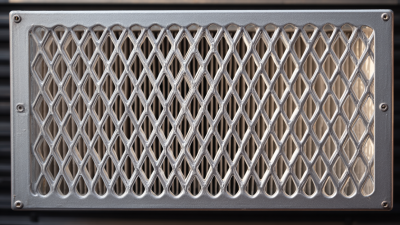
| Frame and Seal Options | Aluminum or galvanized-steel frames; gasket or gel-seal configurations may be specified | The selected frame and seal design should match the ceiling grid, housing, and cleanroom validation method. |
| Quality Verification | Individual filter testing, traceable test records, and on-site installation verification | Supports cleanroom qualification, procurement acceptance, and ongoing contamination-control programs. |
Technical note: HEPA efficiency values depend on the applicable test standard and test method. The 99.97% at 0.3 μm value is a commonly referenced performance criterion, while EN 1822 classifications are determined at the most penetrating particle size (MPPS).
H13 and H14 HEPA Grades: EN 1822 Efficiency of 99.95–99.995%
For semiconductor manufacturing, H13 and H14 HEPA filters are judged by EN 1822, not by marketing language. The standard rates H13 at 99.95% minimum efficiency and H14 at 99.995% at the most penetrating particle size, or MPPS. This test point is critical. It is not simply a 0.3-micron rating.
A qualified China-based supplier should provide individual scan-test results, airflow data, pressure-drop records, and EN 1822 classification documents. H13 filters allow roughly 5 particles in 10,000 to pass at MPPS. H14 reduces this figure to about 5 in 100,000. According to ISO 14644-1:2015, cleanroom classification depends on measured airborne particle concentration, so filter efficiency alone cannot guarantee wafer protection. Installation quality matters greatly.
In practical cleanrooms, technicians should inspect gasket compression, frame flatness, sealant condition, and terminal leakage. Small details matter. Reports from SEMI’s World Fab Forecast continue to show expanding global cleanroom capacity, increasing demand for stable filtration and documented quality control. However, a 99.995% claim is not enough. Real performance can decline through poor handling, excessive loading, or uneven airflow. I have seen specifications look perfect on paper while field verification exposed installation weaknesses. EN 1822:2019 test reports, factory leak testing, and on-site particle measurements should be reviewed together.
China HEPA Supplier Capabilities: GB/T 13554 Testing and Certification
China’s semiconductor expansion is raising demand for verified cleanroom components. SEMI’s 2024 World Fab Forecast projected global semiconductor manufacturing equipment spending at about US$109 billion. That investment increases pressure on every Industrial Hepa Filter supplier.
GB/T 13554-2020 provides a practical testing framework for high-efficiency filters in China. Qualified laboratories typically evaluate filtration efficiency, pressure drop, airflow uniformity, and scan leakage. Aerosol testing should reflect the filter’s rated operating condition, not only a comfortable laboratory setting. A credible supplier can provide calibrated instruments, traceable test records, and complete factory inspection reports. Certification alone is not enough.
In semiconductor facilities, small defects matter. A damaged gasket can create a visible leak during field scanning. A supplier should therefore control frame flatness, separator spacing, sealant curing, and final packing. ISO 14644-1:2015 defines cleanroom particle classification, while GB/T 13554 supports filter performance verification. These standards address different risks.
Technical teams should compare resistance curves, test aerosol details, and certificate validity. Some documents look complete but omit test airflow or sampling positions. That is a warning. Factory audits, witness testing, and batch traceability add useful confidence. Still, no supplier process is perfect. Even experienced manufacturers may need to improve sealing checks after transport trials. Performance data should be reviewed alongside installation records and maintenance conditions.
ULPA Versus HEPA Filtration: Up to 99.9995% Efficiency at 0.12 Microns
Top HEPA Supplier China For Semiconductor Manufacturing
Semiconductor cleanrooms demand more than impressive efficiency claims. The U.S. Department of Energy defines HEPA filtration as at least 99.97% efficient at 0.3 microns. This particle size represents a challenging testing point. A Commercial Hepa Filter can therefore protect sensitive processes when airflow, sealing, and maintenance remain controlled.
ULPA filtration reaches higher levels. Under ISO 29463 and EN 1822 classifications, U15 filtration can achieve 99.9995% efficiency at its most penetrating particle size. Some tested configurations approach this performance near 0.12 microns. However, 0.12 microns is not automatically guaranteed for every filter. Buyers should request the complete test curve, not one attractive number. Small particles behave differently under changing airflow.
In semiconductor production, a poorly fitted gasket can defeat excellent media. I have seen cleanroom discussions focus on filter grades while overlooking frame leakage and installation pressure. That is a mistake. Particle counters should verify performance after installation, especially around ceiling modules and access panels. Pressure drop also matters. Excessive resistance can reduce designed air changes and increase fan energy. ISO 14644-1 classification testing provides the cleanroom framework, but it cannot repair weak maintenance practices. The better specification includes efficiency, MPPS data, airflow, leakage testing, pressure drop, and replacement intervals. Some uncertainty remains. Real conditions are never perfectly laboratory-like.
Supplier Qualification: Leak Testing, Airflow Uniformity, and Traceability
Selecting a top HEPA supplier in China requires evidence beyond a clean factory and attractive datasheet. For semiconductor manufacturing, qualification should begin with leak testing. IEST-RP-CC034 recommends scanning the filter face and frame for local penetration, using a challenge aerosol and calibrated photometer. A 99.97% efficiency claim at 0.3 microns is useful, but it does not prove installation integrity. The gasket, gel seal, clamping pressure, and corner joints need separate inspection.
Airflow uniformity is equally important. ISO 14644-3 provides recognized methods for velocity and airflow testing, while EU GMP Annex 1 uses approximately 0.36–0.54 m/s as a unidirectional airflow reference. This range is not a universal semiconductor limit, so the supplier should match the customer’s process specification. During acceptance, technicians should map multiple points above a Hepa Filter For Laminar Flow Hood, record velocity deviations, and photograph instrument displays. Small dead zones can disturb wafer handling.
Traceability separates a qualified supplier from a merely capable one. Each filter should carry a serial number linked to media batch, frame material, sealant lot, factory leak results, airflow data, and calibration certificates. ISO 9001-based controls support this documentation structure. I would also request retained samples and records for several production lots. A weakness remains: supplier reports may be accurate yet incomplete. Independent witness testing is worth the extra time. Accuracy needs proof.
Selecting China’s Top HEPA Supplier for Semiconductor Fab Applications
Selecting China’s top HEPA supplier for semiconductor fab applications requires more than comparing prices. Cleanroom performance depends on filtration efficiency, airflow stability, construction quality, and documented testing. A qualified supplier should provide factory test reports, material specifications, and traceable production records. Ask whether each Laminar Flow Hepa Filter is tested individually before shipment.
Review the supplier’s experience with semiconductor facilities, not only general cleanrooms. Examine frame sealing, gasket compression, airflow resistance, and particle-release control. Request sample data from operating projects with similar ceiling systems and air volumes. A practical factory audit can reveal assembly details that brochures often hide. Check welding quality, filter media protection, and packaging cleanliness. Small defects matter.
Tips: Compare test methods, not only efficiency numbers. Confirm testing follows recognized standards, such as EN 1822 or ISO 29463. Ask for a realistic lead-time plan and replacement-filter support. Include acceptance criteria in the purchase contract. Keep communication technical and written. Also, question unusually perfect claims. Supplier documents may look complete, yet field performance can differ. A second-party inspection is worth considering. Do not select the cheapest option automatically; however, the most expensive supplier may not be the best choice either.
F7 & M7 Bag Filters: High-Quality China Solutions Based on The Freedonia Group’s World Air Filters Report
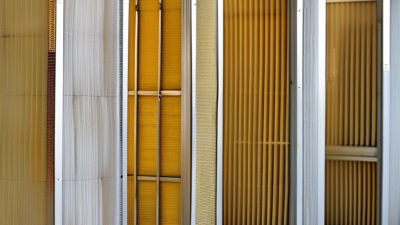
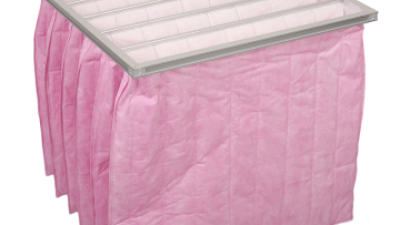
F7 and M7 bag filters offer a dependable solution for commercial buildings, industrial facilities, clean air systems, and other ventilation applications. Designed to capture fine airborne particles efficiently, these filters help maintain cleaner indoor air while supporting stable airflow and reliable HVAC performance. Their layered synthetic media and sturdy pocket construction provide a practical balance between filtration efficiency, dust-holding capacity, and service life.
Manufactured in China with precision and consistent quality control, our F7 and M7 bag filters are produced to meet the performance requirements of modern air-handling systems. Each filter can be supplied in different dimensions, pocket numbers, frame materials, and sealing configurations to suit specific equipment and installation conditions. Careful attention to raw materials, stitching, bonding, and final inspection helps ensure dependable performance from batch to batch.
As an experienced factory supplier, we support distributors, contractors, facility managers, and industrial buyers with bulk orders and customized solutions. Our production team can assist with product selection, technical specifications, packaging, and delivery arrangements. Whether you need standard replacement filters or a tailored filtration program, our China-based manufacturing capabilities provide competitive value, responsive service, and reliable supply for long-term cooperation.
FAQS
It measures airborne particle concentration by particle size. Visual cleanliness is not enough. Class 1 allows 10 particles per cubic meter at 0.1 micrometers. Class 5 allows up to 3,520 particles at 0.5 micrometers.
ISO Class 1 has stricter particle limits than ISO Class 5. Class 5 is more practical for some controlled production areas. The required class affects filters, airflow, and monitoring.
No. Filters are only one part of compliance. Room pressure, airflow, installation, monitoring, and maintenance also matter. One damaged gasket can affect an entire ceiling system.
The supplier should provide efficiency data, inspection records, gasket details, and traceable material information. Testing methods should be clearly documented. Missing details deserve questions.
GB/T 13554-2020 supports testing for efficiency, pressure drop, airflow uniformity, and scan leakage. Testing should reflect the filter’s rated operating condition. Comfortable laboratory conditions may hide field problems.
Review test airflow, aerosol information, sampling positions, resistance curves, and certificate validity. Check whether instruments are calibrated and records are traceable. Documents can mislead.
A poor seal can create a leak during field scanning. Teams should check frame flatness, separator spacing, sealant curing, and packing protection. Small defects matter.
Yes. Frequent door openings, moving carts, and maintenance can change room conditions. Fan speed changes may disturb pressure stability. Production is less predictable.
Factory audits, witness testing, batch traceability, and installation records provide useful evidence. Replacement guidance should also be available. No supplier process is perfect. Transport trials may reveal weak sealing checks.
Conclusion
Selecting a qualified Hepa Filter Supplier China For Semiconductor Manufacturing is essential for maintaining the strict environmental control required in modern fabrication facilities. Cleanrooms commonly follow ISO 14644-1 Classes 1–5, where stable airflow, low particle levels, and consistent filtration performance directly support process reliability. Standard HEPA filters are typically evaluated at 99.97% efficiency for 0.3-micron particles, while H13 and H14 grades comply with EN 1822 performance ranges of 99.95% to 99.995%.
A capable China-based supplier should provide documented testing under GB/T 13554, along with dependable leak testing, airflow uniformity verification, and complete product traceability. For applications requiring even higher particle control, ULPA filtration may deliver efficiency up to 99.9995% at 0.12 microns. Beyond efficiency ratings, semiconductor manufacturers should assess manufacturing consistency, certification quality, customization capability, delivery reliability, and technical support. A thorough supplier qualification process helps ensure that selected filters meet both cleanroom requirements and long-term fab operating needs.