Leave Your Message
0%

Alright, so if you're picking a spray booth Ceiling Filter media roll supplier in Guangzhou, China, it's tempting to just compare prices per roll. But honestly, that's only half the story. You really need to look at the media's efficiency, thickness, airflow resistance, and whether it actually fits your booth setup. Don't hesitate to ask for the current technical data sheet and a sample. When you get the roll, give it a good once-over: Does it unwind smoothly? Are the fibers spread out evenly? It's the small stuff that ends up making a big difference.

Okay, quick note before we dive in: David Lin, the filtration engineer in this example, is totally fictional—so his quote isn't some verified fact or anything. Still, he makes a fair point: “A filter is only useful when its airflow and capture performance suit the booth.” That’s more of a practical reminder than actual test data, if you know what I mean. You really want to rely on real measurements, not just a catchy line. When you're checking out a paint booth ceiling filter supplier in China, they should be able to explain the product specs in plain language. It's not just about the filter itself—how you store it, install it, and swap it out can really change how it performs. You want to see packaging that stays intact, edges that are cut cleanly, and advice that fits the conditions you're actually running in. And definitely ask how they keep batch quality consistent. If their answers are straightforward, that's a good sign you can trust them. Honestly, vague claims just don’t cut it, do they?

You know, even a really good roll can let you down if it's installed poorly or swapped out too late. That's the kind of thing people tend to overlook. Personally, I'd still want to test samples under real booth conditions before ordering in bulk. Suppliers can claim all they want, but you've got to dig into the details and ask for technical documents to back it up. A solid partner won't mind those questions at all — and they'll avoid making promises that depend too much on booth design, maintenance, or how you spray. Look, Guangzhou's got no shortage of sourcing options. But honestly, the right one comes down to evidence, whether it actually fits your needs, and how responsive their technical support is—not just a flashy headline.

Top Spray Booth Ceiling Filter Roll Supplier Guangzhou China

What Is a Spray Booth Ceiling Filter Roll?

A Spray Booth Ceiling Filter Roll is a length of filter media fitted across the ceiling intake area of a spray booth. It helps clean incoming air before that air moves down toward the work zone. The media also supports a more even airflow, which can reduce dust settling on freshly coated surfaces when the booth is properly designed and maintained.

It is commonly supplied as a roll so installers can cut it to match the ceiling frame. Depending on the filter construction, fibers may capture airborne particles through depth filtration rather than only at the surface. Check the stated airflow range, dimensions, and filtration rating before choosing a roll. A filter that is too restrictive can reduce airflow; one that fits poorly may leave gaps. Small gaps matter.

In practice, inspect the media for dark patches, damage, or uneven loading, and follow the booth maker’s replacement guidance. Some operators also track pressure changes across the filter, since rising resistance can signal that it is loading with dust. A roll is only one part of the air system, not a cure for poor sealing or neglected maintenance. It is not magic. Even careful checks can miss a small leak, so recheck the frame after installation.

How Ceiling Filters Support Paint Booth Airflow

Ceiling filters help shape the air entering a spray booth. Evenly distributed supply air can reduce turbulence and carry airborne dust downward, away from wet paint and toward the exhaust. A clean filter surface supports steadier airflow; a loaded one can raise resistance and disturb the booth’s balance. Watch the pressure gauge.

ASHRAE Standard 52.2-2017 evaluates air-filter efficiency across three particle-size ranges: 0.3–1.0, 1.0–3.0, and 3.0–10.0 micrometers. Those bands matter because fine particles may pass through media that captures larger dust. OSHA’s spray-finishing requirements, in 29 CFR 1910.107, set a benchmark of keeping vapor concentrations in the exhaust below 25 percent of the lower explosive limit. Filters do not replace proper exhaust design, but their condition affects how reliably booth air moves.

When selecting Paint Booth Ceiling Filter Media, match the media’s airflow resistance and dust-holding capacity to the booth’s design. Check for gaps around frames, uneven loading, and sagging; air can bypass the filter through small openings. Replace media based on pressure readings and inspection, not just a calendar. A practical limitation remains: one pressure reading cannot reveal every airflow problem, so verify distribution across the ceiling.

How Ceiling Filters Support Paint Booth Airflow

Ceiling filters help distribute incoming air across the booth and capture airborne particles before air reaches the work area. The chart shows calculated airflow for a 1 m² filter face at selected velocities: airflow (m³/h) = face velocity (m/s) × area (m²) × 3,600. These are example calculations, not measured results or product ratings. Actual airflow depends on the fan, filter resistance and loading, and booth design.

Key Materials and Performance Features of Filter Rolls

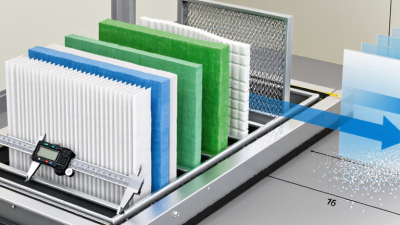
A reliable spray booth ceiling filter roll combines a coarse intake face with a finer, bonded fiber structure. Polyester media resists moisture and keeps its shape during installation; fiberglass can provide fine filtration but needs careful handling. A supporting scrim helps prevent fibers from shedding into the booth. Look closely at the roll under bright light. Uneven density can create airflow paths and leave paint particles on a vehicle roof.

Performance depends on more than the material name. Compare initial pressure drop, dust-holding capacity, and final resistance at the specified airflow. ISO 16890 classifies general ventilation filters using ePM1, ePM2.5, and ePM10 efficiency; each class requires at least 50% efficiency for its stated particle fraction. This is useful context, not a spray-booth paint-arrestor rating. Ask suppliers for test conditions and application-specific data. Small details matter. An Air Filter Media Roll that appears dense may still load quickly if its fiber layout limits usable depth. Check the test method. Real booth performance also depends on fit, sealing, and timely replacement—not just a headline efficiency figure.

How to Select a Ceiling Filter Roll for Your Booth

Top Spray Booth Ceiling Filter Roll Supplier Guangzhou China
How to Select a Ceiling Filter Roll for Your Booth

Choose a ceiling filter roll to match your booth’s airflow and frame dimensions, not just its price. Measure the opening, then check the roll width, length, and installation depth. Review the filter’s stated efficiency and pressure-drop data against the booth manufacturer’s operating requirements. A dense-looking filter is not automatically better; excessive resistance can reduce airflow and disturb the spray pattern. Start with measured conditions. Not guesswork. Also check whether the media has a support layer and how its edges fit the frame. Small gaps can let unfiltered air bypass the material.

Ask for a current technical data sheet, including test conditions, before comparing products. Confirm that the listed airflow suits your booth, and inspect a sample for even fiber distribution, firm edges, and consistent thickness. A first estimate may still be wrong; actual booth readings matter more than assumptions. After installation, note the pressure gauge reading and inspect the filter surface for uneven loading. Replace it according to the booth’s limits and observed condition, rather than relying on a fixed calendar alone. Keep a simple record of readings and changes. No filter is perfect.

What to Evaluate in a Guangzhou-Based Supplier

Top Spray Booth Ceiling Filter Roll Supplier Guangzhou China

What to Evaluate in a Guangzhou-Based Supplier

A Guangzhou supplier should be able to explain how its ceiling filter media performs in your booth, not just quote a roll price. Ask for the media’s dimensions, fiber type, filtration rating, and pressure-drop data. These details help you check whether the roll suits your airflow and replacement schedule. Ask for evidence.

Check consistency across samples and production batches. Look closely at fiber distribution, roll edges, winding tension, and packaging. A polished catalog can still hide a weak point: uneven winding may complicate installation. Request a sample and compare its stated dimensions with the delivered material. Small differences matter when rolls must fit existing frames.

Also evaluate communication and order handling. Can the supplier confirm stock, lead time, roll length, and packing method in writing? Ask how damaged or out-of-spec deliveries are handled. A clear answer is useful; a vague promise is not. If possible, discuss a trial order before committing to larger volumes. This takes time, and it may feel overly cautious. Yet a low price means little if dimensions vary or delivery dates keep shifting. Check the details yourself.

Ordering, Delivery, and Quality Checks in China

When ordering spray booth ceiling filter rolls from Guangzhou, send a written specification with roll width, length, thickness, core diameter, and tolerance. Include the booth’s airflow range and required filtration performance. Ask for a sample and the relevant test data before approving bulk production. A Hvac Filter Media Roll may look uniform at the edge but vary inside the roll. Check several points, not just the first layer.

The World Bank’s 2023 Logistics Performance Index ranked China 19th among 139 economies. This is useful context, not a delivery promise. UNCTAD’s Review of Maritime Transport 2024 reports that shipping carries over 80% of global trade by volume, so port schedules can affect arrival dates. Confirm production time, dispatch date, port, shipping terms, and who handles export documents. Leave room for delays. A tidy schedule can still be wrong.

Before dispatch, inspect roll labels, dimensions, packaging, and visible damage; request dated photos and a packing list. Keep the rolls dry and wrapped, with edges protected against crushing. Compare the delivered sample with the approved one, then record any differences. Check pressure-drop and efficiency results against the agreed test method, such as ISO 16890 where applicable. Paperwork helps, but it cannot replace a physical check.

Top Spray Booth Ceiling Filter Roll Supplier Guangzhou China - Ordering, Delivery, and Quality Checks in China

Stage Data Dimension Typical Requirement or Planning Data Recommended Check
1. Application review Filter position and use Confirm whether the roll is for a spray booth ceiling or another intake-air filtration position. Specify the booth model or opening dimensions where available. Match the proposed media and airflow direction to the booth design and operating conditions.
2. Product specification Media construction Request the fiber type, media structure, airflow direction, and any support or reinforcing layer. These details vary by product and should be stated on the quotation. Compare the written specification with the sample and product documentation; do not rely on color alone to identify the media.
3. Roll dimensions Width, length, and core Specify roll width and length in millimetres or metres, plus core inside diameter and maximum roll outside diameter if relevant to the dispenser. Measure a production roll against the purchase order; confirm dimensions and tolerances in writing before production.
4. Performance data Airflow resistance and filtration performance Request initial pressure drop and the stated test airflow or face velocity, along with the test method and any efficiency or dust-holding data being offered. Compare test results only when test methods and conditions are comparable. Agree acceptance limits before placing the order.
5. Sample approval Sample and reference record Request a representative sample before bulk production when the product is new or the specification is changing. Record the approved sample’s specification, date, and identifying reference so incoming goods can be compared consistently.
6. Purchase order Order and commercial terms List product specification, roll quantity, packing, price, currency, payment terms, inspection requirements, delivery address, and agreed Incoterm with named place. Check that the pro forma invoice matches the purchase order, including the product description and shipment terms.
7. Production planning Lead time Obtain a written production and dispatch schedule. Lead time depends on stock availability, order quantity, customization, and factory workload; it is not a fixed China-wide figure. Confirm the estimated completion date and how the supplier will report delays or specification changes.
8. Pre-shipment inspection Quantity and workmanship Check roll count, labels, packaging condition, visible contamination, tears, and other agreed workmanship criteria. Keep dated inspection photos and a packing list; use an agreed sampling plan if inspecting only part of the order.
9. Packing and documents Protection and shipment paperwork Agree moisture and handling protection suitable for the route. Request the commercial invoice, packing list, and transport documents required for the selected shipment and destination. Confirm that document quantities, descriptions, and consignee details match the shipment and import requirements.
10. Delivery planning Transport method and transit time Courier or air freight may suit samples or urgent small consignments; sea freight is commonly considered for larger shipments. Transit time depends on route, service, customs, and destination. Request a current freight schedule and clarify who handles export clearance, insurance, import clearance, duties, and final delivery under the agreed Incoterm.
11. Receiving inspection Incoming-goods acceptance On arrival, check package condition, roll labels, quantities, and dimensions against the purchase order and approved sample. Document shortages or damage promptly with photographs and notify the seller and carrier within the applicable claim period.
12. Final quality records Traceability and corrective action Retain the purchase order, approved specification, inspection record, test documents, invoice, packing list, and shipment records. For any nonconformity, identify the affected rolls and agree a documented remedy before using or disposing of the goods.

Note: Product specifications, test values, lead times, and freight schedules should be confirmed with the seller for each order; the figures and checks above are procurement guidance, not a guaranteed product specification or delivery commitment.

FAQS

What does a spray booth ceiling filter roll do?

It filters incoming air before it reaches the work area. It can also help distribute airflow more evenly. Small gaps matter.

How can I choose the right filter roll?

Check the required airflow range, dimensions, and filtration rating. A restrictive filter may reduce airflow, while a poor fit can leave gaps.

What details should I include when ordering?

Specify the roll width, length, thickness, core diameter, and acceptable tolerances. Include the booth’s airflow needs and filtration requirements.

Should I request a sample before bulk production?

Yes. Compare the sample with your written specification and request relevant test data. Check several places inside the roll, not just its outer layer.

How can I tell when a filter needs inspection?

Look for dark patches, damage, or uneven dust buildup. Rising pressure across the filter may also indicate increased resistance. It is not magic.

What should I check before dispatch?

Review labels, dimensions, packaging, and visible damage. Request dated photos and a packing list, but remember that paperwork cannot replace inspection.

How should filter rolls be stored during transport?

Keep them dry and wrapped, with the edges protected from crushing. After delivery, compare them with the approved sample and record differences.

Can I rely on an estimated delivery schedule?

Confirm production time, dispatch date, port, shipping terms, and export-document responsibilities. Allow extra time for delays; a tidy schedule can still be wrong.

Conclusion

A spray booth ceiling filter roll is designed to capture airborne particles as incoming air passes through the booth, helping create a cleaner and more consistent painting environment. Its filtration structure, fiber composition, thickness, and airflow resistance affect how evenly air moves across the workspace and how effectively the filter retains dust. Choosing a suitable roll means matching its dimensions and performance characteristics to the booth’s design, operating conditions, and maintenance schedule.

When evaluating a supplier in Guangzhou, China, consider product specifications, material consistency, cutting or roll-size options, sample availability, and clear communication about delivery and quality checks. A reliable purchasing process should confirm dimensions, packaging, handling requirements, and inspection criteria before shipment. Working with a Top Spray Booth Ceiling Filter Media Roll Supplier Guangzhou China can help buyers compare practical options and plan supply needs, while ensuring that the selected filter roll suits the booth rather than relying on claims alone.

LJF Technical Team

LJF Technical Team

IN Guangzhou LJF Purification Equipment Co., Ltd. With a strong expertise in the air purification industry, she plays a pivotal role in promoting the company’s innovative products and services. Emma regularly contributes to the company’s blog, where she shares insightful articles that not only......
Previous How to Choose Top H13 Hepa Filter Suppliers China Factory?