Commercial HVAC Bag Filters are like the first line of defense—protecting coils, fans, ducts, and the spaces where people work or relax from airborne particles that can cause trouble. But it’s not just about keeping things clean; the condition of these filters also impacts airflow, comfort levels, and how much it all costs to run. Here’s the kicker: a filter might look totally clean on the outside, yet a dusty layer could be hiding inside, quietly choking the system without showing any obvious signs. That hidden resistance really does add up.
So, how long does a typical bag filter last in a commercial HVAC setup? Well, there's no one-size-fits-all answer. Many facilities tend to swap out filters every three to twelve months, but honestly, the real lifespan depends on how many particles are floating around, how much air is flowing, the level of construction or activity nearby, humidity levels, and how many hours the system runs. Places like busy hospitals or shopping centers might need more frequent changes, whereas a small, quiet office building could go longer without swapping. Relying solely on the calendar isn’t the best idea—it’s more of a rough guideline than a rule.
Now, standards like those from ASHRAE (think of it as the industry’s gold standard) tell us how to evaluate filtration performance through particle-size efficiency ratings, including MERV ratings. They also recommend keeping an eye on how much dust is building up and how the pressure changes during routine maintenance. The EPA emphasizes the importance of regular filter inspections to maintain good indoor air quality. Basically, it pays to have a measured, thoughtful approach instead of just guessing.
Technicians should keep track of things like initial and final pressure drops, airflow rates, installation dates, and any visible dirt buildup. Having a simple log near the air handler can uncover seasonal patterns or trends. Sadly, many maintenance teams skip this step and just replace filters without recording any of the crucial data—that’s a missed opportunity to really understand what's going on.
And for specialized filters like commercial Hepa Filters, close monitoring is even more critical. Since they’re more efficient, they also tend to create more resistance, which can affect system performance. The goal here is finding that sweet spot—making sure the air is clean, airflow stays steady, fans don’t waste unnecessary energy, and the equipment stays protected. Remember, don’t just assume a filter’s lifespan based on what the supplier says; it’s best to check everything firsthand on site.
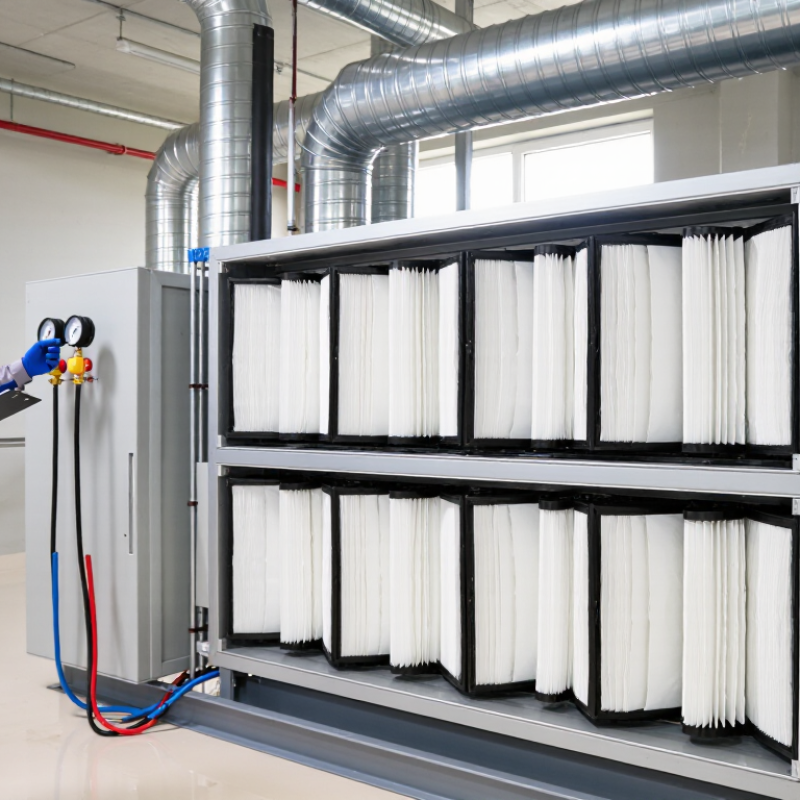
A Filter Bag captures airborne particles as return air passes through its fabric pockets. The pockets increase surface area without requiring a large cabinet. Fine dust collects on the fibers and gradually forms a dust cake. This layer improves particle capture, but excessive buildup restricts airflow.
In commercial HVAC service, differential pressure is a practical indicator of filter condition. A rising reading often means the Filter Bag is loaded with dust. The fan may then work harder, increasing energy use and reducing airflow at occupied spaces. I have seen neglected filters produce weak ventilation, uneven temperatures, and dusty supply grilles. Airflow tells the truth.
Correct installation also protects filter life. Each bag should sit evenly in its frame, without gaps, folds, or damaged stitching. Air can bypass a poorly seated filter and carry dust toward coils and fans. Moisture creates another problem. Damp dust can harden inside the fabric and become difficult to remove. Control leaks around access doors and inspect nearby drain pans regularly.
A replacement schedule should reflect actual building conditions. Construction dust, crowded spaces, and extended operating hours can shorten service life. Clean offices may allow longer intervals, but fixed calendars are not always reliable. Record pressure readings, inspection dates, and visible dust levels. Review those records with a qualified technician. One overlooked detail can change the result.
Commercial HVAC bag filters rarely fail because of age alone. Dust loading is usually the main cause. Construction debris, textile fibers, and outdoor pollution can block an Air Filter Bag within weeks. ASHRAE Standard 52.2-2017 measures filtration efficiency across particle sizes, but it does not promise a fixed service life. A high MERV rating may improve capture while increasing resistance.
Pressure drop deserves close attention. The U.S. Department of Energy’s Federal Energy Management Program identifies clogged filters as a common cause of restricted airflow and unnecessary fan energy. A rising differential pressure reading often reveals trouble before occupants notice hot or cold zones. However, many facilities still replace filters by calendar date. That practice is convenient, but not always intelligent.
Moisture creates another serious risk. Condensation can harden dust, support microbial growth, and weaken filter media. ISO 16890 testing also shows that efficiency depends on particle size and loading conditions, not one simple percentage. Poor sealing causes air to bypass the filter, while excessive fan speed can deform bags and accelerate wear. Inspect the frame, gasket, clamps, and nearby coils during every change. Small gaps matter. I have seen a clean filter perform badly because its frame was misaligned. Maintenance records should include pressure drop, operating hours, dust conditions, and humidity. Some assumptions will be wrong. That is why measured data should guide the next replacement interval.
Identifying factors that shorten bag filter service life. The score represents relative engineering risk: 1 = low impact and 5 = very high impact. Actual service life depends on airflow, dust concentration, humidity, filter design, and maintenance practices.
Excessive airflow, high dust loading, moisture, poor filter fit, and delayed maintenance can increase pressure drop and cause earlier bag filter replacement. Controlling these conditions helps extend filter life.
Extending bag filter life starts with choosing the correct material, not simply selecting the highest efficiency rating. Synthetic media often resist moisture and maintain shape in busy commercial HVAC systems. Fiberglass can offer stable airflow, but it may hold less dust in some applications. A practical decision considers dust type, humidity, airflow, and replacement access.
ASHRAE Standard 52.2 evaluates filters by particle-size efficiency and assigns MERV ratings. MERV 13, commonly recommended by public health guidance when systems can handle it, targets finer particles than lower-rated filters. The U.S. Environmental Protection Agency’s Guide to Air Cleaners in the Home advises using MERV 13 or the highest compatible rating. Compatibility matters. A dense filter can increase pressure drop and reduce delivered airflow.
In field inspections, premature loading often comes from construction dust, outdoor pollution, or undersized filter surfaces. A deeper bag configuration can provide more media area and longer service intervals. ISO 16890, referenced across international filtration practice, reports performance using particulate matter bands rather than a single overall rating. This helps engineers match media to real exposure conditions. Still, ratings are laboratory results. They do not guarantee equal performance in every air-handling unit. Record pressure drop, inspect seams, and review fan capacity before upgrading. The best choice is sometimes a slightly lower rating with reliable airflow and scheduled replacement.
Correct installation begins with airflow direction. Match the filter’s arrow with the air stream, then keep each pocket vertical and fully expanded. Collapsed pockets create uneven loading and reduce usable surface area. The housing should hold the filter squarely, without twisting the frame or crushing the gasket.
Small errors matter. Even a narrow bypass gap can carry unfiltered air around the media.
ASHRAE Standard 52.2 evaluates filter performance under controlled airflow, but field installation decides the real result. ISO 16890 measures efficiency across particle sizes, including ePM1, ePM2.5, and ePM10. These ratings do not replace airflow checks. Technicians should record clean-filter pressure drop and compare it with the system’s final limit. Eurovent 4/23 also emphasizes annual energy performance, not initial pressure drop alone. A lower starting resistance can be valuable, if filtration remains suitable.
I have seen filters blamed for comfort complaints when the frame was leaking. I used to make that mistake too. The fan may run harder, while occupied zones still receive weak airflow. U.S. Department of Energy fan guidance applies the affinity law: fan power can vary approximately with the cube of speed. Therefore, a small airflow correction may increase electrical demand quickly. Check the fan belt, damper position, and coil cleanliness before changing the filter. Leave enough access space for inspection. Record readings monthly, though high-dust areas may require weekly checks. Perfect installation is rare. Careful verification is better.
A preventive filter schedule protects airflow, equipment, and indoor comfort. It should not rely on guesswork. ASHRAE Standard 180 requires documented inspection and maintenance for commercial HVAC systems. The standard also supports adjusting intervals to building conditions. A busy clinic needs closer attention than a quiet office.
Inspect bag filters monthly during normal operation. Check them weekly in workshops, retail spaces, or buildings near construction. Look for dark loading, collapsed pockets, moisture, and air bypass around the frame. Record the date, filter size, measured pressure drop, and operating conditions. The U.S. Department of Energy reports that HVAC systems can represent about 40% of commercial building energy use. A clogged filter can increase fan resistance and waste energy.
Use the manufacturer’s final pressure-drop limit as the replacement trigger. Do not replace filters only because three months have passed. Conversely, waiting for visible dust is a weak practice. Many facilities review readings every 30 days and replace filters twice yearly, then revise the interval using real data. Keep spare filters sealed and stored indoors. One overlooked detail: installation errors can shorten service life more than dust. A technician should confirm airflow direction, tight seating, and clean access panels after every change. The schedule may need refinement. That is normal.
Commercial HVAC filter life depends more on maintenance habits than on the filter alone. A neglected bag filter loads with dust, fibers, and moisture. Its resistance then rises, forcing the fan to work harder. ASHRAE Standard 52.2 evaluates both particle removal efficiency and pressure drop, making both measurements important during service.
Inspect the filter section monthly, especially near loading docks, workshops, and construction areas. Look for dark pleats, damaged pockets, loose seals, and bypass marks on the frame. A simple pressure reading can reveal hidden wear before airflow complaints appear. The U.S. Environmental Protection Agency reports that indoor pollutant levels can be two to five times higher than outdoor levels. Poor maintenance can worsen that difference.
Replace filters according to measured resistance, not only the calendar. Many facilities change them too early, while others wait until airflow becomes visibly weak. Both choices waste money or reduce comfort. For a Hepa Bag Filter, verify gasket compression and cabinet cleanliness during every change. Fine media can perform well but may punish a weak fan system with higher pressure loss. The U.S. Department of Energy identifies fan energy as a major part of commercial HVAC consumption, so pressure control matters. Keep a basic log of pressure, runtime, dust conditions, and replacement dates. It will not be perfect. However, it can expose seasonal patterns and correct maintenance decisions.
| Maintenance Dimension | Recommended Practice | Typical Commercial HVAC Interval | Key Measurement or Trigger | Expected Effect on Filter Wear | Practical Result |
|---|---|---|---|---|---|
| Initial filter inspection | Check the bag filter for uneven loading, damaged seams, collapsed pockets, moisture, and air bypass. | At commissioning and during every scheduled inspection | Visible defects, loose mounting, or dust accumulation downstream | Prevents premature damage caused by mechanical stress and unfiltered airflow. | Early detection of installation and handling problems |
| Differential-pressure monitoring | Record pressure drop across the filter bank instead of replacing filters only by calendar date. | Weekly during dusty periods; monthly during stable operation | Trend in Pa or in. w.g.; follow the filter manufacturer’s final pressure-drop limit | Reduces unnecessary replacement and avoids excessive loading that increases airflow resistance. | More consistent replacement timing and easier maintenance planning |
| Filter replacement threshold | Replace when the approved final pressure drop is reached, airflow is insufficient, or the filter is damaged or wet. | Common planning range: approximately 3–9 months, depending on dust load and operating hours | Pressure drop, airflow, indoor-air-quality requirements, and filter condition | Avoids both premature disposal and excessive media loading. | Balanced filter life, airflow, and fan-energy performance |
| Filter rack sealing | Inspect gaskets, retaining clips, tracks, and frame joints; seal gaps that permit air to bypass the filter. | At every filter change and at least quarterly | Visible gaps, damaged gaskets, dust tracks, or leakage around the frame | Prevents concentrated airflow through the filter edges, which can cause localized wear and dust penetration. | Improved filtration consistency and longer usable media life |
| Airflow and fan control | Verify that supply-air volume and fan speed remain within the air-handler design range. | Quarterly and after major HVAC adjustments | Measured airflow, fan speed, static pressure, and abnormal vibration | Limits excessive air velocity and pressure stress on bag pockets and stitching. | Reduced mechanical fatigue and more stable system performance |
| Upstream coil and prefilter cleaning | Clean upstream screens, coils, louvers, and prefilters so the bag filter receives a more uniform dust load. | Inspect monthly; clean according to measured fouling and site conditions | Visible fouling, pressure drop, coil-face blockage, and outdoor-air dust level | Reduces rapid dust accumulation and prevents localized loading on the first filter pockets. | Longer service intervals and improved heat-transfer performance |
| Moisture and condensate control | Inspect drain pans, traps, humidifiers, and coil sections for leaks or carryover before the filter bank. | Monthly and after high-humidity or heavy-rain events | Wet media, biological growth, standing water, or condensate carryover | Prevents media deformation, microbial growth, and sudden pressure-drop increases. | Fewer emergency replacements and safer air-handler operation |
| Correct filter installation | Install the filter in the correct airflow direction and fully support each pocket without crushing or folding it. | At every replacement | Airflow arrow, pocket position, frame fit, and retaining hardware | Avoids distortion, vibration, uneven loading, and premature seam failure. | Reliable filter geometry and lower risk of bypass leakage |
| Cleaning and handling procedures | Do not shake, vacuum, wash, or reuse disposable bag filters unless specifically approved for that filter construction. | During every service visit | Torn media, disturbed dust cake, damaged pockets, or improper storage | Protects the filter structure and prevents released dust from entering the clean-air side. | Fewer installation-related failures and better indoor-air quality |
| Maintenance recordkeeping | Log installation date, pressure drop, airflow, operating hours, inspection findings, and replacement reason. | Update at every inspection and filter change | Pressure-drop trend and service-life history by air-handling unit | Identifies recurring causes of premature wear and supports condition-based maintenance. | More accurate budgets, fewer unexpected shutdowns, and optimized replacement intervals |
| Planning note: Filter service life varies with outdoor-air quality, construction activity, occupancy, operating hours, airflow, humidity, and filter efficiency. Use the approved final pressure-drop limit and the HVAC system’s airflow requirements as the primary replacement criteria. | |||||
Extending bag filter life starts with evidence, not guesswork. In a commercial HVAC room, record differential pressure under consistent airflow conditions. A rising reading often signals dust loading, poor prefiltration, or restricted ducts. Check gauges during normal occupancy and peak demand. Note the date, fan speed, airflow, and operating hours. Small details matter.
Inspect the filter face and clean-air side during every service visit. Look for uneven dust patterns, damp areas, frayed stitching, and collapsed pockets. A dark band near the frame may indicate bypass, not a fully loaded filter. Photograph the same section each time. Record the Bag Filter Material, dimensions, pocket count, and installation direction. These details help technicians compare wear against actual operating conditions. They also show whether replacement happened too early.
Use a simple log linking pressure readings to filter changes and indoor events. Construction dust, humidity spikes, and unusual occupancy can explain sudden loading. If pressure rises quickly, check seals and nearby access panels before replacing the filter. That step is easy to miss. Do not clean a disposable bag filter unless its design permits cleaning. I have seen teams rely on one threshold and overlook airflow loss below it. Review trends with maintenance staff monthly, question abnormal readings, and adjust inspection intervals when evidence supports it. The record should be clear enough for another technician to trust.
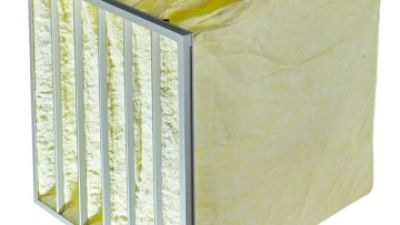
China fiberglass pocket filters offer a practical balance of filtration performance, fire safety, and factory-direct value for modern HVAC ventilation systems. According to the U.S. Environmental Protection Agency, indoor pollutant levels can be two to five times higher than outdoor concentrations, highlighting the importance of dependable air filtration in commercial and industrial buildings. Manufactured from specially engineered fine glass fiber, these bag-style filters provide a large dust-holding area while supporting stable airflow and longer service intervals.
When choosing top suppliers in China, buyers should evaluate fiber uniformity, pocket welding quality, frame strength, airflow resistance, and documented testing. Filters tested to UL 900 Class 2 requirements are suitable for enterprises that need recognized flame and smoke performance. Buyers should also request efficiency data based on ASHRAE 52.2 testing, which classifies air filters through the Minimum Efficiency Reporting Value (MERV) system. Consistent laboratory documentation, production traceability, and customized dimensions are essential indicators of a reliable factory solution.
These fiberglass pocket filters are designed for commercial air-conditioning units, industrial ventilation equipment, and as pre-filters for cleanroom air-handling systems. A properly selected pocket configuration can capture airborne particles efficiently without placing unnecessary demand on fans. Factory suppliers that provide design consultation, sample validation, quality inspection, and export-ready packaging can help HVAC contractors and facility operators achieve dependable air quality across diverse operating environments.
Dust loading is usually the main cause. Construction debris, textile fibers, and outdoor pollution can block filters within weeks. Calendar-based replacement may be convenient, but it can be inaccurate. Measure actual conditions.
A rising differential pressure often indicates clogging before occupants notice comfort problems. Compare readings with the system’s final pressure limit. Record pressure monthly, or weekly in dusty areas. Small changes matter.
Yes, higher efficiency can increase resistance. The filter may capture more particles while making the fan work harder. Check airflow and energy demand together. Efficiency is not the whole answer.
Match the filter arrow with the air stream. Keep every pocket vertical and fully expanded. Collapsed pockets reduce usable surface area and cause uneven dust loading. Recheck the position carefully.
Air can pass around the filter through small frame or gasket gaps. The media may look clean while unfiltered air enters the system. Inspect the frame, gasket, and clamps during every change. Small gaps matter.
Condensation can harden dust, support microbial growth, and weaken filter media. Check nearby coils and damp areas during inspections. Moisture problems may be hidden behind clean-looking surfaces. Do not assume dryness.
Check the fan belt, damper position, coil cleanliness, frame alignment, and housing seals. Excessive fan speed can deform filter pockets and accelerate wear. I once blamed the filter incorrectly. The frame was leaking.
Record pressure drop, operating hours, dust conditions, humidity, and airflow observations. Use these readings to adjust the replacement schedule. Some assumptions will be wrong. Measured data is safer.
Extending bag filter life in commercial HVAC systems begins with understanding how the filter captures airborne particles while maintaining proper airflow. What Is The Typical Lifespan Of A Bag Filter In Commercial Hvac? In practice, service life varies according to dust loading, operating hours, indoor air quality, humidity, filter material, and system design. Choosing the correct filter dimensions, pocket configuration, and efficiency rating helps prevent excessive resistance and premature wear. Proper installation is equally important, since gaps, damaged frames, or incorrect airflow direction can reduce performance and shorten service life.
A preventive maintenance program should include regular inspections of filter surfaces, seals, pressure differences, fan performance, and surrounding components. Replacing filters according to actual condition rather than using a fixed date alone can improve efficiency and reduce unnecessary costs. Cleaning coils, checking ductwork, controlling unusual particle sources, and maintaining stable airflow can also reduce filter loading. Keeping detailed records of installation dates, pressure readings, inspection results, and replacement reasons allows facility teams to identify trends and establish a more accurate replacement schedule.