Leave Your Message
0%

Look, when you're picking an H13 Hepa Filter supplier from a Chinese factory, don't get swayed by slick product photos. It really comes down to evidence. Sure, H13 filters are built for demanding air cleaning, but the actual performance depends on the whole filter setup and how it's installed. So ask suppliers directly for recent test reports, efficiency data, pressure drop readings, and the test standard they used. Also, check if each report actually names the tested model, media, frame, and sealing method. Those small details make a big difference. A clean label can look great, but honestly, it doesn’t prove the product’s actually consistent behind the scenes.

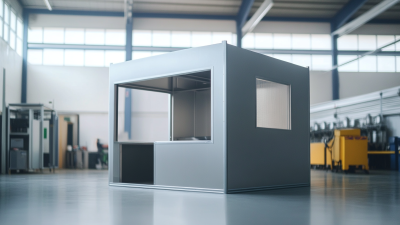
Ask for clear photos of pleat spacing, separators, edge seals, and the finished packaging. Then double-check that those details actually match the samples and specs you’ve been given. Before you even ask for a quote, it’s worth talking through media options, frame materials, dimensions, allowable pressure drop, production capacity, and lead times. A decent supplier should be able to answer technical questions on the spot and be upfront about any limitations. And when you’re comparing factories, use the same spec across the board—don’t just shop by price. So if you're checking out a Paint Booth Ceiling Filter Supplier China, just remember: ceiling-filter needs and HEPA filter needs are not the same—don't treat them like they're interchangeable. Definitely ask for a sample before committing. Then check the dimensions, workmanship, and documentation against what your equipment actually requires. It's a simple step, but it can save you a real headache later. It’s worth asking the supplier how they handle batch IDs, damaged packaging, and repeat orders. Let’s be honest—no supplier can eliminate every sourcing risk. I wouldn’t put all my faith in a single report or a smooth sales pitch. A factory visit or an independent inspection can turn up gaps you’d never catch from online listings, though even that doesn’t guarantee they’ll stay consistent later. So the smart move is to combine documented checks, clear written specs, and expectations that are actually realistic. That way, you can make a much more informed choice.
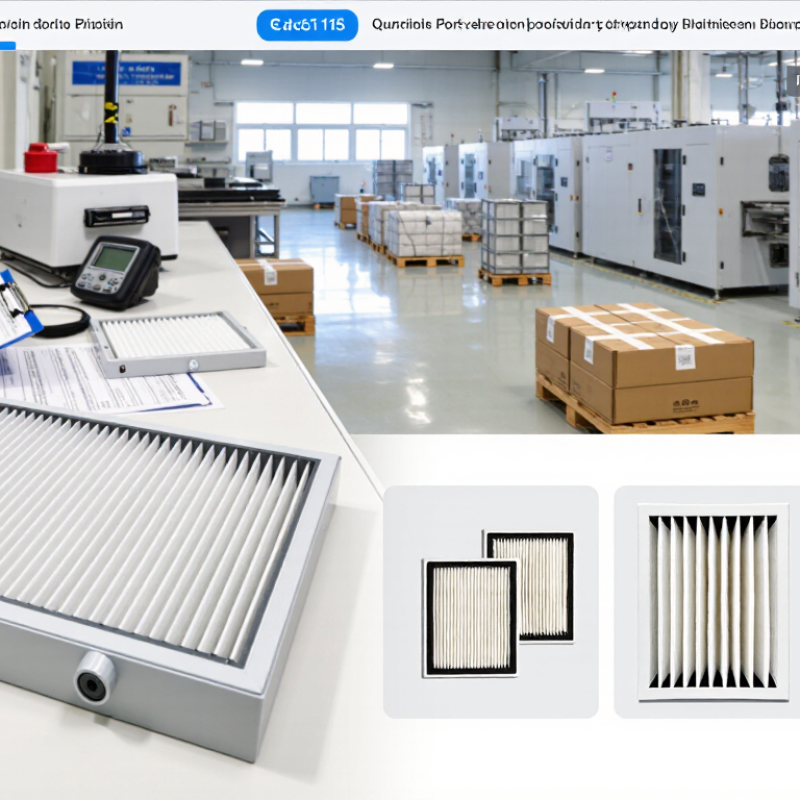
How to Choose Top H13 Hepa Filter Suppliers China Factory?

Understand the H13 HEPA Filter Classification

An H13 rating is a measured performance class, not just a label on a frame. EN 1822-1:2019 sets H13 minimum overall efficiency at 99.95% at the most penetrating particle size (MPPS); its local efficiency threshold is 99.75%. ISO 29463-1:2017 provides a related international classification framework. The test identifies the filter’s MPPS, which can differ by filter design. H14’s overall threshold is 99.995%. That gap matters when comparing specifications. Small numbers, big consequences.

When evaluating a Hepa Filter supplier, ask for the test report covering the exact model and size, not a general product sheet. Check the stated airflow, pressure drop, test method, and scan-test results. A tightly sealed filter can still perform poorly if installation leaves gaps around the frame. I would not treat a clean datasheet as proof; seals and assembly details are easy to overlook. Also compare operating conditions with your intended use, because pressure drop may rise as the filter loads with particles. These checks make the H13 classification more meaningful than a percentage printed in a catalogue.

Define Your Filtration and Application Requirements

Before contacting an H13 HEPA filter supplier, define what the filter must capture and where it will operate. List the target particles, required airflow, operating hours, and acceptable pressure drop. A laboratory bench and a dusty production line rarely need identical configurations. Measure the filter opening, including frame depth and gasket space. Measure before ordering. Ask which test method verifies the H13 efficiency, and request the corresponding test documentation for the offered model. An Industrial Hepa Filter should suit the actual system, not just match a grade on a quotation.

Application conditions matter, too. Record temperature, humidity, airflow direction, and any exposure to cleaning chemicals. Check whether the fan can handle the filter’s initial and final resistance; otherwise, airflow may fall as the filter loads. Specify frame material, seal type, and whether a prefilter is already installed. A useful supplier discussion includes a drawing, operating data, and clear acceptance criteria. A common planning mistake is to focus on particle efficiency while overlooking installation clearances. Even a detailed specification can miss something, so confirm dimensions and operating assumptions against the equipment before approving production.

How to Choose Top H13 HEPA Filter Suppliers China Factory? — Define Your Filtration and Application Requirements

Requirement Dimension What to Define Example Specification or Check What to Confirm with the Supplier
Filter classification Required HEPA grade and the applicable test standard. H13 under EN 1822: minimum integral efficiency of 99.95% at the most penetrating particle size (MPPS). Request a test report identifying the standard, filter model, airflow, MPPS efficiency, and individual test result. Do not treat a general material certificate as a finished-filter test.
Application and risk Where the filter will be installed and what process or people it protects. Examples include cleanroom terminal filtration, pharmaceutical areas, laboratory ventilation, and equipment enclosures. Each application may require different controls. Confirm whether the application requires an individual leak test, documented traceability, special handling, or additional validation by the system owner.
Airflow requirement Required airflow through each filter and the operating conditions. State the design airflow in m³/h or L/s. For example, 500 m³/h equals approximately 139 L/s; this is a requirement example, not a universal H13 rating. Ask for the filter’s rated airflow and pressure-drop data at that airflow. Confirm the data applies to the exact size and construction being quoted.
Face area and air velocity Available installation area and the intended airflow distribution. Calculate average face velocity as airflow divided by effective face area. A larger face area can reduce velocity at the same airflow, subject to system design. Confirm the supplier’s stated face area, airflow basis, and recommended operating range; check compatibility with the fan and housing.
Overall dimensions Nominal width, height, depth, gasket location, and mounting arrangement. Provide dimensions in millimetres, for example 610 × 610 × 150 mm, only if that size fits the actual housing. This is an illustrative size, not a standard requirement. Request a dimensioned drawing, including tolerances, frame details, seal position, and any knife-edge or gel-seal interface before production.
Initial pressure drop Maximum acceptable clean-filter resistance at the specified airflow. Specify a maximum in Pa at the required airflow rather than comparing pressure-drop figures measured at different airflows. Request a pressure-drop curve or test point for the exact filter configuration. Also establish the system’s final resistance or replacement criterion.
Media and construction Media type, separator or separatorless design, frame material, and sealant. Options can include glass-fibre media or synthetic media, with construction selected for the operating environment and system requirements. Confirm material compatibility with temperature, humidity, cleaning agents, and any process contaminants; request material declarations where needed.
Operating environment Temperature, relative humidity, moisture exposure, and any chemical or cleaning exposure. Provide the expected normal and peak conditions, including intermittent washdown or chemical exposure if applicable. Ask for documented operating limits for the complete filter assembly, not only for the Filter Media.
Leak testing and traceability Required inspection level, identification, and records for each unit or batch. Define whether each finished filter requires an individual scan or leak test and what identification must appear on the product and report. Agree on acceptance criteria, test method, report format, serial or batch identification, and record retention before placing an order.
Packaging and transport Protection required during storage and shipment. Specify clean, damage-resistant packaging, orientation markings, and any moisture or handling precautions relevant to the route. Confirm packing details, export documentation, storage instructions, lead time, and the process for reporting transport damage.
Supplier qualification Ability to manufacture the specified design consistently and provide supporting evidence. Evaluate production controls, calibration records, inspection procedures, change control, and sample approval against your purchase specification. Request relevant quality documents and a sample or pre-production approval process. Verify that quoted specifications match the final drawing and test requirements.

Note: H13 efficiency classification is defined by the applicable test standard and test conditions. Airflow, dimensions, pressure drop, materials, and operating limits are product-specific; confirm them for the exact filter and installation before purchase.

Verify Supplier Credentials and Factory Capabilities

When comparing H13 HEPA filter suppliers in China, verify documents against the actual factory, not just the trading office. Request a current quality-management certificate, its issuing body, expiry date, and covered production address. Then check whether the supplier makes filters onsite or outsources key steps, such as pleating, frame assembly, and final testing. Paper is not proof.

Ask for recent batch test reports and confirm they identify the filter model, test method, and measured results. EN 1822-1:2019 sets H13 minimum overall efficiency at 99.95% at the most penetrating particle size; its minimum local efficiency is 99.75%. ISO 29463-1:2017 provides a related framework for classifying and testing high-efficiency filters. A capable factory should explain how its aerosol challenge and leak-scan equipment verify those values. Ask to see a test in progress, not only a polished certificate.

Walk the production floor, if possible. Look for controlled media storage, clean assembly areas, calibrated instruments, and traceable batch records. Ask how rejected units are isolated and how test equipment calibration is logged. These details can reveal more than a showroom. Still, one visit cannot prove consistent output; request reports from several production batches and compare them. If explanations change between sales and quality staff, pause and investigate.

Evaluate Materials, Testing, and Quality Controls

How to Choose Top H13 Hepa Filter Suppliers China Factory?

Evaluate Materials, Testing, and Quality Controls

When assessing a Commercial Hepa Filter supplier, inspect the media, frame, and seals—not just the specification sheet. Ask whether the filter uses consistent glass-fiber media and whether pleat spacing stays even across the pack. Uneven pleats can restrict airflow. Look closely at corners, where sealant gaps may become leak paths. A clean sample helps, but one sample cannot prove batch consistency.

Ask for test records tied to the exact model and production lot. EN 1822-1:2019 sets H13’s overall efficiency at a minimum of 99.95% at the most penetrating particle size (MPPS); local efficiency is at least 99.75%. These figures are more useful than a vague “high efficiency” claim. Request the MPPS test result, aerosol method, scan-test record, and instrument calibration status. ISO 29463 also provides a framework for classifying and testing high-efficiency filters. Check that documents identify the tested unit, not only a product family.

Quality control shows in small details. Do operators check frame dimensions, gasket compression, and media-pack integrity before shipment? Ask how failed units are quarantined and whether corrective actions are recorded. A factory tour can reveal real processes, though a tidy inspection area is not proof of consistent output. I would compare several lot records and ask one uncomfortable question: what happens when a filter fails? The answer should be specific.

Compare Customization, Lead Times, and Total Costs

When comparing H13 HEPA filter suppliers in China, treat customization, timing, and cost as one decision. Share the required dimensions, airflow, initial pressure drop, frame material, and sealing method before requesting a quote. Ask whether the supplier can provide a sample made to the same drawing, not a close substitute. Small gaps matter. Request documented test results for the exact filter configuration, and confirm how measurements were taken. A change in pleat depth can affect both resistance and fit.

Lead times should be separated into sample approval, material preparation, production, inspection, and shipment. Ask for calendar dates and the assumptions behind them, especially for nonstandard frames or seals. A factory schedule may not include approval delays. Compare total landed cost, not just unit price. Include tooling, testing, export packing, freight, and the cost of replacing filters that fail incoming checks. Request a written quotation with quantities, tolerances, payment terms, and a validity period. Then compare quotes line by line. The cheapest option may still be unsuitable if its test scope or delivery plan is vague.

Assess Samples, After-Sales Support, and Supplier Reliability

When assessing H13 HEPA filter suppliers in China, request a production sample, not only a catalogue sheet. Check the frame dimensions, gasket compression, pleat spacing, and pressure drop against your equipment. Ask for a scan-test report tied to the sample’s serial or batch number. EN 1822-1:2019 specifies a minimum integral efficiency of 99.95% for H13 filters at the most penetrating particle size. A certificate alone cannot show whether the delivered filter fits your hood. Details matter.

For a Hepa Filter For Laminar Flow Hood, test the sample in the actual housing if possible. Record airflow and pressure readings before and after installation, then inspect for bypass around the gasket. ASHRAE’s 2023 Position Document on Filtration and Air Cleaning emphasizes that filtration performance depends on proper selection and installation, not just the filter rating. One short trial is useful, but it may not reveal long-term variation. Keep that limitation in mind.

After-sales support should be specific. Ask who handles technical questions, how quickly they respond, and what evidence they need for a defect claim. Reliable suppliers can provide batch traceability, inspection records, replacement procedures, and clear lead times. Paperwork matters. Check whether support continues after shipment, especially when a filter arrives damaged or its measured resistance differs from the approved sample. A vague promise is not a service plan.

Activated Carbon Pleated Panel Filters: A Guide to China Supplier Factory Solutions

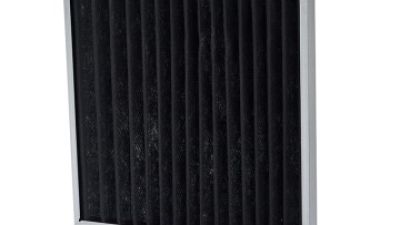
Activated carbon pleated Panel Filters combine the dust-holding structure of pleated media with activated carbon’s ability to adsorb many odors and gaseous contaminants. The pleated design provides a broad filtration area in a compact panel, helping support steady airflow while capturing airborne particles. Carbon adsorption adds another layer of air treatment, making these filters a practical option for spaces where both particulate control and fresher air are priorities.

Working with a China supplier factory can give buyers access to production capacity and specifications suited to different air-handling systems. Filters can be selected according to dimensions, media configuration, airflow needs, and the intended operating environment. Typical applications may include commercial buildings, offices, and other indoor facilities that need dependable ventilation filtration. For local and international suppliers, clear communication about performance requirements, installation conditions, and replacement schedules helps ensure the selected filter is appropriate for the system. These activated carbon pleated panels offer a versatile solution for upgrading air filtration with combined particle capture and odor adsorption.

FAQS

Which supplier documents should I check?

Check a current quality certificate, its issuing body, expiry date, and covered factory address. Paper is not proof.

How can I confirm the supplier makes filters onsite?

Ask who handles pleating, frame assembly, and final testing. If possible, watch these steps on the production floor.

What H13 test results should I request?

Request records showing the exact model, tested unit, method, and measured results. EN 1822-1:2019 sets minimum overall efficiency at 99.95% at MPPS.

What factory details can reveal quality controls?

Look for controlled media storage, clean assembly areas, calibrated instruments, and traceable batch records. Ask how failed units are isolated.

What should I inspect on a filter sample?

Check frame dimensions, even pleats, gasket compression, and sealant at the corners. Small gaps may create leak paths.

Should I test the sample in its intended housing?

Yes, if possible. Record airflow and pressure readings, then check for bypass around the gasket. One short trial has limits.

How can I assess consistency between production batches?

Compare test reports from several lots, not just one polished certificate. I might still miss variation, so keep checking.

What should reliable after-sales support include?

Look for clear technical contacts, response times, batch traceability, and replacement procedures. “We will help” is not a service plan.

Conclusion

Choosing Top H13 Hepa Filter Suppliers China Factory requires more than comparing prices. First, understand what H13 classification means and define the required filtration performance, airflow, dimensions, operating conditions, and application. Then verify each supplier’s credentials, production capacity, and ability to maintain consistent manufacturing standards. Ask about filter media, frame materials, testing procedures, and quality controls, and request relevant documentation to support product specifications.

Compare customization options, production lead times, shipping arrangements, and total costs rather than focusing on unit price alone. When possible, evaluate samples against your requirements before placing a larger order. Also consider communication, after-sales support, and the supplier’s track record for dependable delivery and problem resolution. A careful, evidence-based evaluation can help you select a factory suited to your technical needs and long-term supply expectations.


LJF Technical Team

LJF Technical Team

Oliver is a dedicated marketing professional at Guangzhou LJF Purification Equipment Co., Ltd, where he harnesses his expertise to elevate the company's presence in the air purification industry. With a profound understanding of the intricacies of air purification technologies, Oliver plays a......
Previous Where To Buy Laminated G3 G4 Air Filter Media From China?