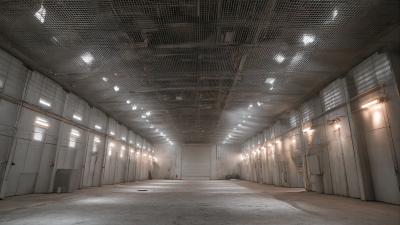
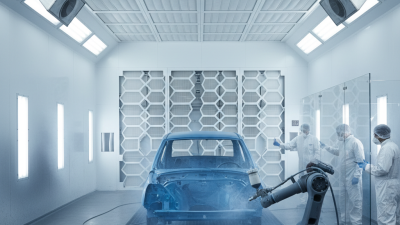
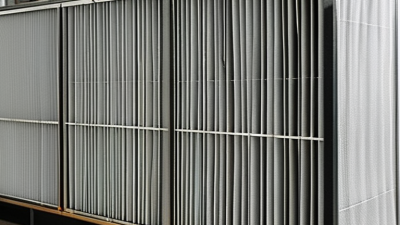
So, you’re wondering what exactly a fiberglass Paint Stop Filter roll is used for, right? Well, even in 2026, that’s still a pretty common question if you’re running a workshop or finishing shop dealing with airborne paint overspray. Basically, a paint stop filter roll is usually cut to fit into an exhaust filter frame or the intake area of a spray booth. As air flows through it, the randomly arranged glass fibers trap the tiny droplets of paint, helping to cut down on buildup in the ducts and ventilation equipment downstream. You’ll mainly see these used in spray-painting setups where overspray tends to escape and needs catching before the air exhausts further into the system.
Now, the details really matter here. Sometimes, a filter might look clean but still be loaded with paint—so don’t judge a book by its cover! And if the edges aren’t fitted properly, air can sneak past the Filter Media altogether. It’s a good idea for operators to keep an eye on pressure readings, airflow, and any visible signs of paint buildup. Also, be sure to follow the manufacturer’s guidelines for replacing the filter. Remember, it’s not just about sticking in a roll—make sure it fits perfectly with your equipment.
And a quick heads-up: don’t treat the fiberglass roll as a substitute for proper booth design, good ventilation, or proper personal protective gear. The performance of these filters really depends on paint type, how much spray volume you use, airflow, and how everything’s installed. It’s important to follow the manufacturer’s instructions and your workplace procedures—because overlooking these details is pretty common and can cause problems.
This guide’s here to help you understand where fiberglass paint stop media fits into the whole filtration setup, what it’s good for protecting, and some practical tips for keeping everything running smoothly. Plus, it tackles a common question: when should you actually replace a filter? Well, the truth is, it depends on real conditions on the ground, not just the calendar. So, keep an eye on how it performs rather than just timing it.”
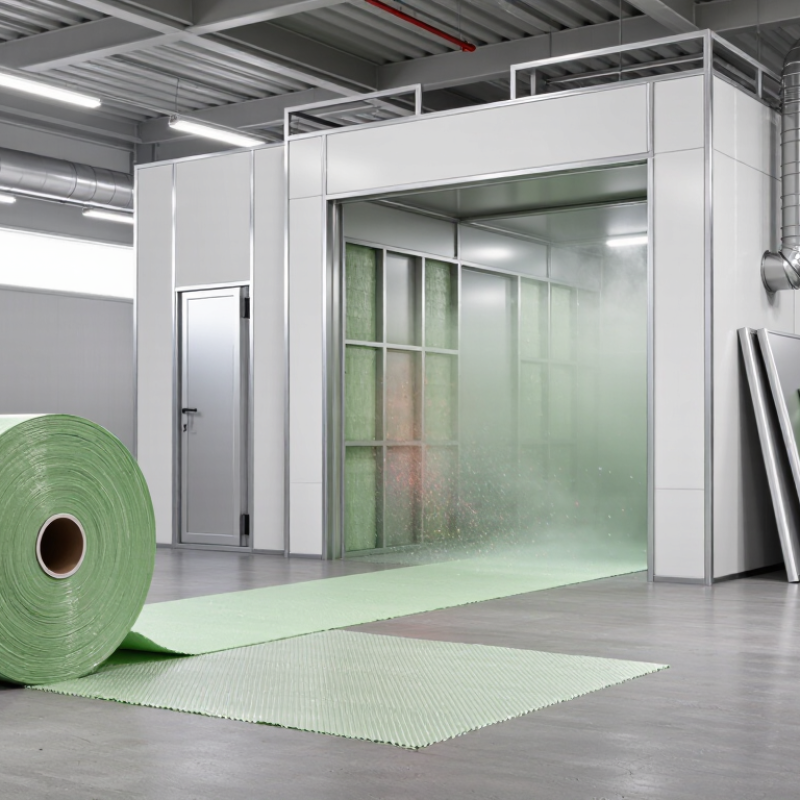
Fiberglass Filter Roll is a disposable, depth-loading medium used behind spray-booth work areas to catch paint droplets carried in exhaust air. Its loose glass-fiber layers create a winding path, so larger wet particles strike fibers and collect while air continues through. Think of a tacky mist meeting a pale, fibrous wall. It is not a solid barrier.
As paint builds up, the roll’s color and airflow resistance can change. Operators typically inspect it for uneven loading, damage, or paint breakthrough, then replace it according to booth conditions and the filter maker’s guidance. Some paint still escapes. A filter roll captures overspray; it does not replace proper ventilation or respiratory protection.
Airflow matters. OSHA’s spray-finishing ventilation requirements specify at least 100 feet per minute across the open face of certain spray booths (29 CFR 1910.94(c)(6)(ii)). That figure is a booth-airflow benchmark, not a filter-efficiency rating. A poorly fitted roll can allow air to bypass its edges, even when the media looks clean. This detail is easy to miss. A snug fit, suitable airflow, and routine checks help the filter perform as intended, though actual service life varies with paint type and spray volume.
How a fiberglass paint stop filter captures overspray in a spray booth
Paint stop filter rolls are installed in a spray booth’s exhaust path. Airborne paint droplets encounter the Fiberglass Media and collect within it, while air continues through the filter. As paint builds up, airflow can be restricted, so the filter should be checked and replaced according to booth conditions and the filter manufacturer’s guidance. The chart shows process order, not measured filter performance.
Fiberglass paint-stop rolls capture airborne paint droplets before booth exhaust reaches ductwork or fans. A Fiberglass Air Filter Roll is commonly fitted in dry-filter spray booths handling automotive refinishing, commercial vehicles, farm machinery, metal cabinets, and furniture finishing. These jobs create visible overspray. The filter catches it as air passes through the booth’s exhaust wall.
Grand View Research estimated the global paints and coatings market at USD 190.1 billion in 2023, reflecting broad demand across coated products. That figure does not measure filter use, but it helps explain why finishing operations span many industries. EPA’s AP-42 Section 4.2.2 documents emissions from automotive and light-duty truck surface coating, including spray operations where overspray control matters. In practice, operators choose roll depth and changeout timing around airflow, paint type, and loading. A saturated roll can restrict airflow. That detail is easy to miss.
These rolls suit booths applying liquid coatings, not sanding-dust collection or final high-efficiency filtration. They are often used as a replaceable first-stage arrestor in exhaust systems. Still, a roll is not a cure-all. Poor sealing at the frame edges can let paint bypass the media, while an unsuitable filter may load too quickly. Check the booth’s operating guidance and inspect the roll for uneven paint buildup.
A Paint Booth Filter Roll is used to capture wet paint overspray before it reaches exhaust ducts and fans. In daily booth work, the fiberglass roll catches visible mist while allowing air to move through the intake or exhaust area. It is commonly cut to fit filter frames, grilles, or replacement sections.
Thickness affects service life and airflow resistance. A thicker roll usually holds more overspray, but it can restrict air sooner when loaded. Thin media may maintain airflow initially, yet require more frequent changes. Density matters too. A dense fiberglass structure can improve capture of fine particles, but excessive density may increase pressure drop. The practical choice depends on coating type, spray volume, and booth design.
At about 250 feet per minute, airflow must remain steady across the filter face. Uneven velocity can leave cloudy areas, overspray buildup, or paint deposits near the fan. I have found that a clean filter can look acceptable while airflow is already weakening. That is easy to miss. Checking filter pressure, observing spray drift, and inspecting the exhaust side gives better evidence than appearance alone. A filter should be replaced before loading causes unstable airflow, though the exact point differs between waterborne and solvent-based coatings. The 250-FPM figure is a working reference, not a universal answer. Calibration and real booth measurements still matter.
Fiberglass paint stop filter roll captures airborne paint overspray before it reaches exhaust ducts, fans, or outdoor discharge points. Its layered fibers create depth loading, not a sealed surface barrier. In practical spray-booth maintenance, technicians often inspect the roll when pressure rises, fibers darken, or visible mist appears downstream. It is simple, but not foolproof.
ISO 16890 evaluates air-filter performance across particles from approximately 0.3 to 10 micrometres. The standard reports ePM1, ePM2.5, and ePM10 values after conditioning and efficiency testing. ASHRAE 52.2 uses twelve particle-size ranges between 0.30 and 10 micrometres. It assigns a MERV value from composite minimum efficiencies. These ratings are not interchangeable. Neither test fully represents wet paint loading, solvent vapour, or tacky coating droplets.
That distinction matters in 2026. A fiberglass roll may perform well as a coarse overspray prefilter, yet show limited relevance under an ISO or ASHRAE laboratory test. Field selection should include airflow, coating type, booth temperature, pressure-drop limits, and replacement intervals. Actual spray trials can reveal behaviour that datasheets miss. This is where specifications become imperfect. A reported efficiency number cannot replace visual inspection, differential-pressure readings, and documented maintenance records. Safety controls must also address vapours separately, because particulate fiberglass media does not remove gases.
Fiberglass paint stop filter roll captures overspray from spray booths, finishing rooms, and small coating areas. Its layered fibers trap wet paint particles before they reach exhaust ducts or fans. As the media loads, airflow resistance increases. The pressure difference appears on a manometer as inches of water gauge, or in. w.g.
A 0.5 in. w.g. reading equals about 125 pascals. Many operators use this level as a practical replacement trigger, especially when airflow visibly weakens. It is not a universal deadline. Clean-filter resistance, fan capacity, booth design, and coating volume change the result. ASHRAE Standard 52.2 requires pressure-drop measurements at defined test airflow, showing why readings need consistent conditions. The ASHRAE Handbook—HVAC Applications also recommends monitoring filter resistance rather than judging replacement by appearance alone.
Watch the gauge daily during heavy production. A gray surface may still pass air, while a damp, uneven section can restrict one part of the booth. NFPA 33’s ventilation requirements also support maintaining designed airflow in spray application areas. Do not wait for paint buildup to touch the exhaust side. That mistake is common.
The 0.5 reading may be useful, but the real question is whether airflow remains stable and safe. Record pressure before and after each roll change. Data beats guesswork, although imperfect records can still mislead.
A Paint Booth Exhaust Filter Roll captures paint overspray before air leaves the booth. Fiberglass media traps wet particles, dust, and coating residue during spraying. In daily use, technicians often notice a darker filter surface and rising airflow resistance. That visible change helps indicate when replacement is necessary.
Proper disposal supports OSHA and EPA paint-emissions compliance, but one procedure does not fit every facility. Used filters may contain solvents, pigments, or heavy-metal residues. Their classification depends on the coating, contamination level, and applicable local rules. Workers should review safety data sheets and waste determinations before moving the material. Do not shake dirty filters. That can release trapped particles into the work area. Wear suitable gloves, eye protection, and respiratory protection when required by the hazard assessment.
After removal, place filters in strong, closed containers or bags that prevent leakage and dust release. Label them with the contents, accumulation date, and relevant hazard information. Store them away from ignition sources and weather exposure. Use an authorized waste contractor when required, and retain pickup records, inspection logs, and disposal documentation. These records can show consistent control during an inspection. They can also reveal weak points. In practice, rushed replacement and unclear labels still happen. A documented routine is safer than memory. Inspect the Paint Booth Exhaust Filter Roll regularly, track pressure changes, and confirm that disposal practices match current environmental requirements.
| Dimension | Practical Information | Compliance and Disposal Considerations |
|---|---|---|
| Primary use | A fiberglass paint-stop filter roll is installed in a spray-booth exhaust path to capture airborne paint overspray before air leaves the booth. | It is one part of a ventilation and emissions-control system. It does not, by itself, establish compliance with every applicable air-emissions requirement. |
| How it captures overspray | Air passes through the fibrous media, where paint particles are retained. The filter is intended for paint overspray, not as a substitute for controls designed to remove solvent vapors or gases. | Use the filter type and installation specified for the booth and coating process; follow the equipment and filter instructions. |
| Typical locations | Commonly used in the exhaust filtration area of paint-spray booths and other spray-finishing systems that use compatible fiberglass media. | The applicable requirements depend on the operation, coating, facility, and federal, state, and local rules. |
| Inspection and replacement | Inspect the media and booth according to the manufacturer’s instructions and facility procedures. Replace filters when loaded, damaged, improperly seated, or when required by the system’s maintenance criteria. | Keep required maintenance or inspection records where applicable. Do not rely on a single universal replacement interval; loading varies with use and process conditions. |
| Safe removal and handling | Handle used media to minimize dust and contact with paint residues. Use the facility’s hazard assessment, safe-work procedures, and appropriate protective equipment. | OSHA requirements may include applicable spray-finishing, ventilation, hazard-communication, and PPE rules. Consult product safety information and site procedures; requirements vary by task and workplace. |
| Waste determination | A used filter can contain paint, solvents, or other process residues. Its waste status depends on the materials and process involved. | Under the U.S. Resource Conservation and Recovery Act rules, the generator must determine whether a waste is hazardous (40 CFR 262.11). Do not assume all used paint filters are hazardous or nonhazardous. |
| Collection and disposal | Collect spent filters in a manner that prevents residue release, and keep them separate when needed to support the waste determination and site procedures. | Follow applicable hazardous-waste, solid-waste, and local disposal rules. Do not burn filters or place them in ordinary trash unless the waste determination and local rules allow it. |
| Emission-compliance role | Effective overspray capture and timely maintenance can help a facility operate its spray-booth control system as intended. | EPA air rules may apply to particular coating operations, including some area-source spray operations. Confirm the facility’s applicable permit and regulatory requirements; correct filter disposal supports waste compliance but does not alone demonstrate air-emissions compliance. |
| Good practice in 2026 | Use compatible media, maintain the booth, train workers on handling procedures, and document filter changes and waste decisions as required by the facility’s program. | Verify current federal, state, and local requirements for the facility’s location and operation. This table is general information, not a site-specific legal determination. |
China-made HVAC air pre-filter media can play an important role in supporting indoor air quality, especially when selected and maintained according to recognized ventilation and filtration guidance. Reports and recommendations from ASHRAE and the EPA emphasize the value of controlling airborne particles through effective filtration, adequate ventilation, and regular system maintenance. As the first filtration stage, pre-filters capture larger contaminants such as dust, pollen, fibers, and pet dander before they enter deeper HVAC components.
Reliable suppliers and factories in China offer pre-filter media in various materials, thicknesses, and configurations for commercial, industrial, and residential systems. High-quality media can help reduce the particle load on finer filters, allowing advanced filtration stages to operate more efficiently and maintain stable airflow. This protective function may also help extend filter service life, reduce pressure buildup, and support consistent HVAC performance.
When evaluating pre-filter products, facility managers should consider particle-capture capability, airflow resistance, moisture tolerance, dimensional stability, and compatibility with the existing equipment. Regular inspection and timely replacement remain essential, since a loaded or damaged pre-filter can restrict airflow and reduce overall system efficiency. By combining dependable China-sourced pre-filter media with proper maintenance practices, building operators can create a stronger foundation for cleaner indoor air and more reliable HVAC operation.
It captures wet paint overspray before particles reach exhaust ducts, fans, or nearby surfaces. It catches visible mist.
Thicker media usually stores more overspray and lasts longer. However, loaded fibers can restrict airflow sooner.
Airflow may remain strong at first. The filter can load quickly and require frequent replacement.
Dense fiberglass can capture finer particles. Excessive density may increase pressure drop and weaken booth airflow.
No. It is a practical reference, not a fixed answer. Booth design, coating volume, and calibration still matter.
Check the pressure gauge, observe spray drift, and inspect the exhaust side. A clean-looking filter may still restrict airflow.
Many operators consider replacement near 0.5 in. w.g., or about 125 pascals. Actual conditions may differ.
No. Gray fibers may still pass air, while damp patches can create uneven resistance. Measurements provide better evidence.
Record pressure before and after each roll change. Include production volume and filter condition. Records are useful, but imperfect data can mislead.
Uneven velocity can leave cloudy areas, overspray buildup, or deposits near the fan. Stable airflow matters more than appearance alone.
What Is Fiberglass Paint Stop Filter Roll Used For? It is used in paint booths and finishing areas to capture airborne overspray before it reaches exhaust ducts, fans, or the surrounding environment. The fiberglass media traps paint particles through its layered structure while allowing air to pass through. In 2026, these rolls remain useful for automotive, industrial, furniture, and general coating applications where consistent airflow and clean exhaust systems are important.
Filter performance depends on thickness, density, installation quality, and an approximate airflow of 250 feet per minute. Testing concepts associated with ISO 16890 and ASHRAE 52.2 can help users understand particle-removal performance, although fiberglass overspray filters are primarily selected for paint capture. As paint builds up, resistance increases, and replacement may be needed when pressure drop approaches 0.5 inches water gauge or when airflow visibly declines. Proper handling and disposal of used filters also support OSHA and EPA paint-emissions compliance.