Choosing a DPA paint Pocket Filter supplier in China for the coating industry isn’t just about comparing prices—that’s definitely not enough. Coating lines tend to generate fine overspray, pigment dust, and have changing airflow loads, so you really need a filter that can handle all that without making things worse by increasing pressure loss. Usually,Paint Booth Pocket Filtersare the go-to choice for spray booths, prep areas, and controlled finishing rooms. The trick is that their performance relies on a few factors: the quality of the Filter Media, pocket depth, the strength of the frame, and how well everything seals up.
Now, when it comes to evaluating DPA filters, you can’t just rely on flashy claims. It’s really about the proof—asking for technical data, media specs, detailed drawings, and batch inspection records. A trustworthy supplier should be able to walk you through their efficiency ratings, initial resistance, recommended airflow, and how often you should replace the filters. And don’t forget to check samples—make sure they fit your existing housing, with no folded edges or loose seals. Because here’s the thing, a filter might look clean after a day or two, but airflow can already be dropping—that’s a detail that really counts. It impacts everything from booth performance and drying times to worker safety.
Experience also shows us that small issues can crop up over time. For instance, uneven stitching can shorten a filter’s lifespan, or a weak galvanized frame might bend during installation. Sometimes, if the pocket spacing is off, it can cut down on the usable filter area. No filter is perfect, of course, but the best ones are supported by actual testing, straightforward communication, and consistent manufacturing. It’s smart to compare samples under real coating conditions, then check pressure readings after installation. This way, you’re not just guessing—it helps make the whole process safer and more predictable.
Of course, initial specs might not be spot-on. Changes in airflow, paint types, humidity levels, or how you maintain things can all impact performance. A good supplier will understand this and be open to working together to refine the final setup. Ultimately, it’s all about trust, good info, and a little bit of trial and error that leads to reliable, efficient operations.
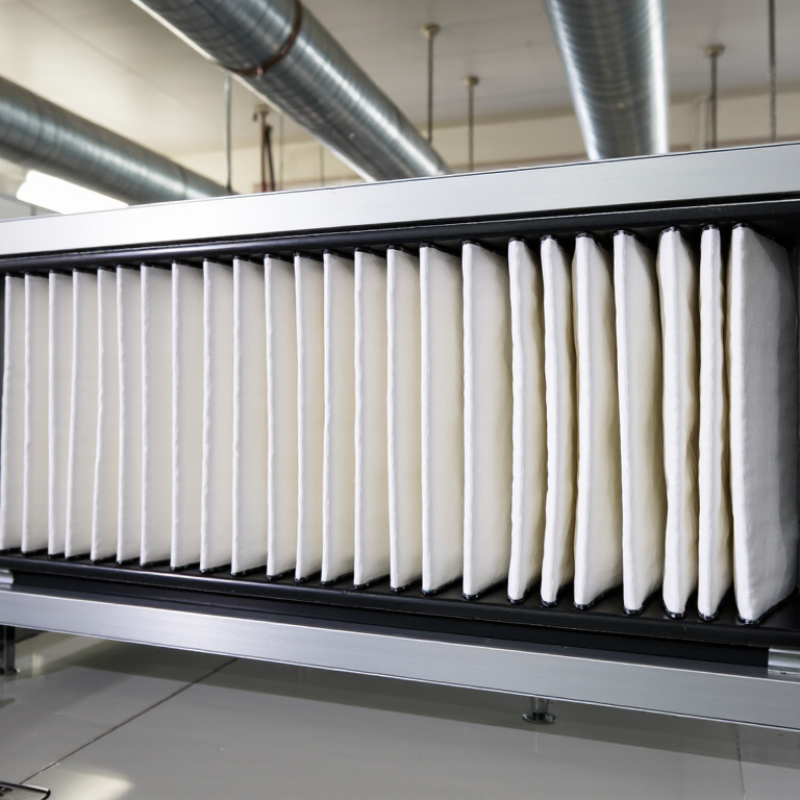
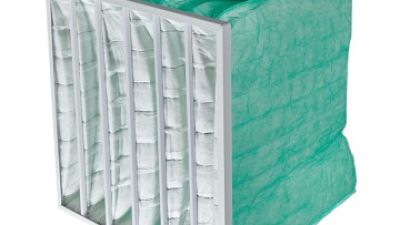
A DPA Paint Pocket Filteris a deep-pocket Air Filter designed for coating facilities. It typically uses synthetic or glass-fibre media inside sewn pockets. The pockets enlarge the dust-holding surface without greatly increasing the filter’s face area. In spray rooms, curing areas, and ventilation units, it helps capture overspray particles before they reach coils, ducts, or finished surfaces.
The role is practical. Cleaner supply air can reduce surface defects, while controlled exhaust protects downstream equipment. A 2023 report from Grand View Research valued the global paints and coatings market at about USD 206.56 billion. It also forecast approximately 4.3% annual growth from 2024 to 2030. More coating production means greater demand for stable air filtration. Small details matter. Pocket depth, gasket compression, airflow direction, and frame rigidity affect real performance.
A filter’s efficiency rating alone can mislead. Actual results depend on paint loading, humidity, airflow speed, and replacement timing. The ISO 16890 framework evaluates filters by particulate size, including PM1, PM2.5, and PM10, giving engineers more useful selection data. In practice, a DPA Paint Pocket Filter should match the ventilation system’s pressure limit and the coating process. Otherwise, energy use may rise quickly. That mistake is common. For China-based sourcing, buyers should request test reports, media specifications, dimensional tolerances, and batch inspection records. A clear document trail supports reliable decisions, although field conditions still require regular review.
A Pocket Air Filter for coating lines must capture overspray without collapsing under continuous airflow. In field inspections, technicians often find overloaded pockets near spray booths and mixing rooms. Progressive-density synthetic media helps distribute dust through the pocket depth. This extends usable loading capacity and reduces sudden pressure increases. The pocket seams also need heat sealing or strong stitching. Small leaks can mark painted surfaces with visible particles.
ASHRAE Standard 52.2 reports MERV 15 performance at 85% or higher for 0.3–1.0 micrometer particles. MERV 16 reaches at least 95% in the same size range under laboratory testing. These results are useful, but not automatic guarantees. Actual performance depends on airflow, installation, humidity, and filter loading. A filter rated 2,000 m³/h should not be forced through a smaller frame. That mistake increases energy use.
Pressure drop deserves equal attention. The U.S. Environmental Protection Agency’s AP-42 coating guidance treats particulate overspray and VOC emissions as separate control issues. Pocket filters remove airborne particles; they do not replace activated-carbon systems for gases. ISO 16890 also evaluates particle efficiency through ePM categories, giving engineers a clearer comparison than appearance alone. In practice, a washable-looking pocket is usually the wrong choice. Paint dust can harden inside the media. Inspect the gasket, pocket spacing, fire classification, and final pressure drop before selecting a supplier.
Paint pocket filters support several stages of modern paint and coating production. They remove dust, fibers, gel particles, and dried coating flakes from process air. Cleaner air protects mixing rooms, drying areas, and filling lines.
During raw material handling, filters capture airborne powder before it settles on equipment. In pigment dispersion, controlled filtration helps reduce contamination around high-speed mixers. The same principle applies during letdown, where resins, solvents, and additives are combined.
Small particles can affect gloss, color uniformity, and surface finish. They can also block spray equipment. That is costly.
A suitable filter requires more than a standard size. Buyers should check airflow, temperature, humidity, pressure loss, and chemical compatibility. Synthetic or fine-fiber media may suit different coating environments.
Pocket depth also affects dust-holding capacity and replacement frequency. In practice, a deeper pocket is not always better. Poor spacing can restrict airflow.
Operators should inspect seams, frames, and sealing surfaces before installation. A loose seal can defeat an efficient filter.
For a China-based supplier, reliable quality control matters. Each production batch should have clear dimensions, media specifications, and inspection records. Sample testing under real airflow conditions is helpful.
Packaging should protect the pockets from crushing during transport. One point is often underestimated: filter replacement timing. Waiting for visible dirt may increase energy use and disturb coating consistency.
A practical maintenance log gives production teams better evidence, though it is not perfect.
DPA Paint Pocket Filter Supplier China For Coating Industry?
Material selection controls both cleanliness and service life in coating workshops. A typical pocket filter uses synthetic melt-blown media, fiberglass, or blended fibers. Synthetic media resists moisture and handles frequent airflow changes. Fiberglass can provide finer particle capture, but it needs careful installation because the fibers are more fragile.
Common sizes include 592 × 592 mm and 287 × 592 mm face dimensions. Pocket depths often range from 300 to 900 mm. Custom frames may use galvanized steel, stainless steel, or moisture-resistant plastic. Ask the supplier for actual dimensions, gasket thickness, and pocket spacing. Small gaps can cause bypass leakage.
Performance needs measurable evidence. ISO 16890 classifies filters by ePM1, ePM2.5, and ePM10 efficiency, while ASHRAE 52.2 reports particle-size removal through a minimum efficiency curve. For spray-coating areas, a final filter may require an ePM1 rating near 60–80%, depending on booth design and overspray control. Initial resistance commonly falls between 80 and 150 Pa, but this varies with media and airflow. The U.S. EPA reports that indoor pollutant levels can be two to five times higher than outdoor levels, making leakage control important. Request test reports, airflow curves, dust-holding capacity, and replacement recommendations. One practical weakness remains: laboratory efficiency may not match a poorly sealed frame. A supplier should explain that difference clearly.
Selecting a DPA filter supplier in China requires more than comparing prices. In coating plants, a Filter Pocket must handle powder, paint mist, airflow changes, and regular replacement. Ask for the exact media composition, filtration rating, dimensions, stitching method, and operating temperature. A reliable supplier should explain these details clearly.
Request a production sample before placing a large order. Check the Filter Pocket against your existing frame, especially the sealing edge and pocket depth. A small mismatch can create bypass leakage around the housing. Measure pressure drop during a practical trial. Laboratory figures alone may not reflect your spray booth conditions.
Supplier experience is visible in the questions they ask. Do they request paint type, airflow, dust loading, and cleaning frequency? Do they provide material certificates, inspection records, and batch traceability? Factory photos are useful, but inspection reports are stronger evidence. Packaging also matters; damp media can arrive looking acceptable yet perform poorly. I have seen purchasing teams focus heavily on unit cost and overlook replacement labor. That calculation is incomplete. Communication can also fail after payment, so confirm drawings, lead times, claim handling, and approval procedures in writing. Leave room for doubt. Verify the details.
| Selection Dimension | Priority | Why It Matters | ||
|---|---|---|---|---|
| Filter Classification | Specify the required performance under ISO 16890, such as ISO Coarse, ePM10, ePM2.5, or ePM1. Avoid using only outdated G4, M5, or F7 terminology without an equivalent current test classification. | Request a current test report showing the standard used, test airflow, efficiency result, and pressure-drop curve. Confirm that the report applies to the proposed media construction. | High | Ensures that the filter matches the required air cleanliness and protects coating-area equipment. |
| Typical Filtration Level | For general air-handling or paint-shop prefiltration, ISO Coarse or ePM10 grades are commonly considered. Higher-efficiency final or secondary filtration may require ePM2.5 or ePM1, depending on the process design. | Compare the supplier's efficiency data with the ventilation designer's specification. Do not select a higher grade solely by name because higher efficiency can increase initial pressure drop. | High | Balances particle control, airflow stability, energy use, and filter service life. |
| Initial Pressure Drop | A practical comparison range for many pocket-filter configurations is approximately 50–180 Pa at the rated airflow. The actual value depends on media area, pocket depth, frame size, and airflow. | Request a pressure-drop curve with the exact filter dimensions and rated airflow. Check whether the stated value is for a clean filter and whether it is measured or estimated. | High | Lower clean pressure drop generally reduces fan energy consumption and improves available airflow. |
| Final Replacement Pressure Drop | Many systems use a replacement trigger in the approximate range of 250–450 Pa, but the correct limit must be set by the fan curve, housing strength, and ventilation design. | Ask for a recommended final pressure drop and confirm it against the air-handling unit manufacturer's operating limit and the site's filter-monitoring procedure. | High | Prevents excessive energy use, reduced airflow, bypass leakage, and fan overload. |
| Filter Dimensions and Fit | Confirm the face dimensions, depth, header thickness, gasket position, pocket count, and airflow direction. Common pocket depths include approximately 300, 500, and 600 mm, but the installed housing determines the correct size. | Provide a dimensional drawing and compare every measurement with the existing housing. Request a first-article sample or fit-check sample before mass production. | High | Accurate fit is essential to prevent air bypass around the filter bank. |
| Pocket Construction | Pockets should be evenly spaced, securely sewn or welded, and supported so that they remain open during operation. Pocket geometry must allow the full media area to be used. | Inspect production samples for uniform pocket spacing, secure seams, stable support stitching, and unobstructed airflow. Include these points in the incoming inspection checklist. | High | Stable pocket shape improves usable filter area, dust holding, and resistance to airflow collapse. |
| Filter Media | Synthetic or glass-fiber media may be used depending on the required efficiency, moisture exposure, temperature, and disposal policy. Media should be compatible with the coating area's air contaminants. | Request the media technical data sheet, basis weight, fiber construction, efficiency classification, moisture resistance, and any available safety documentation. | High | Media selection affects filtration efficiency, pressure drop, mechanical strength, and operating life. |
| Frame Material and Corrosion Resistance | Galvanized steel, plastic, or other corrosion-resistant frame options may be suitable. The selection should reflect humidity, cleaning chemicals, salt exposure, and the coating process environment. | Confirm frame material, coating or galvanizing specification, thickness, corner construction, and resistance requirements in the purchase specification. | Medium | Corrosion can weaken the frame and create leakage or handling problems during service. |
| Temperature and Humidity Suitability | Standard pocket filters are commonly intended for normal HVAC air temperatures. Elevated-temperature zones, high humidity, or wet cleaning require a specifically approved construction. | Compare the supplier's declared operating temperature and humidity limits with the actual air conditions at the filter location, including startup and shutdown conditions. | High | Unsuitable environmental conditions can cause media deformation, loss of strength, or microbial growth. |
| Flame and Safety Documentation | Fire performance requirements vary by country, building code, and installation type. The filter should be supplied with applicable fire or flammability documentation when required by the project. | Request the relevant test report or declaration and verify that the tested media and construction match the supplied product. Do not accept an unrelated document. | High | Supports compliance with site safety rules and project-specific fire requirements. |
| Paint-Overspray Compatibility | Pocket filters are generally used for air intake, supply-air, or secondary filtration and should not automatically be treated as primary overspray arrestors. Wet paint overspray may require a dedicated arrestor stage. | Map the filter location in the ventilation system and request written confirmation of compatible contaminants. Confirm whether a separate overspray filter is required upstream. | High | Prevents premature loading, blocked airflow, and an unsuitable filter design for wet or sticky particles. |
| Dust-Holding Capacity | Compare dust-holding capacity only when test conditions, airflow, final pressure drop, and test dust are the same. A larger value is not directly comparable across different test methods. | Request the test method and full test conditions. Use pressure-drop history from the installed system as the final basis for service-life evaluation. | Medium | Helps estimate replacement intervals and total operating cost when test data are comparable. |
| Airflow and Filter Area | Use the system's actual airflow rather than a nominal value. Increasing the effective media area generally lowers face velocity and pressure drop, provided the housing can accommodate the filter. | Check the rated airflow per filter, total filter-bank airflow, face velocity, and fan operating point. Require the supplier to provide a performance curve for the selected size. | High | Correct sizing supports stable coating conditions and reduces the risk of inadequate ventilation. |
| Leakage and Sealing | The filter must seal correctly against the housing using the specified gasket, header, or clamping arrangement. Filter media efficiency does not compensate for perimeter bypass. | Inspect gasket continuity, header flatness, pocket attachment, and housing contact. Include a visual leakage check during installation and replacement. | High | Bypass leakage can introduce unfiltered particles into controlled coating areas. |
| Quality Control and Traceability | A reliable supplier should maintain documented controls for incoming media, dimensions, stitching or welding, efficiency, pressure drop, and final inspection. | Request a quality-control plan, batch or lot identification, inspection records, calibration records, and a certificate of conformity for each shipment. | High | Traceability makes it easier to investigate performance changes and manage repeat orders. |
| Sampling and Pre-Shipment Inspection | The approved sample should match the mass-production specification in dimensions, media, frame, pocket count, labels, packaging, and airflow direction. | Use an agreed inspection checklist, define acceptable tolerances, and approve pre-shipment photographs or third-party inspection before dispatch. | High | Reduces the risk of receiving filters that cannot be installed or do not match the approved design. |
| Packaging and Transportation | Packaging should protect pockets from compression, moisture, puncture, and contamination. Filters should remain dry and should not be stored under heavy loads. | Review packaging specifications, carton or pallet dimensions, moisture protection, labeling, and storage instructions. Inspect packaging damage immediately upon arrival. | Medium | Improper transport can deform pockets or damage media before installation. |
| Replacement and After-Sales Support | The supplier should provide installation instructions, storage guidance, pressure-drop recommendations, replacement identification, and technical support for repeat orders. | Evaluate response time, technical documentation quality, corrective-action procedures, and the supplier's ability to reproduce the approved construction. | Medium | Good support improves maintenance consistency and reduces downtime in coating operations. |
| Total Cost of Ownership | Compare purchase price together with freight, import charges, replacement frequency, pressure-drop energy cost, disposal, and downtime. The lowest unit price is not necessarily the lowest operating cost. | Request a quotation based on the exact specification and calculate annual cost using measured airflow, operating hours, fan energy, and actual replacement intervals. | High | Provides a more realistic basis for supplier selection than unit price alone. |
Selecting a paint pocket filter supplier in China requires more than comparing prices. In coating lines, Pocket Filter Media must resist sticky overspray, humidity, and repeated airflow changes. Polyester and synthetic blends are common choices because they offer stable strength and useful dust-holding capacity. However, material selection should follow the paint chemistry and booth design.
Quality checks should include initial pressure drop, airflow resistance, dust-holding capacity, and seam strength. Ask for test reports from controlled laboratories, not only supplier claims. ISO-based testing can improve comparability, but the test method must match the final application. A filter may perform well in a dry-air test and fail near solvent-heavy spraying conditions. That gap matters.
Manufacturing details also deserve close inspection. Check pocket depth, stitching density, frame rigidity, gasket compression, and dimensional tolerance. Uneven pockets can create bypass airflow. Poor sealing leaves paint residue on the downstream side. Traceable batch numbers help identify problems during production. I would request sample filters before approving a large order. Inspect the cut edges and welds yourself. They reveal more than polished photographs. A low initial pressure drop can also mislead; it may indicate weak media rather than superior efficiency. Supplier audits, replacement guidance, and clear corrective procedures support reliable long-term operation. No factory is perfect, and honest reporting of defects is a useful sign.
When sourcing a DPA paint pocket filter supplier in China, ordering should begin with process data, not a low unit price.
Share airflow, filter dimensions, pocket count, paint type, operating temperature, and target pressure drop. A reliable supplier should confirm filtration grade and frame construction in writing. Ask for a technical drawing before production. Small errors in pocket length can affect sealing and overspray control. This step feels slow, but it prevents costly replacements.
Customization may include synthetic or glass-fiber media, galvanized or stainless frames, reinforced stitching, and different pocket depths.
For water-based coatings, ask about moisture resistance. For solvent-related environments, request material compatibility guidance from qualified technical staff. The supplier should provide samples, inspection photos, batch records, and packaging details. Independent testing is useful when coating quality is critical. Do not accept vague claims. A certificate alone may not prove performance in your exact booth.
Tips: Send a used filter photo with measurements marked clearly. Request one sample and test it during a normal production shift. Confirm lead time, minimum order quantity, replacement policy, and export packing. Keep an approved drawing for repeat orders. Supplier support should continue after delivery, including installation advice and troubleshooting for rising pressure drop. I would also review communication speed. It is not everything, but delayed answers may reveal weak after-sales control. Perfect specifications on paper can still fail in practice.
Non-woven synthetic pocket filters provide an efficient and practical solution for secondary and post-filtration in ventilation systems, air conditioning units, and industrial dust collection equipment. Designed with multiple filter pockets, they offer a large dust-holding capacity while maintaining stable airflow and helping reduce pressure loss. Their lightweight yet durable synthetic media supports reliable performance in demanding working environments.
Manufactured by experienced suppliers in China, these pocket filters are suitable for paint shops, production facilities, warehouses, commercial buildings, and other areas where clean air is essential. The synthetic material captures airborne particles effectively, including dust, fibers, and other common contaminants, helping protect downstream equipment and improve indoor air quality. Various sizes, pocket configurations, and filtration grades can be selected to match different system requirements.
Built for consistent operation, non-woven synthetic bag filters are easy to install and replace, helping simplify routine maintenance and reduce equipment downtime. Their rugged construction allows them to perform steadily in continuous-use applications, while their efficient particle capture contributes to a cleaner, healthier, and more productive workspace.
Common media include synthetic melt-blown fibers, fiberglass, and blended fibers. Synthetic media handles moisture and airflow changes well. Fiberglass captures finer particles but needs careful installation. Fragile fibers can be damaged during handling.
Common face sizes include 592 × 592 mm and 287 × 592 mm. Pocket depths often range from 300 to 900 mm. Confirm actual dimensions, gasket thickness, and pocket spacing. Small gaps may cause bypass leakage.
Request filtration ratings, airflow curves, initial resistance, and dust-holding capacity. Useful classifications include ePM1, ePM2.5, and ePM10. Initial resistance often ranges from 80 to 150 Pa. Actual results vary with airflow and media.
Compare the sample with the existing housing. Measure the face dimensions, pocket depth, sealing edge, and spacing. Check the gasket carefully. A tiny mismatch can reduce performance.
Yes, request one sample before a large purchase. Test it during a normal production shift. Measure pressure drop and inspect the sealing edge. Laboratory performance may not match workshop conditions.
Ask about media composition, stitching, frame materials, operating temperature, and filtration grade. Request inspection records, material certificates, and batch traceability. Also ask about lead time, replacement policy, and claim handling. Factory photos help, but inspection records are stronger.
Custom options may include synthetic or fiberglass media, reinforced stitching, and different pocket depths. Frames can use galvanized steel, stainless steel, or moisture-resistant plastic. Moisture resistance may matter for water-based coatings. Confirm compatibility with qualified technical staff.
Share airflow, filter dimensions, pocket count, coating type, temperature, and target pressure drop. Send a used filter photo with measurements marked clearly. Request a technical drawing before production. It feels slow, but it prevents expensive mistakes.
Support should include installation advice and troubleshooting for rising pressure drop. Keep an approved drawing for repeat orders. Confirm packaging protects the media from damp conditions. Perfect specifications can still fail in practice. Verify the details.
Dpa Paint Pocket Filter Supplier China For Coating Industry solutions are designed to support clean, stable, and efficient air filtration throughout paint and coating production. These pocket filters help capture dust, overspray particles, and other airborne contaminants in ventilation and process-air systems, protecting finished products and maintaining a safer, cleaner working environment. Their key features may include high dust-holding capacity, low resistance, strong sealing performance, and reliable airflow control.
When selecting a supplier, coating manufacturers should evaluate filter materials, dimensions, pocket configuration, filtration efficiency, temperature resistance, and service life. Suppliers should also demonstrate consistent manufacturing processes, quality inspection procedures, and compliance with applicable industry standards. Custom sizing, material selection, packaging, delivery coordination, and technical support are valuable for different production environments. A dependable China-based supplier can provide practical filtration solutions for mixing, spraying, drying, sanding, and other coating-related processes while helping customers control maintenance costs and improve operational stability.