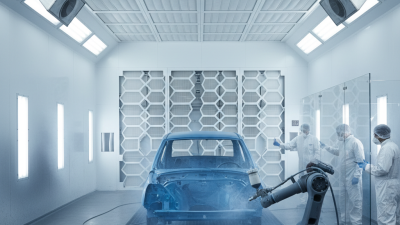
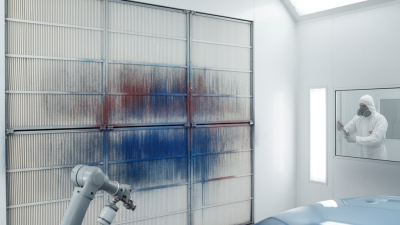
So, you’re wondering if you can get custom-sized Paint Booth Filters for your specific setup? Usually, the answer is yes—though it really depends on a few things like your booth’s filter frame, airflow direction, and the coating process you're using. Sometimes, a filter that looks like it’ll fit might leave a tiny gap, ya know? And that gap can be a problem because air can slip past the media there, carrying overspray right into your exhaust system.
Here's my advice: measure carefully. Jot down the inside width, height, and depth of your filter frame. Also, check how the filter is held in place—does it sit flat, fold into a track, or is there a gasket involved? Also, don’t forget that your paint booth exhaust filters need to have media suited for your airflow and the type of spray material you're using. Custom cuts are great, but only if they actually fit your system’s real conditions.
Now, you could look at some technical references for guidance. The EPA’s AP-42 chapter on surface coating talks about emissions from coating processes—helpful background, but not a step-by-step sizing guide. NIOSH publications on spray-painting ventilation give you some good principles on exposure control, but they don’t cover every booth’s frame size. So, really, nothing beats taking your own measurements directly from your booth.
Pay attention to the little things—like a loose edge can totally mess up a good installation. Not super glamorous, I know. Before hitting ‘order,’ double-check your measurements against what your filter supplier specifies. Make sure you’re clear on the airflow requirements and the media type you need. Honestly, I can’t give you a quote from a specific expert without a solid, verifiable source. Claiming I have some special inside knowledge wouldn’t be fair to you—or very trustworthy either.
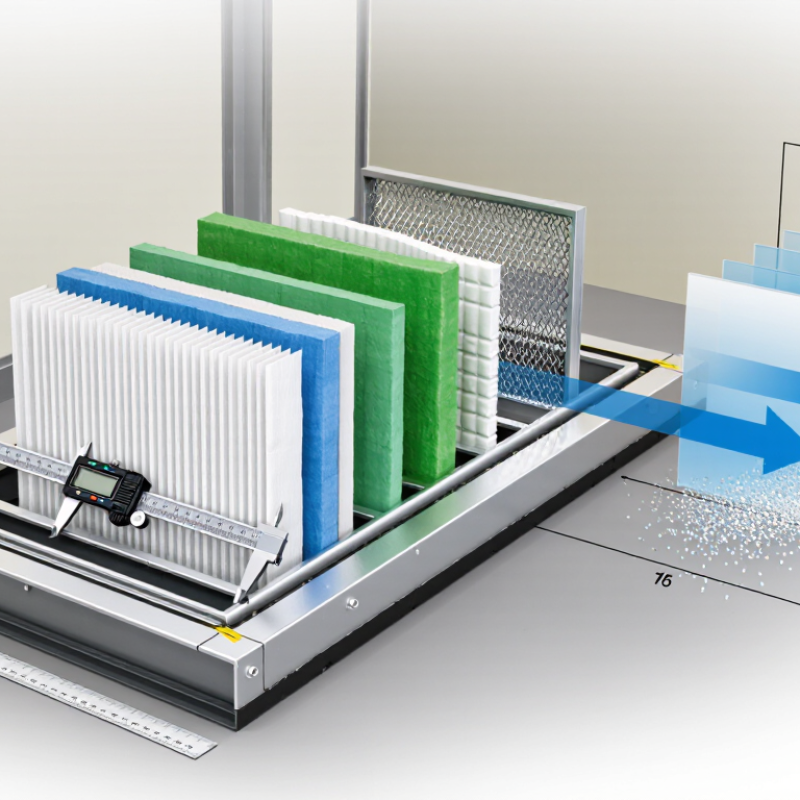
What Custom-Size Paint Booth Filters Are and How They Work
Custom-size paint booth filters are cut or built to match an opening that standard filter dimensions do not fit. They may have unusual widths, lengths, thicknesses, or edge details. The goal is a close fit, not simply a filter that looks about right. Even a narrow gap can let air bypass the filter and carry paint particles farther into the booth.
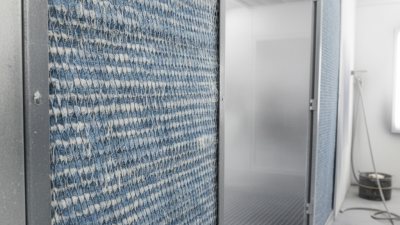
Paint Spray Booth Filterswork by passing moving air through layers of Filter Media. Depending on their position and purpose, they capture airborne overspray or help keep incoming air cleaner. The media traps particles while allowing air to pass, but its resistance rises as it collects material. A filter that is too dense for the system may reduce airflow; one that is too open may not capture enough overspray. Small differences matter.
Before ordering, measure the opening itself, including depth and any frame or retaining lip. Check the airflow direction and whether the filter sits at the intake or exhaust side. In practice, dimensions on an old filter can be misleading if it has compressed or sagged. It is easy to assume a custom cut solves every fit problem. It does not. A poor frame seal, incorrect media, or a loaded filter can still affect airflow and finish quality. Monitor pressure and inspect the edges after installation. A quick visual check helps, but it is not a substitute for the booth’s maintenance guidance.
When a Booth May Need a Nonstandard Filter Size
A booth may need a nonstandard filter size when its frame was built to older dimensions, modified during a retrofit, or designed around a custom plenum. Standard nominal sizes can differ slightly from the actual opening. Measure the frame’s width, height, and depth, not just the filter currently installed. Small gaps matter.
Check how the filter sits in the frame, including gasket contact and airflow direction. A filter that is too small may let air bypass its media; one that is too large can buckle or resist proper seating. It is tempting to trim a standard filter to make it fit. That can damage the edges and create uneven airflow, so it is not a dependable fix. Measure twice.
When dimensions do not match standard options, custom-cut Industrial Paint Booth Filters may be available. Confirm the required size, thickness, media type, and airflow needs against the booth documentation or with a qualified technician. Also check the pressure-drop range specified for the system. A careful fit check is easy to skip, but it can reveal a worn or distorted frame that a custom filter alone will not solve. The measurements may look straightforward; still, small errors can leave a visible gap.
How to Measure a Filter Opening Accurately
Custom-size paint booth filters can fit openings that standard sizes do not. Measure the opening in the booth frame, not an old filter that may have compressed or warped. Use a tape measure to record the clear width and height from edge to edge. Check each dimension at the top, middle, and bottom; frames are not always perfectly square. Small differences matter. Write down the largest and smallest readings, along with the units.
Measure the frame’s depth too, and note any gasket, lip, or retaining clips that affect the fit. A filter that matches the face dimensions but sits too loosely can leave gaps around its edges. For Downdraft Paint Booth Filters, confirm the airflow direction and installation position against the booth documentation. Measure twice. It is easy to misread a tape or record height as width, especially in a dim booth. Even careful notes can miss a bent frame, so photos and a sketch with labeled dimensions can help clarify the opening before ordering. Compare your measurements with the supplier’s sizing instructions, and ask for confirmation if the frame shape or mounting method is unusual.
How Filter Media and Airflow Needs Affect Selection
Custom-size paint booth filters can be made to fit unusual openings, but dimensions are only part of the decision. Measure the frame’s inside width and height, then check its depth and retaining clips. A filter that fits loosely can let air bypass the media. Small gaps matter.
Media choice depends on where the filter sits and what it must capture. Intake filters are selected to help keep incoming air clean, while exhaust filters collect overspray before air leaves the booth. Fiberglass, polyester, and layered media can differ in particle capture, dust-holding capacity, and resistance to airflow. Match the media to the coating process and the booth’s specifications rather than choosing by appearance alone.
Airflow needs deserve equal attention. Denser media may capture more particles, but it can also increase resistance as it loads with paint. Check the filter’s rated airflow and pressure-drop information, then compare it with the booth’s operating requirements. A custom panel should preserve the intended airflow, not just cover the opening. If performance is uneven, inspect seals and pressure readings before assuming the filter size is wrong. Specifications are useful, but real booth conditions can expose details a catalog cannot.
What to Provide When Ordering Custom Filters
When ordering Booth Filters For Paint, send the supplier the opening’s width and height, filter depth, and the number of filters required. Measure the booth’s actual filter rack, not just an old filter; used frames may be bent or compressed. Include clear photos, the airflow direction, and whether the filter sits in a holding frame. Small details matter. A few millimeters can leave a bypass gap.
Describe the coating process, expected airflow, and whether the filter captures intake dust or paint overspray. Ask for the media type, pressure-drop data, and replacement guidance for your operating conditions. ASHRAE Standard 52.2 evaluates particle removal across three size ranges: 0.3–1, 1–3, and 3–10 micrometers. ISO 16890 reports performance against PM1, PM2.5, and PM10 fractions. These standards can help compare tested air-filter performance, but they do not confirm booth fit or overspray suitability. Request test data for the specific filter media. A rating alone is not enough. I would recheck every measurement before approving a custom run; that extra step is easy to skip.
Can I Get Custom Size Paint Booth Filters for My Booth? - What to Provide When Ordering Custom Filters
| Information to Provide | Example Details | Why It Matters |
| Filter location and purpose | Intake, exhaust, or another filter position; describe what the filter is expected to capture. | Different booth locations may require different filter designs and media. |
| Exact dimensions | Opening: 20 × 20 in; required filter depth: 2 in. Confirm whether measurements are in inches or millimeters. | Measure the filter opening and available depth. Specify whether dimensions are nominal, actual, or maximum allowed. |
| Frame and installation details | Frame material, edge style, airflow direction, and how the filter is retained in the housing. | The filter must fit the rack securely and be installed in the correct orientation. |
| Booth and coating details | Booth type, coating process, and whether the application uses dry paint or another coating process. | Application details help identify suitable filter media and construction. |
| Airflow information | Airflow rate, if known, and the booth manufacturer's specified airflow or pressure limits. | Airflow requirements help evaluate filter performance and compatibility with the booth system. |
| Operating conditions | Typical operating temperature, humidity, and any relevant exposure to moisture or process chemicals. | Environmental conditions can affect material selection and filter service life. |
| Quantity and replacement schedule | Number of filters needed for the initial order and estimated ongoing usage. | Quantity helps with quoting, production planning, and replacement-stock planning. |
| Photos or a drawing | A clear photo of the existing filter and housing, plus a dimensioned sketch when available. | Visual references can clarify unusual shapes, tabs, notches, and measurement points. |
| Fit tolerance and delivery needs | Specify any maximum size, acceptable fit allowance, delivery location, and requested delivery date. | Clear requirements reduce the chance of fit issues and help confirm production and shipping expectations. |
How to Install and Check a Custom-Size Filter
Measure the filter opening at several points; booth frames can be slightly out of square. Order to the frame’s actual dimensions, then compare the new filter with the old one before installation. Check airflow arrows and seat the filter evenly. The gasket should touch the frame on every side without bending the media. Small gaps matter. A visible edge leak can let overspray or dust bypass the filter.
After fitting, run the booth fan and check the pressure gauge or manometer against the booth’s specified clean-filter range. Record the reading. ASHRAE Standard 52.2 rates filters by particle-size removal; its MERV 13 category requires at least 50% efficiency for 0.3–1.0 micrometre particles, 85% for 1.0–3.0 micrometres, and 90% for 3.0–10 micrometres. These ratings do not confirm that a filter suits a particular spray booth. Airflow and pressure drop still matter. Recheck the seals and pressure after use, and replace the filter when the booth instructions or pressure limit calls for it. Gauges can be easy to misread, so note the baseline and ask a qualified technician if readings seem inconsistent.
Can I Get Custom Size Paint Booth Filters for My Booth? — How to Install and Check a Custom-Size Filter
Example measurements for a custom filter fit check (millimeters).
Measure the frame opening before ordering, then compare the filter’s measured dimensions with the opening. In this example, the filter is 4 mm smaller in both directions, leaving 2 mm of clearance per side when centered. Confirm the required fit with your booth or filter manufacturer, install the filter in the direction of airflow, and check that it sits securely with no gaps around the frame. Measurements shown are illustrative, not a universal sizing specification.
High-Efficiency DPA Paint Mist Pocket Filters: Coating Air Filtration Insights from MarketsandMarkets Industry Reports
As coating lines expand their use of high-solids, water-based and multi-component formulations, managing airborne paint mist becomes an important part of maintaining clean process air. MarketsandMarkets’ *Paints and Coatings Market* report projects the global market will grow from USD 179.9 billion in 2023 to USD 217.6 billion by 2028, a 3.9% compound annual growth rate. This growth points to sustained demand for coating operations that can handle varied materials while supporting consistent air filtration and reliable production conditions.
A self-supporting paint-mist pocket filter is designed to capture overspray and residue from high-solids coatings, powder coatings, water-based paints, colorants and adhesives. Its honeycomb filter structure is intended to retain its shape as it collects paint mist, helping preserve usable dust-holding capacity during operation. For coating facilities, this construction can offer a practical filtration option where stable performance and effective mist capture are priorities. Selecting a filter suited to the coating mix, airflow and maintenance schedule can help operators manage residue and support better air quality throughout the process.
FAQS
It is made to fit an opening that standard dimensions do not match. Width, height, thickness, or edge details may vary. A close fit matters.
Older frames, retrofits, and custom plenums may have unusual openings. Measure the frame, not just the filter already inside it. Small gaps matter.
Record clear width and height at the top, middle, and bottom. Measure the frame depth, too. Note any gasket, lip, or retaining clips. Measure twice.
Used filters may sag, compress, or warp. Their measurements may not match the original opening. A tape measure and a labeled sketch can help.
Yes. Intake and exhaust positions serve different purposes, and airflow direction matters. Check the booth documentation before choosing a filter.
A small filter can leave gaps that let air bypass the media. An oversized one may buckle or sit unevenly. The frame seal matters.
Trimming may damage the edges and create uneven airflow. It is not a dependable fix. A distorted frame may need attention, too.
Inspect the edges for gaps and confirm that the filter sits securely. Monitor pressure and follow the booth’s maintenance guidance. A quick look helps, but it is not enough.
Conclusion
Can I Get Custom Size Paint Booth Filters For My Specific Booth? In many cases, yes. A custom-size filter can be made to fit an opening that does not match standard dimensions, helping reduce gaps and support consistent airflow. Nonstandard filters may be needed for older booths, unusual frames, or replacement openings that have been modified over time. Before ordering, measure the opening carefully, including its width, height, and depth, and note whether the filter sits inside a frame or overlaps its edges.
The right choice depends not only on dimensions but also on the filter media and the booth’s airflow requirements. When requesting a custom filter, provide accurate measurements, the desired media type, the filter’s intended position, and any relevant operating details. Once installed, check that it sits securely, seals around the edges, and does not obstruct airflow. A careful fit and routine inspection can help the filter perform as expected.