Leave Your Message
0%

So, you're wondering how to choose the right Hvac Filters for hospitals and healthcare facilities? Honestly, it’s not just about looking at a MERV number or flipping through a supplier’s brochure. I mean, hospital air systems support all sorts of spaces—operating rooms, isolation rooms, labs, pharmacies, patient wards—and each of these areas comes with its own set of risks. A filter that’s perfect for a general corridor might not cut it in an operating room. Plus, the wrong filter could cause higher pressure drops, use more energy, or crank up maintenance requirements.

Did you know the CDC reports that on any given day, about one in 31 hospital patients will get at least one healthcare-associated infection? That doesn’t mean filters alone are the magic solution, but it sure highlights why indoor air quality really matters. The ASHRAE Standard 170 lays out ventilation guidelines for various clinical spaces, but it’s a good idea to review these alongside infection control policies, equipment choices, and the specifics of your local condition.

If you’re thinking about Hepa Filters, they’re great at catching tiny particles—when installed, sealed, tested, and replaced properly. You can check out some options here:Hvac Hepa Filters.

Harvard’s Joseph G. Allen once said, “Buildings are a critical part of public health,” and I think he hits the nail on the head. Getting the airflow, filtration, humidity, and maintenance right really makes a difference. But beware—just choosing a high-efficiency filter isn’t always enough. An older fan might struggle with a more demanding filter, or a cheaper filter might not fit properly and let air bypass around it.

Healthcare teams should really compare things like particle efficiency, pressure drop, fire safety, how well it fits, ongoing monitoring, and overall costs over the lifespan. Don’t just go by marketing speech—make sure to review your facility’s data, chat with qualified HVAC engineers, and double-check the performance after installation. It’s all about making smart, well-informed choices to keep everyone safe and healthy.
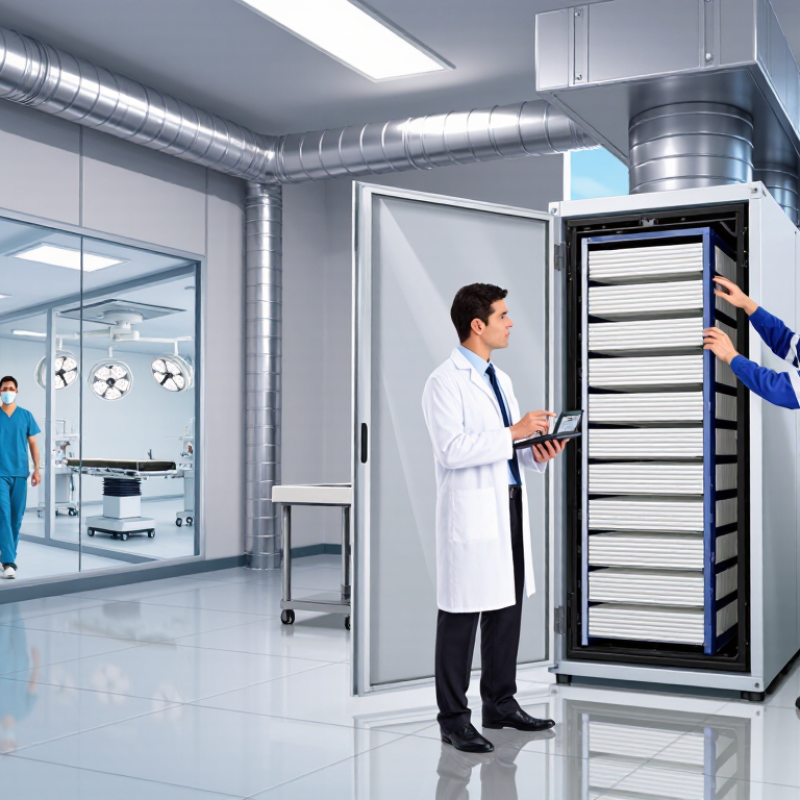
How To Choose HVAC Filters For Hospitals And Healthcare?

Understanding HVAC Filtration Needs in Healthcare Facilities

How To Choose HVAC Filters For Hospitals And Healthcare?

Healthcare facilities need filtration choices based on room function, airflow, and infection-control goals. A surgical suite, isolation room, pharmacy, and waiting area do not share identical risks.

Hvac Air Filters should match the required efficiency, airflow resistance, and pressure-control design.

Higher efficiency can capture more particles, but it may also increase fan energy and reduce airflow. Always review current healthcare ventilation guidance, local requirements, and verified test data.

A filter’s frame seal matters as much as its filter media. Air can bypass a perfectly rated filter through a small gap.

During routine inspections, check gaskets, holding clips, housing damage, and visible dust tracks. Monitor pressure drop with a gauge, not by appearance alone.

Replace filters according to measured conditions and facility procedures.

Maintenance records should include installation dates, pressure readings, room location, and technician observations.

A common field lesson is simple: a clean-looking filter may already perform poorly.

Tips:

Select filtration by zone, not by building size alone.

Confirm the filter fits securely before ordering large quantities.

Coordinate changes with infection prevention and facilities teams.

Watch airflow after installation.

If readings seem unusual, investigate the seal, sensor, and fan before blaming the filter.

Even experienced teams miss small installation errors sometimes.

That deserves a second check.

Identifying Hospital Areas and Their Air Quality Requirements

Hospital air planning begins with room function, not a single filter rating. Patient rooms, operating rooms, emergency departments, laboratories, and isolation rooms carry different exposure risks. ASHRAE Standard 170-2021 specifies pressure relationships, outdoor-air rates, and air changes for these zones. For example, airborne infection isolation rooms generally require 12 air changes per hour in new construction. The CDC lists six air changes per hour for many existing isolation rooms. That difference matters during renovation planning.

Operating rooms need controlled positive pressure and typically 20 total air changes per hour under ASHRAE 170-2021. Isolation rooms require negative pressure, while protective-environment rooms use positive pressure. Filters support this design, but they cannot correct poor airflow, open doors, or neglected maintenance. Pleated Filters Hvac may suit general patient-care systems when the equipment can handle added resistance. ASHRAE guidance commonly points to MERV 13 or higher when feasible, but final selection needs pressure-drop verification.

Specify filtration by zone, then verify performance with pressure readings, airflow testing, and documented replacement intervals. The 2023 ASHRAE Epidemic Task Force guidance emphasizes improved filtration and ventilation as layered controls, not standalone protection. Maintenance records should show filter condition, differential pressure, and installation dates. A rushed upgrade can reduce airflow. That is an uncomfortable design flaw. Some facilities still choose filters by frame size alone, which is convenient but weak engineering. Review the room’s clinical purpose every time.

Comparing Filter Types, Efficiency Ratings, and Performance Standards

Choosing Hvac Filters for hospitals requires more than selecting the highest efficiency rating. Filter type, airflow resistance, and room function must work together. Standard pleated filters often protect air-handling equipment, while higher-efficiency filters support cleaner clinical environments. ASHRAE Standard 52.2 rates filters by particle-size removal, not general “cleanliness.” A MERV 13 filter must remove at least 85% of particles between 1 and 3 microns. That sounds strong. It is not HEPA performance.

HEPA filters provide at least 99.97% efficiency at 0.3 microns, according to U.S. Department of Energy filtration guidance. However, they create greater pressure drop and may require stronger fans, better sealing, and more frequent system checks. ASHRAE Standard 170 sets ventilation requirements for healthcare facilities, but it does not replace engineering judgment. ISO 16890 classifies filters by particulate matter ranges, including PM1, PM2.5, and PM10. These ratings can improve comparisons, but they should not be treated as interchangeable with MERV.

Tips: Match the filter to the space. Operating rooms, isolation rooms, laboratories, and waiting areas have different risks. Check the fan’s measured pressure, not only its design label. Inspect gasket compression around the frame; a small bypass gap can undermine expensive media. Record pressure-drop readings during replacement. A higher rating is not automatically safer. In practice, maintenance teams sometimes discover that airflow falls before the filter looks dirty. That detail is easy to miss. CDC healthcare environmental-control guidance also emphasizes routine inspection, maintenance, and documented HVAC performance. Filters should be selected by qualified facility engineers and verified under actual operating conditions.

How To Choose HVAC Filters For Hospitals And Healthcare? - Comparing Filter Types, Efficiency Ratings, and Performance Standards

Filter Type Common Rating or Standard Efficiency Information Typical Healthcare Application Main Advantages Important Limitations Selection and Maintenance Considerations
Washable Metal or Permanent Panel Often unrated or below MERV 5; verify test documentation Generally limited capture of fine particles compared with pleated filters Pre-filtration in selected air-handling systems; not normally the final filter for critical clinical spaces Reusable; can tolerate some moisture and coarse dust; low replacement frequency Cleaning quality varies; may retain biological material if not fully cleaned and dried; relatively weak fine-particle performance Use only where permitted by the facility risk assessment. Establish documented cleaning, drying, inspection, and replacement procedures.
Pleated Panel Filter MERV 8 is commonly used for general pre-filtration; performance must be confirmed under ANSI/ASHRAE Standard 52.2 MERV 8 filters provide substantially better particle removal than low-efficiency flat panels, but are not HEPA filters Outside-air and return-air pre-filters; administrative and lower-risk areas, subject to the system design Widely available; relatively low initial pressure drop; protects downstream coils and higher-efficiency filters Does not provide the high-efficiency removal required for many airborne-infection-control or protective-environment applications Confirm actual airflow, filter face velocity, gasket condition, and final pressure drop. Replace before excessive loading restricts design airflow.
High-Efficiency Pleated Filter MERV 11–13 under ANSI/ASHRAE Standard 52.2 MERV 13 is commonly specified when improved removal of fine particles is required; the rating is based on defined particle-size efficiency tests, not a single universal percentage General patient-care areas, outpatient facilities, and central air-handling pre-filtration where the system can support the pressure drop Improved fine-particle capture; can reduce particulate transport through recirculated air; readily installed in many systems Higher resistance than lower-rated filters; does not equal HEPA performance; improper installation can cause bypass leakage Check fan capacity, coil cleanliness, filter rack sealing, and pressure-drop limits. Follow the healthcare facility’s infection-control and ventilation requirements.
Extended-Surface Bag Filter Commonly available in MERV 14–15; verify certification to ANSI/ASHRAE Standard 52.2 High removal of fine particles relative to standard pleated pre-filters; exact performance depends on construction and airflow Air-handling units serving higher-risk clinical zones, often upstream of HEPA filters or where HEPA is not required by the design Large media area; good dust-holding capacity; can provide stable performance over the service life Requires adequate housing depth and support; pressure drop increases as the filter loads; not automatically suitable for every critical room Confirm bag orientation, retaining hardware, airflow direction, access clearance, and fan static-pressure reserve. Monitor differential pressure.
HEPA Filter Typically tested to 99.97% minimum efficiency at 0.3 micrometre under applicable HEPA test methods; ISO 29463 may be used for classification High-efficiency removal of particles near the most penetrating particle size; actual installed performance also depends on housing and seal integrity Protective-environment rooms, airborne-infection-control applications, operating-room supply systems, pharmacies, laboratories, and local exhaust or recirculation units when required by the design Very high particle removal; suitable for critical applications when correctly selected, installed, and tested Higher initial and operating pressure drop; requires a suitable housing, reliable gasket or gel seal, and validated installation; it does not remove gases or vapors Specify certified filter modules, accessible test ports, scan-test requirements, and replacement procedures. Verify room pressure relationships and airflow after installation.
ULPA Filter Often classified under ISO 29463 or related national standards; commonly associated with efficiencies of 99.999% or higher at a specified test particle size, depending on the class Higher particle-removal efficiency than standard HEPA classifications, but the stated efficiency and test particle size must be checked in the certificate Specialized cleanrooms, research, pharmaceutical, or other highly controlled environments; uncommon for routine hospital ventilation Extremely high particle control when the entire system is designed for it Very high resistance, higher energy use, greater installation sensitivity, and usually unnecessary for ordinary patient-care areas Use only when required by a validated process or risk assessment. Confirm fan capacity, housing compatibility, certification, and in-place integrity testing.
Gas-Phase or Molecular Filter No MERV rating for gas removal; performance is specified by contaminant, sorbent type, contact time, and test method Designed for selected gases, odors, or volatile compounds rather than general particle removal Operating rooms, laboratories, isolation exhaust, odor-control systems, or areas with documented chemical-contaminant concerns Can reduce specific gaseous contaminants that particle filters cannot capture Not a substitute for a particulate filter or HEPA filter; capacity is contaminant-specific and can be exhausted without obvious visual signs Identify the target contaminant before selection. Use monitoring, documented service-life criteria, proper upstream particle filtration, and safe disposal procedures.
Key selection rule: Filter choice should be based on the required clinical risk control, airflow rate, system pressure capacity, filter-housing compatibility, leakage control, maintenance access, and applicable healthcare ventilation codes or guidelines. MERV ratings and HEPA classifications are not interchangeable; always review the complete test certificate and verify installed performance.

Selecting Filters for Infection Control and Patient Safety

How To Choose HVAC Filters For Hospitals And Healthcare?

Selecting Filters for Infection Control and Patient Safety

Hospital filter selection must begin with the room’s clinical risk, not efficiency alone. Operating rooms, isolation rooms, pharmacies, and general wards require different airflow controls. ASHRAE Standard 170 establishes space-specific ventilation and filtration requirements for healthcare facilities. Its guidance supports coordinated decisions involving air changes, pressure relationships, filter efficiency, and maintenance.

A stronger filter is not automatically safer. Excessive resistance can reduce designed airflow and weaken pressure control. That detail is often missed.

The U.S. EPA’s Guide to Air Cleaners in the Home states that certified HEPA filters remove at least 99.97% of particles measuring 0.3 microns, under test conditions. This performance matters for selected high-risk applications, but HEPA media alone does not prevent infection.

The CDC’s Guidelines for Environmental Infection Control in Health-Care Facilities also emphasize ventilation design, directional airflow, and proper maintenance.

WHO reported in its 2022 Global Report on Infection Prevention and Control that about seven in 100 acute-care patients in high-income countries acquire at least one healthcare-associated infection. Filtration is only one barrier. It can fail quietly.

Tips:

Match each filter to the room’s required efficiency and pressure drop. Check seals, frames, and airflow direction during installation. Record differential pressure readings before and after replacement. Inspect filters by condition, not appearance. A clean-looking filter may still be unsuitable.

Review specifications with facilities engineers and infection prevention staff, then verify actual airflow after installation. Reflection helps here: the “best” filter on paper may create the wrong clinical result.

Balancing Airflow, Energy Use, and Filter Replacement Costs

Choosing hospital HVAC filters requires more than selecting the highest efficiency rating. Hepa Hvac Filters can capture extremely small particles, but their tighter media often increases resistance. That resistance can reduce airflow, raise fan energy use, and disturb pressure relationships between corridors, rooms, and isolation areas. Small changes matter. A facility engineer should compare airflow readings, filter pressure drop, room pressure, and energy data before approving a change.

A practical system often uses staged filtration. A prefilter can remove larger dust and protect the final filter from early loading. The final filter should match the clinical risk, air-handling unit capacity, and applicable healthcare standards. Higher efficiency is not automatically safer if the system cannot maintain required air changes. That sounds efficient. Not always. I have seen replacement decisions based only on calendar dates, even when gauges showed very different loading patterns across units.

Replacement cost includes labor, disposal, access equipment, and the energy consumed by a loaded filter. Monitoring differential pressure helps teams replace filters when performance and operating cost begin to conflict. However, pressure readings should not be used alone. A damaged seal, poor installation, or clogged coil can create similar symptoms. Infection prevention staff, maintenance specialists, and commissioning professionals should review the evidence together. The best choice may be slightly more expensive upfront, yet cheaper over a year. It may also need revision after seasonal testing. That is normal. Reliable decisions come from measured airflow, documented maintenance, and honest review of what did not work.

Planning Installation, Maintenance, and Filter Monitoring Procedures

Hospital filter planning should begin with room function, not a generic MERV number. Operating rooms, isolation rooms, laboratories, and patient corridors have different airflow risks. ASHRAE Standard 170-2021 defines healthcare ventilation requirements, including pressure relationships, air-change rates, and filtration levels. Use its requirements with the facility’s infection-control risk assessment. The U.S. Environmental Protection Agency reports that indoor pollutant levels can be two to five times higher than outdoor levels, making neglected filtration a serious concern.

Installation details often decide whether a filter performs as tested. Confirm the filter size, airflow direction, gasket contact, and housing condition before commissioning. A loose frame can allow bypass air, even when the filter has a high efficiency rating.

Record pressure-drop readings at startup, then compare them with the manufacturer’s approved limits. Do not rely on appearance alone. A clean-looking filter may still be loaded internally.

Maintenance procedures should assign responsibility by room and shift. The CDC’s Guidelines for Environmental Infection Control in Health-Care Facilities recommends documented HVAC inspection and preventive maintenance. Replace filters according to pressure data, operating hours, and risk level, rather than a fixed calendar date. During each change, staff should photograph the housing, verify the replacement grade, and log the date.

Continuous monitoring can use differential-pressure sensors and alarms, but sensors require calibration. That part is often missed. Review alarm trends weekly, investigate sudden pressure changes, and recheck airflow after construction or equipment changes. No procedure is perfect; clinical teams and engineers should revisit it when occupancy, treatment patterns, or infection risks change.

Premium Nonwoven Fabric Pocket Filter Media Rolls for HVAC: A Guide to China Suppliers and Factories

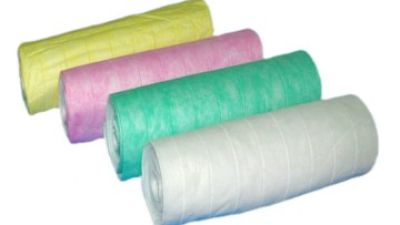
Premium nonwoven fabric pocket filter media rolls are essential raw materials for producing high-efficiency bag filters and plate filters used in HVAC ventilation systems. The U.S. Environmental Protection Agency reports that indoor pollutant concentrations can be two to five times higher than outdoor levels, highlighting the importance of dependable air filtration in commercial and industrial buildings. Manufactured from engineered synthetic fibers, quality pocket media can provide balanced dust-holding capacity, low pressure drop, and stable airflow, helping ventilation equipment operate efficiently over extended service periods.

For buyers evaluating China suppliers and factories, production consistency is as important as filtration performance. Advanced fiber-forming, thermal bonding, and roll-cutting technologies help maintain uniform thickness, tensile strength, and porosity throughout each media roll. Suppliers should provide performance data based on recognized methods such as ISO 16890 or ASHRAE 52.2, including initial resistance, particulate arrestance, and dust-loading results. The World Health Organization’s air quality guidance also emphasizes the health significance of reducing fine particulate exposure, making reliable filter media a practical requirement for modern air-quality management. Factory-direct sourcing can support customized widths, roll lengths, fiber structures, and processing options for different HVAC filter designs, while strict quality control improves compatibility with automated bag-filter and plate-filter production lines.

FAQS

Should hospitals always choose the highest-efficiency filter?

No. Filter choice must match the room, airflow, pressure limits, and clinical risk. Higher efficiency can reduce airflow. Stronger is not always safer.

What does a MERV 13 rating indicate?

It removes at least 85% of particles measuring 1 to 3 microns. This rating does not equal HEPA performance.

How efficient are HEPA filters?

HEPA filters provide at least 99.97% efficiency at 0.3 microns. They may require stronger fans and tighter housing seals.

Why is pressure drop important?

A filter can restrict airflow as particles collect inside the media. Measure pressure with a gauge, not by appearance alone.

Do operating rooms and waiting areas need identical filters?

No. Each space has different airflow risks and occupancy patterns. Match filtration with room function and infection-control needs.

How can poor installation reduce filter performance?

A loose frame or damaged gasket creates bypass gaps. Unfiltered air may pass around expensive filter media.

What should staff check during filter replacement?

Confirm size, airflow direction, gasket contact, housing condition, and filter grade. Photograph the housing and record the replacement date.

When should hospital filters be replaced?

Use pressure readings, operating hours, and room risk instead of one fixed calendar date. A clean-looking filter may already be loaded internally.

How should filter monitoring be managed?

Check differential-pressure sensors, calibrate them, and review alarm trends weekly. Sudden changes deserve investigation. Sensors are helpful, not perfect.

Should filter procedures remain unchanged after installation?

No. Recheck airflow after construction, equipment changes, or occupancy shifts. Procedures may need revision. That part is easy to overlook.

Conclusion

How To Choose Hvac Filters For Hospitals And Healthcare Facilities? The process begins with understanding that different hospital areas require different levels of air cleanliness. Operating rooms, isolation rooms, laboratories, patient wards, and public spaces may each need carefully selected filtration strategies based on infection-control goals, occupant risk, ventilation design, and applicable performance standards. Comparing filter types, efficiency ratings, dust-holding capacity, and pressure-drop characteristics helps facilities choose suitable protection without compromising system operation.

Effective selection also requires balancing filtration performance with airflow, energy consumption, and replacement costs. Filters should be installed correctly, inspected regularly, and replaced according to pressure readings, condition, and facility procedures rather than a fixed schedule alone. A documented monitoring plan can track filter performance, maintenance activities, and changes in indoor air requirements. By coordinating engineering, infection-control, and facility-management teams, healthcare organizations can support safer indoor environments while maintaining reliable, efficient, and sustainable HVAC operation.

Sophia

Sophia

Sophia is a dedicated marketing professional at Guangzhou LJF Purification Equipment Co., Ltd., where she harnesses her expertise to promote the company’s innovative air purification solutions. With a deep understanding of the industry and its challenges, Sophia plays a critical role in positioning......
Previous Where To Source Spray Booth Ceiling Filter Rolls From China?