Choosing the right partner starts with knowing your own facility inside out—your airflow needs, operating conditions, all that. And when it comes to picking a Hepa Filter supplier in China, it's not just a price game. You need a supplier who can walk you through filter grades, dimensions, pressure drop, and replacement intervals without confusing you. Ask for the product data sheets and test reports that actually match the model you plan to buy. Because the details really matter.
Honestly, don't just glance at the specs—really dig into their quality controls, production capacity, and how they communicate. If you're looking at Hepa Filters, make sure you nail down the efficiency rating and the test standard behind it, like EN 1822 or ISO 29463 if that applies. Also, ask them straight up: how do you inspect each unit, and what happens with serial numbers or batch records? A shiny brochure doesn't tell you much. Get a sample in your hands, check the frame and gasket yourself, and double-check that the dimensions actually fit your housing. Hey, before you go ahead and place a big order, make sure you've nailed down the lead times, packaging, warranty stuff, and how they handle defects. You really don't want surprises later.
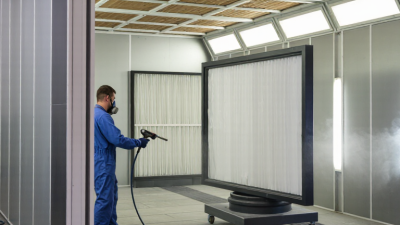
A good supplier won't just push the same product for every building—they should actually ask about your application first. And don't just take their word for it: line up the technical docs with the quotes, and if the project's important enough, check their claims through records or get an independent inspection. So, if you're also sourcing a Paint Booth Ceiling Filter Supplier China, treat that as a separate search. Ceiling filters for paint booths and HEPA filters do different jobs—they're not the same thing. Honestly, no checklist can cover every little detail. A tempting low quote is hard to ignore, and even a careful buyer can miss something small. Honestly, take your time comparing suppliers—don't rush it. Ask plenty of follow-up questions, and if their answers stay consistent throughout, that's a pretty strong sign. That's the supplier you want to go with.
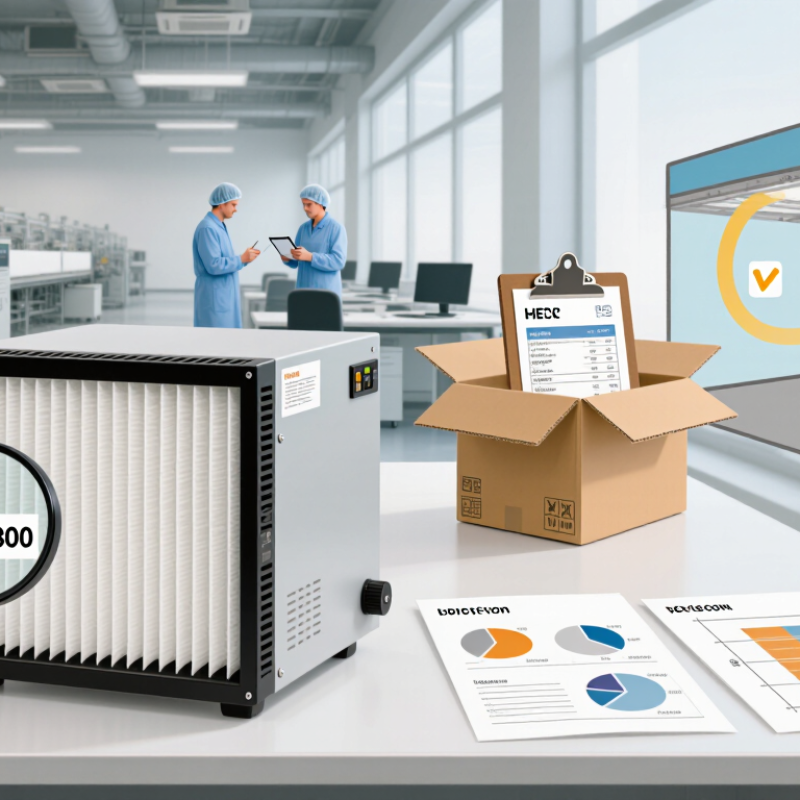
Before asking a Commercial Hepa Filter supplier in China for a quote, document where the filter will operate. Record airflow, available space, temperature, humidity, dust type, and acceptable pressure drop. A filter sized only by face dimensions may fit the housing but restrict airflow. Measure the frame and check gasket position, too.
Set a measurable efficiency target. The U.S. Department of Energy’s HEPA definition specifies at least 99.97% efficiency at 0.3 micrometers. ASHRAE Standard 52.2 evaluates HVAC filter efficiency across three particle-size ranges: 0.3–1, 1–3, and 3–10 micrometers. These figures describe different test methods and should not be treated as interchangeable. Ask suppliers which standard and test conditions support their figures. Ask for test reports tied to the quoted filter model.
Then define service needs: replacement interval, change-out access, seal design, and preferred test documentation. In a cleanroom or process area, a small bypass gap can undermine the intended filtration performance. Specify the complete assembly, not just the media. One detail is easy to miss. I would also request pressure-drop data at your actual airflow; catalogue values may use different conditions. If your requirements are not fully settled, flag that openly before comparing bids. A precise specification makes supplier responses easier to verify, though I would still check the first sample carefully.
A Commercial Hepa Filter should be specified by its tested class, not by a vague “high-efficiency” claim. EN 1822:2019 sets minimum overall efficiencies of 99.95% for H13 and 99.995% for H14 at the most penetrating particle size (MPPS). ISO 29463 also classifies high-efficiency filters using measured performance. These figures are not interchangeable with a MERV rating: ASHRAE Standard 52.2 measures particle-size removal across defined ranges, so request the test method and full report.
Check the paperwork closely.
Ask for an individual scan-test certificate, the filter’s class, MPPS efficiency, pressure drop, and rated airflow. Confirm that the test applies to the exact model and dimensions being quoted. A certificate for a similar filter is not enough.
On site, a frame that is slightly out of square can leave a bypass gap, even when the media passes its test. Small detail. For suppliers in China, ask how they control pleat spacing, sealant coverage, and leak testing between production batches.
Compare reports from an accredited laboratory, and verify the lab’s accreditation scope rather than relying on a logo. I would also confirm the specified operating conditions; that step is easy to overlook.
When choosing a commercial Hepa Filter supplier in China, look beyond years in business. Ask how many years the team has produced the same filter type, and request sample test reports and batch records. The U.S. Department of Energy defines HEPA performance as capturing at least 99.97% of airborne particles measuring 0.3 microns. That demanding benchmark makes consistent testing essential. A certificate alone is not enough.
Check whether production capacity is supported by real equipment and trained staff. Ask to see pleating machines, frame assembly stations, leak-testing equipment, and the process for handling failed units. Compare stated monthly output with recent production records and delivery schedules. Ask how the supplier manages peak orders without skipping inspection steps. Capacity is more than a large factory floor. It is repeatable output.
Experience should also show up in practical details: stable sealant application, careful frame checks, and traceable test results. Ask whether finished filters are individually tested using recognized methods, such as IEST-RP-CC001, and request the relevant records. Verify the scope and dates of any certificates independently. One uncomfortable question matters: can the supplier show what happened when a batch failed? Some answers may be imperfect. That can be more useful than a polished presentation.
| No. | Evaluation Dimension | What to Assess | Evidence to Request | Suggested Evaluation | Weight |
|---|---|---|---|---|---|
| 1 | Relevant Manufacturing Experience | Experience producing commercial HEPA filters for applications such as healthcare, cleanrooms, laboratories, or industrial HVAC. | Dated product records, anonymized project examples, production documentation, and customer references where available. | Favor verifiable, relevant experience over a general claim of years in business. | 12% |
| 2 | Production Capacity and Lead-Time Control | Available production lines, output planning, shift arrangements, bottlenecks, and ability to meet the requested order schedule. | Capacity statement, recent production plan, lead-time schedule, and explanation of how urgent orders are handled. | Compare stated capacity with your order volume and request a schedule that includes inspection and packing time. | 14% |
| 3 | Filter Design and Specification Control | Ability to manufacture to agreed dimensions, airflow, pressure-drop limits, frame construction, seal design, and applicable HEPA classification requirements. | Controlled drawings, approved specifications, material declarations, and documented change-control procedures. | Confirm that every critical requirement is recorded in an approved specification before production. | 12% |
| 4 | Testing and Performance Verification | Testing capability and the method used to verify efficiency, airflow resistance, dimensions, and product integrity against the agreed requirements. | Sample test reports, equipment details, calibration records, and a description of the test method and acceptance criteria. | Check that reports identify the tested product and method; confirm whether testing is performed in-house or by an external laboratory. | 14% |
| 5 | Quality Management and Traceability | Documented inspection stages, nonconformance handling, batch identification, corrective actions, and traceability of materials and finished products. | Quality procedures, sample inspection records, batch-label examples, and corrective-action documentation. | Look for records that connect incoming materials, production batches, inspection results, and shipment details. | 12% |
| 6 | Raw-Material Sourcing and Control | Controls for filter media, separators, frames, sealants, gaskets, and other components that can affect product performance and consistency. | Material specifications, incoming inspection records, supplier-control procedures, and change-notification terms. | Verify that substitutions require approval and that critical materials are checked against documented requirements. | 8% |
| 7 | Customization and Engineering Support | Capability to review drawings, confirm fit and interface details, develop samples, and manage custom sizes or construction requirements. | Engineering workflow, sample approval records, drawing-review examples, and confirmation of prototype timing. | Assess how clearly technical questions are answered and whether approvals are documented before mass production. | 8% |
| 8 | Factory Readiness and Process Consistency | Organization of work areas, equipment maintenance, process controls, staff training, and separation of production and inspection activities where needed. | A live or third-party factory audit, process flow chart, equipment-maintenance records, and training records. | Use an audit checklist and confirm that observed processes match the documents and sample product supplied. | 8% |
| 9 | Packaging, Shipping, and Export Coordination | Protection against handling damage, labeling accuracy, packing-list preparation, shipment planning, and communication of dispatch milestones. | Packaging specifications, sample shipping documents, shipment schedule, and procedures for reporting transit damage. | Confirm that packaging suits the filter construction and shipping route, and agree on document requirements before dispatch. | 6% |
| 10 | Communication and After-Sales Response | Responsiveness to technical questions, order updates, complaint handling, replacement assessment, and corrective-action follow-up. | Named points of contact by role, written response process, warranty terms, and anonymized complaint-resolution examples. | Evaluate response clarity and documented ownership of issues during the quotation and sample stages. | 6% |
| Total Suggested Weight | 100% | ||||
Note: The evaluation weights are a suggested buyer assessment framework, not an industry certification or a claim about any particular supplier. Confirm applicable HEPA classification, test methods, and acceptance criteria for the intended application before placing an order.
When evaluating a commercial HEPA supplier in China, request evidence for the exact filter model, not a generic brochure. Ask for its efficiency class, rated airflow, initial pressure drop, and test method. A report should identify the tested unit, dimensions, and test date. Check whether the method follows a recognized standard, such as EN 1822 or ISO 29463. Confirm that the stated classification suits your application. Details matter.
For leak integrity, ask how each finished filter is scanned and what acceptance limits apply. Request a sample report, including scan results and instrument calibration dates. Match its model and batch details to the carton labels. Independent testing of a pre-shipment sample can expose handling damage or batch variation that supplier data may miss. During a factory visit or video audit, watch technicians seal the filter and record readings. A polished certificate is not enough.
Start with a small trial order. Measure airflow and pressure drop in your own housing; installation conditions can change results. Keep a sample and its paperwork to compare with later shipments. Some checks feel repetitive. They help. Ask what happens when a unit fails inspection, and request a traceable corrective-action record. I would still question unexplained gaps: no checklist catches everything.
When choosing a commercial HEPA filter supplier in China, compare the details behind each quotation. Share the required filter dimensions, airflow, efficiency rating, pressure-drop limit, and sealing method. Ask whether the supplier can adjust frame materials or provide a sample for fit checks. Request test documentation and confirm that it matches the exact configuration quoted. An Industrial Hepa Filter that fits the drawing may still perform differently if its gasket or media changes.
Pricing needs a closer look than the unit cost. Check whether samples, tooling, inspection, export packaging, and freight are included or charged separately. Ask for a written breakdown and clarify payment milestones. Compare delivery terms, production lead time, and the point at which responsibility for transport transfers. Get dates for sample approval and production updates, too. The lowest quote can be less useful if specifications or shipment timing remain vague.
Tips: Send the same specification sheet to every supplier, then compare replies line by line. Ask how delays are reported and what happens if a sample fails inspection. Keep key decisions in writing. It is easy to focus on price and overlook small details; that is worth checking twice.
After-sales support matters because a HEPA filter’s performance depends on installation, sealing, and timely replacement—not just its quoted efficiency. The U.S. EPA’s Guide to Air Cleaners in the Home states that HEPA filters capture at least 99.97% of particles measuring 0.3 microns. Ask a China-based supplier for serial-number-linked test records and clear guidance on interpreting leak or scan-test results. For a Hepa Filter For Laminar Flow Hood, confirm who answers technical questions and how quickly replacement media can be dispatched.
Do not rely on a friendly sales promise alone. Request written warranty terms, spare-part availability, troubleshooting steps, and a named contact after delivery. Agree on response-time targets before ordering, especially if your hood supports a time-sensitive process. A supplier should explain what information it needs, such as airflow readings, pressure-drop measurements, or photos of the filter frame. That matters. A low price can still become costly when a seal issue sits unresolved for days. I would also check whether support continues after the warranty ends; this detail is easy to overlook.
Tips: Send the supplier your hood dimensions and operating conditions before requesting a quote. Ask for the applicable EN 1822 or ISO 29463 test documentation, plus a sample service-response plan. Keep the answers in writing. If replies are vague now, support may be vague later.
Evaluate after-sales support using documented response commitments, parts availability, warranty terms, technical assistance, and complaint handling.
Suggested evaluation weights for a buyer-defined supplier scorecard; these are not market-survey results or industry-standard requirements. Verify each item against written service terms and records.
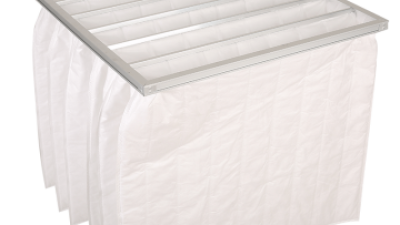
F9 and M9 pocket filters are designed for efficient air filtration in settings where reliable particle control and steady airflow matter. Their pocket-style construction provides a generous filtration area within a compact frame, helping support consistent performance in ventilation and air-conditioning systems. F9 and M9 grades offer options for different filtration requirements, making them suitable for commercial buildings, industrial facilities, and other environments that need cleaner supply air. Selecting the right filter depends on system specifications, operating conditions, and the desired balance between filtration efficiency and airflow resistance.
Discover quality pocket filters from established suppliers and factories in China, with product options suited to varied project needs. Buyers can explore different dimensions, construction details, and order quantities, whether sourcing for a specific installation or planning bulk purchases. Reliable manufacturing partners can help coordinate production and delivery while providing responsive service throughout the purchasing process. With careful attention to product specifications and quality standards, these filters can be a practical choice for businesses seeking dependable air-filtration components.
Record airflow, available space, temperature, humidity, dust type, and acceptable pressure drop. Measure the frame and gasket position, too.
No. A filter may fit the opening but still restrict airflow. Check the full assembly.
Ask which test method and conditions support the stated efficiency. A common HEPA definition specifies at least 99.97% efficiency at 0.3 micrometers. Different test methods are not automatically comparable.
A small bypass gap can reduce the intended filtration performance, especially in cleanrooms or process areas. Small gaps matter.
Yes. Request readings at your actual airflow. Catalogue figures may use different conditions, so I would check them carefully.
Confirm the report matches the exact filter model and configuration being quoted. Media or gasket changes may affect performance.
Send every supplier the same specification sheet. Compare dimensions, airflow, efficiency, pressure-drop limits, sealing, and frame options line by line.
Ask whether samples, tooling, inspection, export packaging, and freight are included. Confirm payment milestones, production lead time, shipment responsibility, and update dates.
Yes. Check the sample against the housing and seal before production. I might still miss a small detail, so record approval in writing.
Choosing a commercial HEPA filter supplier in China starts with clearly defining your application, required airflow, filter efficiency, dimensions, operating conditions, and expected service life. Understanding relevant HEPA standards and the certifications your project requires helps you compare products accurately and confirm that a supplier’s claims match your needs. When considering How To Choose Commercial Hepa Filter Supplier China, also review each supplier’s industry experience, production capacity, and ability to maintain consistent manufacturing quality.
Before making a decision, ask how products are inspected and tested, and request clear documentation for performance and quality checks. Compare options for customization, pricing, minimum order quantities, lead times, shipping arrangements, and payment terms. Finally, evaluate the supplier’s communication, warranty conditions, replacement guidance, and after-sales support. Weighing these factors together can help you select a dependable supplier whose products and service fit your project requirements.