Choosing a Spray Booth Filter System supplier in China for wholesale? It’s not just about who’s cheaper. A good partner needs to actually get airflow, paint overspray, filter loading, fire safety, and maintenance planning. Get that right, and you protect product quality—plus you end up with a cleaner place to work.
As Daniel Wu puts it, “Filter performance is proven at the booth, not on the brochure.” He’s a filtration engineer with over fifteen years in industrial ventilation at Guangzhou AirClean Environmental Technology Co., Ltd., and his point is pretty down-to-earth. A supplier should be able to hand you airflow data, pressure-drop ranges, Filter Media specs, and replacement guidance. And buyers? Ask for photos of production lines, test records, and clear service terms. Don’t be shy about it.
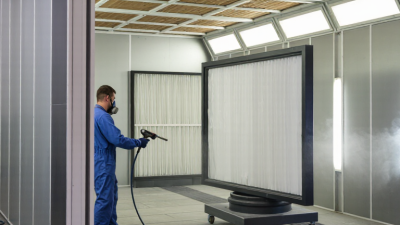
Then look at the little stuff. A well-designed Spray Booth Filter System should capture overspray evenly across the booth face. It should keep airflow stable as filters load up. Easy access matters. So does the filter frame. Bad sealing can let fine particles sneak around the edges—even if the media looks great on paper. That’s an easy one to miss.
So no, don’t choose on price alone.
A responsible Spray Booth Filter System Supplier China Wholesale should explain which filter stages fit water-based coatings, solvent-based coatings, or powder applications. What works depends on booth design and local workplace rules. There’s no one-size-fits-all filter answer. That deserves an honest conversation.
Some supplier claims sound polished but still leave out the important bits. I’ve learned that real performance depends on installation, operator habits, humidity, coating volume, and replacement timing. A careful supplier will admit those limits. That’s not weakness. It’s a sign of professional judgment, real experience, and dependable technical support.
Top Spray Booth Filter System Supplier China Wholesale?
What a Spray Booth Filter System Is
A spray booth filter system captures paint mist, powder, and solvent-laden particles before exhaust air leaves the booth. It usually includes intake filters, exhaust filters, frames, seals, and a pressure-monitoring device. The filter media traps overspray while the fan maintains controlled airflow around the workpiece.
Airflow is critical. OSHA 29 CFR 1910.107 specifies a minimum velocity of 100 feet per minute through openings for several spray booth applications. The U.S. EPA AP-42, Chapter 4.2, identifies filtration as a practical particulate-emission control method for surface coating operations. These figures help engineers select suitable filter resistance and fan capacity. A filter that looks clean may already be saturated.
In field maintenance, pressure drop often tells the truth better than appearance. Operators should record readings, coating volume, filter changes, and visible leakage. Fiberglass, polyester, and high-efficiency media behave differently under wet and dry overspray. Cheap media can collapse early, while overly dense media may restrict airflow. That trade-off is easy to underestimate. Inspect seals carefully. Small gaps can bypass the filter entirely.
Some specifications remain imperfect. Published efficiency percentages may use different test methods and particle sizes. Buyers should request test conditions, airflow data, fire-resistance information, and disposal guidance before comparing wholesale systems. A reliable supplier should also explain installation details, not only quote the filter price.
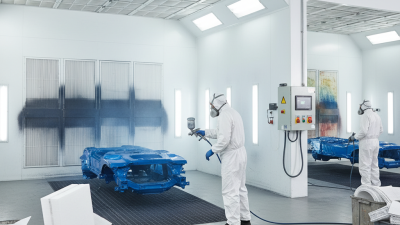
Spray booth filters control airborne coatings by capturing overspray before it reaches workers, ductwork, or the surrounding room. A properly selected filter slows particles without restricting airflow too sharply. EPA’s AP-42, Section 4.2, reports that coating transfer efficiency varies widely by application method. Conventional spray systems may transfer only about 20–50% of coating to the product, leaving substantial airborne overspray. The filter therefore becomes a working safety barrier, not just a replaceable accessory.
OSHA 29 CFR 1910.107 generally requires about 100 feet per minute of airflow across many open spray booth faces. Filters must support this airflow while collecting wet and dry particles. In practice, pressure drop is the detail people often underestimate. A loaded filter can reduce capture performance, increase fan energy, and disturb the spray pattern. Filter media, coating chemistry, particle size, and replacement timing all matter. A single efficiency number can be misleading.
Tips: Check airflow with a calibrated instrument, not by hand. Record initial and replacement pressure readings. Confirm the filter is compatible with the coating and exhaust design. NIOSH guidance supports controlling contaminants at the source, but filtration is not a substitute for ventilation maintenance. One practical mistake is choosing the cheapest filter first. It may cost more through frequent changes, unstable airflow, and contaminated ductwork. The better decision requires testing the full booth system under real production conditions.
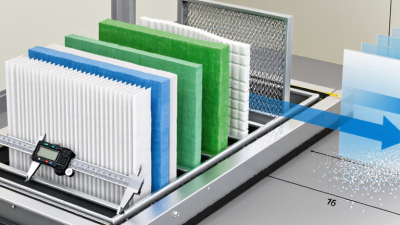
A Spray Booth Filtration System controls overspray, dust, and airborne particles during coating work. Choosing the correct filter type protects finish quality and keeps airflow stable. Intake filters clean incoming air before it reaches the booth. They are often made from synthetic fiber or pleated media, depending on the required dust control.
Exhaust filters capture paint particles before air leaves the booth. Paint arrestor pads are common for liquid coatings, while pocket filters provide greater holding capacity. Fine final filters may be added when cleaner exhaust air is required.
Activated carbon filters can reduce certain solvent odors, but they are not suitable for every coating process. Filter selection must match the coating material, airflow volume, and booth design. A filter that looks efficient may restrict airflow too quickly.
Tips: Check pressure readings weekly and inspect loaded areas by hand. Replace damaged media immediately. Keep spare filters sealed and dry. During one inspection, a clean-looking filter had hardened overspray inside. Visual checks alone can mislead. Record replacement dates, pressure changes, and coating types. This small log helps technicians identify unusual loading patterns. Local ventilation requirements should also guide the final specification, especially for industrial installations.
When assessing a China-based spray booth filter system supplier, do not begin with price. Begin with evidence. A top wholesale supplier should explain filter media, frame materials, airflow resistance, and replacement cycles clearly. Ask for recent test reports, factory photographs, and production records. Generic certificates are not enough.
I have found that practical questions reveal more than polished sales language. Can the supplier match filters to your booth size and coating process? Can they provide a sample before bulk production? Check the sample’s dimensions, sealing edges, stitching, and pressure drop. Small gaps around a filter frame can release overspray and increase maintenance work. Request a video inspection of the cutting and assembly areas. Look for clean storage, labeled materials, and basic quality checks.
Technical support matters after shipment. Confirm response times, packaging methods, spare-part availability, and export experience. Ask how damaged goods are handled, with written procedures. A dependable supplier should share inspection photos before loading and provide clear installation guidance. One weakness remains easy to miss: some suppliers outsource key materials without saying so. Ask directly. I once accepted a lower quote and later found inconsistent filter thickness between batches. That mistake was avoidable. Keep specifications, approval samples, and inspection standards in the purchase agreement.
Recommended supplier-evaluation weighting for wholesale buyers. The model prioritizes filtration performance, compliance evidence, manufacturing quality, total cost, customization, and delivery capability.
Use this as a practical scoring framework: verify ISO 16890 or project-specific test reports, request batch quality records, confirm airflow and pressure-drop data, review material specifications, and assess landed cost rather than unit price alone.
A reliable Paint Booth Filter System supplier should explain price by specification, not by a vague “factory rate.” Grand View Research valued the global paints and coatings market at approximately USD 206.56 billion in 2022, showing why filter demand remains substantial. However, wholesale pricing depends on filter dimensions, media weight, pressure drop, frame material, and packing method. A 600 × 600 mm intake filter is not equivalent to a high-capacity exhaust filter, even when both appear similar in photographs.
Ask for a tiered quotation. For example, 50, 200, and 500 pieces should show separate unit prices, tooling charges, and delivery terms. A useful supplier also provides test data, including initial resistance, dust-holding capacity, and filtration classification under ISO 16890 where applicable.
The U.S. Environmental Protection Agency’s technical guidance on surface coating emissions highlights the importance of controlled airflow and particulate capture. That makes filter performance a production issue, not only a purchasing detail.
Customization may include non-standard sizes, galvanized or cardboard frames, moisture-resistant media, and printed cartons. Confirm whether custom tooling is refundable after repeated orders. Minimum order quantities often rise with special frames or laminated media. Small trial orders are possible, but they may carry higher freight costs. I have seen buyers compare only unit prices, then discover that crushed corners reduce usable filters. That mistake is avoidable. Request sample photos, compression protection, replacement intervals, and a written inspection standard before approving mass production.
A reliable Paint Booth Air Filtration System supplier should prove performance, not merely advertise high efficiency.
Request filter test reports showing airflow, pressure drop, particle capture, and service life. ISO 16890 classifies filters by ePM1, ePM2.5, and ePM10 performance, giving buyers a clearer comparison than vague “99% efficiency” claims.
The U.S. EPA AP-42 guidance also treats coating operations as important sources of particulate and solvent emissions, so overspray control must be evaluated with ventilation design.
Testing should match the booth’s real conditions.
NFPA 33 commonly references a minimum average face velocity of 100 feet per minute for open-face spray booths, while local rules may differ.
A supplier should provide factory quality records, batch numbers, dimensional checks, and pressure-drop readings at stated airflow rates. Ask for flame-resistance evidence when required.
Wet paint changes everything.
Export compliance needs destination-specific review.
Confirm applicable electrical, machinery, chemical, packaging, and waste requirements before shipment. CE marking may apply to complete machinery, but not automatically to every replacement filter.
Export documents should include a commercial invoice, packing list, country-of-origin statement, technical data sheet, and safety information where applicable.
I would also verify fiber shedding and disposal instructions; these details are easy to ignore during wholesale purchasing.
A low purchase price can become expensive when customs, poor fit, or premature loading causes delays.
Installation should begin with airflow mapping, not filter ordering. Measure face velocity across the booth opening and record several grid points. OSHA 29 CFR 1910.94 commonly specifies 100 feet per minute for many spray-finishing booth configurations. Actual requirements vary with booth design, coating, and local rules. An uneven reading can leave a clean-looking corner with heavy overspray. Keep the Paint Booth Filtration System sealed around frames, doors, and access panels. Small gaps defeat costly media.
During operation, log pressure drop, airflow, coating type, and filter hours. Check gauges each shift. Inspect for loading, tears, and bypass marks. EPA AP-42 Chapter 4.2 lists application-method transfer efficiencies ranging roughly from 30% to 95%. That difference proves filtration cannot fix poor gun technique or excessive fluid delivery. It is easy to blame the filter. Sometimes, the process is the problem.
Replacement planning works better through pressure-drop trends than calendar dates alone. Set a documented changeout limit, then compare it with airflow performance and production volume. Store replacement filters dry, sealed, and clearly labeled. Never install damaged media. A practical weakness remains: many teams record pressure only when performance collapses. That is too late. Reviewing weekly readings and photographing the filter face can reveal gradual loading before energy use, finish quality, or worker protection deteriorates. EPA and OSHA guidance should be checked against local requirements before installation or modification.
It captures paint mist, powder, and solvent-laden particles before exhaust air leaves the booth. The fan maintains controlled airflow. The system usually includes intake filters, exhaust filters, frames, seals, and pressure monitoring.
Proper airflow moves overspray toward the exhaust filters. Some applications require about 100 feet per minute through booth openings. Insufficient airflow can reduce finish quality and increase particle escape. The exact requirement depends on local rules and booth design.
Intake filters clean incoming air before it reaches the work area. Paint arrestor pads commonly capture liquid coating overspray. Pocket filters can hold more material. Fine final filters may support cleaner exhaust air.
No. They can reduce certain solvent odors, but suitability depends on the coating and airflow. They should not replace proper ventilation or technical evaluation. This point is easy to overlook.
Record pressure readings weekly, coating volume, filter changes, and visible leakage. Pressure drop often reveals loading better than appearance. A filter may look clean outside but contain hardened overspray inside. Replace damaged media immediately.
Request test conditions, particle sizes, airflow resistance, fire-resistance details, and disposal guidance. Efficiency percentages may use different testing methods. A single percentage does not tell the whole story. Compare equivalent data.
Ask about media, frame materials, airflow resistance, dimensions, and replacement cycles. Request a sample before bulk production. Check stitching, sealing edges, and pressure drop. Factory photographs and recent test records can provide useful evidence.
Confirm packaging, spare-part availability, response times, and damage-handling procedures. Ask whether key materials are outsourced. Keep approved samples and inspection standards in the purchase agreement. I once trusted a low quote. The filter thickness later varied between batches. That mistake was avoidable.
Choosing the right Spray Booth Filter System Supplier China Wholesale can help manufacturers maintain cleaner workspaces, improve coating efficiency, and control operating costs. A spray booth filter system captures airborne paint, powder, dust, and overspray before they move through the ventilation process. Common filter options include intake filters, exhaust filters, paint arrestors, pocket filters, and high-efficiency filtration stages, each selected according to coating materials, airflow requirements, and booth design.
When assessing a supplier, buyers should review material quality, filtration performance, production capacity, customization options, minimum order quantities, and wholesale pricing. Reliable suppliers should provide clear product specifications, inspection procedures, performance testing, and export documentation. It is also important to plan installation, routine cleaning, pressure-drop monitoring, and timely filter replacement to maintain stable airflow. A practical supplier should offer technical guidance, consistent batch quality, secure packaging, and replacement planning that supports long-term booth operation without unnecessary downtime.