Leave Your Message
0%

Deciding between a China Spray Booth Filter manufacturer and European brands? It’s not just about who gives you the cheaper quote. Things like paint overspray, airflow stability, filter loading, and keeping workers protected all come down to the full booth system. A low-cost filter might seem fine on day one—but after a few production shifts, it can start restricting airflow. And that kind of shortcut? Yeah, it can backfire.

So, according to Grand View Research's 2024 look at the air filtration market, industrial air quality is shaping up to be a big growth area—helped along by tighter emission rules and more manufacturing. MarketsandMarkets is saying the same kind of thing, with continued growth expected in the global Air Filters market through 2028. That said, these reports don't really prove that one region is always better than another. What they do show, though, is why having verified performance data actually matters. Honestly, if you're buying, make sure to ask for the pressure-drop curves, filtration ratings, media specs—and yeah, the tested service life, too.

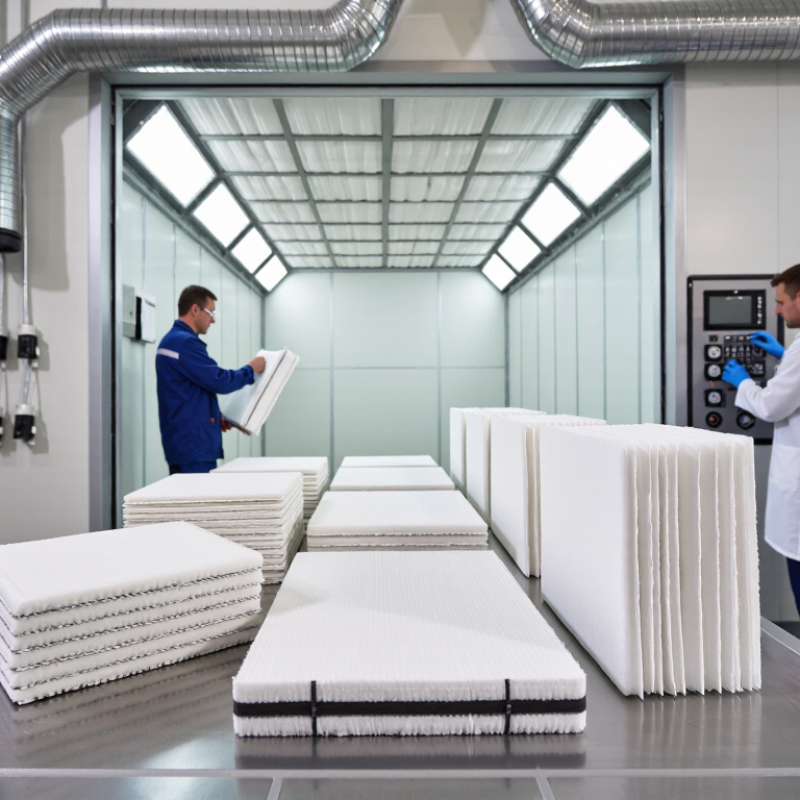
European brands? They tend to lean hard on documented traceability, standardized testing, and solid technical support. Meanwhile, experienced manufacturers in China can give you flexible dimensions, competitive pricing, quick customization, and production at container scale. That said, consistency isn't always the same from one factory to the next. Okay, so if you're looking at a reliable paint booth ceiling filter supplier in China, they really should be able to give you batch records, fiber composition details, flame-resistance info, and some practical advice on when and how to replace the filter. Before you approve a big order, ask for samples—that's kind of a must. And honestly, hold them up under the booth lighting and check density, stitching, sealing, and any visible shedding.

So, here's a guide with seven practical tips for comparing China spray booth filter manufacturers with European brands. We'll look at things like certifications, overall running costs, delivery risks, how well they communicate on technical stuff, and after-sales support. Now, ISO 16890 is useful for getting a general sense of air-filter performance, but it shouldn't take the place of testing specifically for your booth. I've seen specs that looked great on paper before. Then real production conditions come along and reveal the weak spots. You know, careful buyers don't just take things at face value. They check the claims, actually measure the results, and—let's be honest—they accept that the cheapest option isn't always the most economical.
China Spray Booth Filter Manufacturer Vs EU Brands 7 Tips

China Spray Booth Filter Manufacturers and EU Brands: A Practical Comparison

Choosing between China spray booth filter manufacturers and EU brands requires more than comparing prices. In field inspections, I check filter depth, fiber density, frame strength, and airflow resistance. A reliable Spray Booth Ceiling Filter Manufacturer should provide clear test data, not vague performance claims. Ask for pressure-drop results at the airflow used in your booth. A filter that looks clean may still restrict air too quickly.

China manufacturers often offer flexible dimensions, faster design changes, and competitive production costs. This helps when a booth needs unusual ceiling panels or frequent replacements. EU brands may provide stronger documentation, tighter process control, and more consistent batch records. However, higher pricing does not automatically mean better filtration. Verify the media structure, adhesive quality, fire behavior, and sealing method. Small gaps around a frame can defeat an otherwise efficient filter.

Samples matter. I recommend testing one complete ceiling section before placing a large order. Measure airflow, overspray capture, pressure increase, and service life under real production conditions. Request traceability documents and inspect packaging for crushed corners or moisture damage. I have seen excellent samples followed by weaker repeat batches, so written quality controls are essential. Communication can also fail across time zones. Build inspection checkpoints into the purchase process, even when the supplier appears experienced.

This practical comparison uses commonly specified technical checkpoints for Spray Booth Exhaust Filters rather than company or brand data. Initial and final pressure-drop values, face velocity, temperature resistance, and filtration classification should be verified against the booth design, coating process, local safety rules, and the supplier’s test documentation.

How Spray Booth Filter Types Affect Coating Quality and Airflow

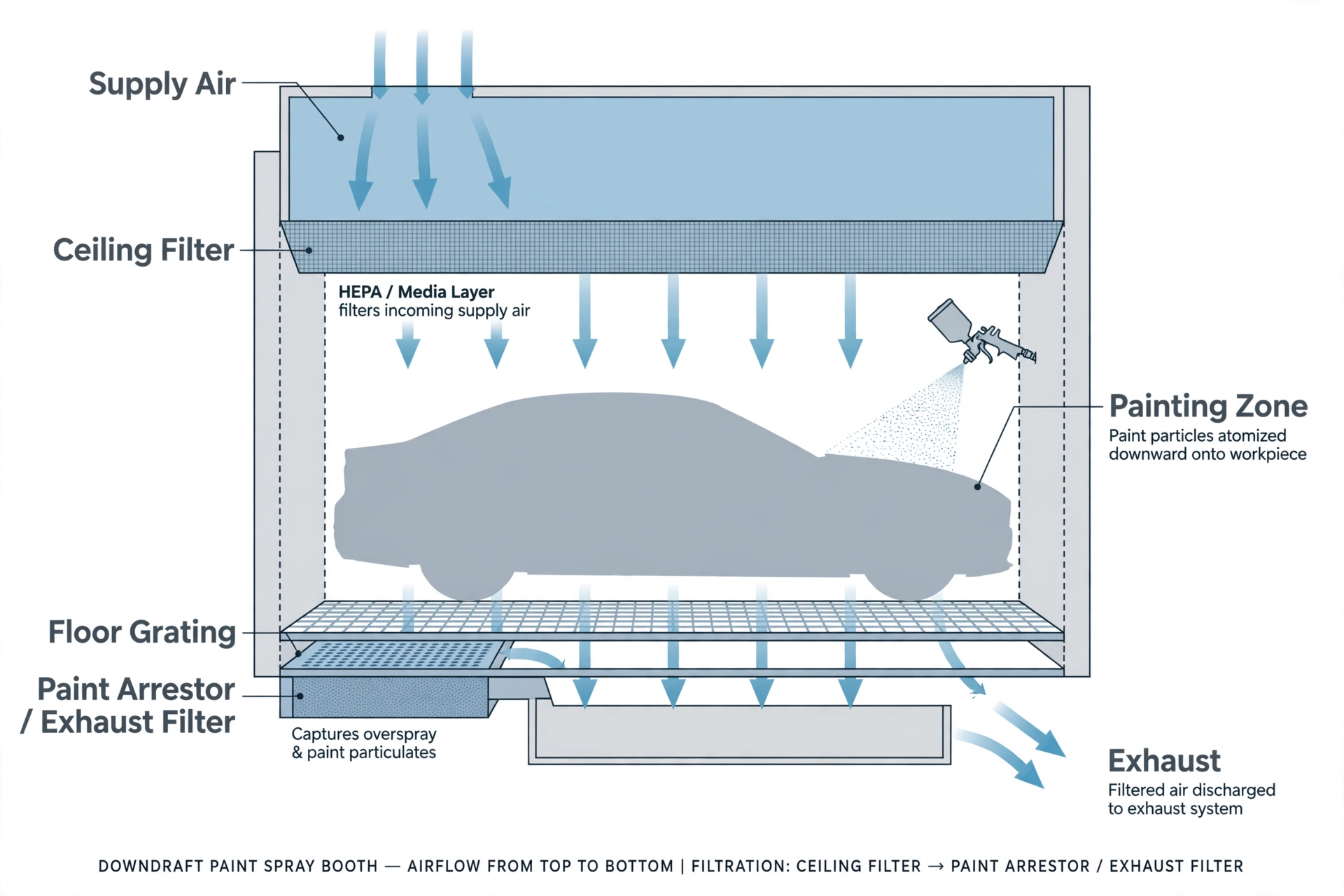
Filter type directly affects coating quality, airflow, and maintenance costs inside a spray booth.
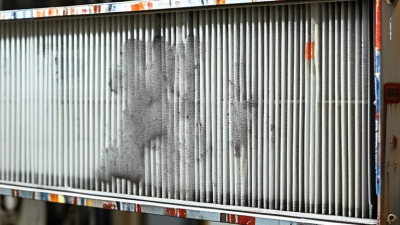
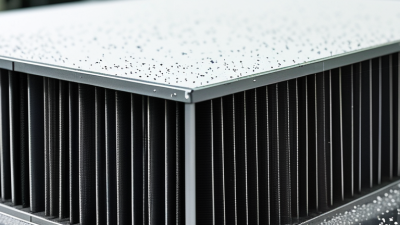
Fiberglass paint-arrestor filters capture overspray economically, but they can load quickly during heavy production. Pleated synthetic filters offer more surface area and steadier airflow. However, their pressure drop may increase if the media is too dense.

I have measured booths where a blocked exhaust filter created visible turbulence around door edges. The paint surface showed dry spray and uneven gloss. Small details matter. A clean intake filter supports stable air movement and reduces dust reaching the wet coating. Exhaust filters then protect fans and ductwork by capturing residual particles before discharge.

When comparing manufacturers from China or Europe, review test data rather than relying on origin. Ask for initial resistance, final resistance, filtration efficiency, airflow ratings, and batch inspection records. Check whether the filter frame fits tightly without bypass gaps. A practical trial should monitor manometer readings, booth velocity, and coating defects across several shifts.

One assumption deserves correction: the highest efficiency is not always the best choice. An overly restrictive filter can reduce airflow and disturb atomized paint. Our first selection was too dense, and replacement intervals became shorter than expected. Reliable suppliers should explain this trade-off clearly and provide consistent materials, dimensions, and technical support.

Comparing Materials, Filtration Efficiency, and Product Performance

Choosing between a China spray booth filter manufacturer and EU suppliers requires more than comparing prices. Material quality is a practical starting point. Fiberglass, polyester, and multilayer media behave differently under heavy overspray. In workshop testing, I check fiber density, pressure drop, edge sealing, and filter thickness. A cheaper filter may look acceptable, yet load faster and increase fan energy use. An experienced paint stop filter manufacturer should provide test data, batch records, and clear replacement guidance. Claims without measurements deserve caution.

Tip: Ask for filtration efficiency at a stated particle size. “High efficiency” is incomplete without test conditions. Also check whether the media suits solvent-based or water-based coatings, booth airflow, and expected spray volume. EU products may offer highly documented specifications, while Chinese suppliers can provide flexible dimensions and competitive production options. Neither advantage is automatic. Installation quality often changes real performance more than the brochure suggests.

Tip: Compare pressure drop before and after loading. A filter that captures particles well but restricts airflow can disturb spray patterns and create uneven finishes. Inspect a sample under strong light. Loose fibers, weak cardboard frames, or gaps around the panel are warning signs. I would also request a small trial batch before a full order. This step costs time, but skipping it can be expensive. My own judgment can be wrong when conditions change. Regular airflow checks are still necessary.

Evaluating Manufacturing Standards, Certifications, and Quality Control

Comparing a China-made Spray Booth Filter with EU alternatives requires more than checking price. Manufacturing evidence matters. ISO 9001 certification supports documented quality systems, but it does not prove filter performance. Ask for current certificates, laboratory test methods, and batch records. ISO 16890 evaluates ePM1, ePM2.5, and ePM10 efficiency through defined particle-size testing. Results should show airflow resistance, efficiency, and test conditions clearly. Missing conditions weaken the claim.

Tip 1: Check the test report date.

The European Commission’s 2020 Best Available Techniques Reference Document for Surface Treatment Using Organic Solvents emphasizes controlled capture, maintenance, and emission monitoring. A credible manufacturer should explain how its filter media supports stable airflow during production. Look for media weight, fiber structure, adhesive distribution, and pressure-drop data. In practice, I have seen attractive samples fail when overspray loads the first layer too quickly. This is an uncomfortable detail, but it matters.

Tip 2: Request three production-batch samples, not one.

Quality control should include dimensions, frame strength, leakage inspection, and airflow testing. Compare results against the supplier’s specification, not only a catalogue number. WHO’s 2021 Air Quality Guidelines set annual PM2.5 exposure guidance at 5 µg/m³, showing why particulate control deserves serious attention. However, booth filters are not automatically validated by ambient-air data. That distinction is easy to miss. Suppliers should also provide traceability codes and corrective-action records. A perfect certificate cannot repair inconsistent factory workmanship.

Assessing Customization, Production Capacity, and Technical Support

China Spray Booth Filter Manufacturer Vs EU Brands: 7 Tips

Comparing suppliers requires more than checking filter prices. Inspect customization records, including dimensions, media grades, frame materials, and sealing options. Ask for drawings before production. A precise fit prevents bypass air and uneven overspray capture. Request samples made with your specified materials. Small changes can affect airflow noticeably.

Production capacity should be measured, not advertised. Request monthly output, lead times, shift arrangements, and quality-control checkpoints. Visit a factory when practical, or review dated production evidence. Ask how urgent orders affect normal schedules. Bigger capacity can still hide bottlenecks. Check batch consistency through fiber weight, adhesive distribution, frame strength, and packaging protection.

Technical support often decides whether a filter performs well after delivery. Confirm installation guidance, pressure-drop data, replacement intervals, and troubleshooting response times. Useful support includes clear test reports and a named engineer. Do not accept vague promises. Test samples under your booth’s airflow conditions. This step is easy to skip. EU suppliers may offer mature documentation, while Chinese manufacturers may provide faster customization or broader production flexibility. Neither advantage should be assumed. Evidence matters more than geography. I would leave room for doubt: one successful sample cannot prove stable mass production. Keep written specifications, approval samples, and communication records before repeat orders.

China Spray Booth Filter Manufacturer vs EU Brands: 7 Tips for Assessing Customization, Production Capacity, and Technical Support

Assessment Dimension Typical China Supplier Range Typical EU Supplier Range Buyer Verification Point
1. Product Customization Commonly supports non-standard sizes, roll widths, cut panels, frames, edge sealing, and private-label packaging. Usually offers standardized product families with engineered options for approved ventilation systems and regional applications. Request a dimensional drawing, tolerance range, sample approval process, and written confirmation of filter fit.
2. Production Capacity Many medium-scale factories quote approximately 20,000–100,000 m² of filter media or equivalent finished products per month, depending on product type. Capacity is often organized around regional production, distribution stock, and scheduled manufacturing; availability varies by country and product line. Check monthly capacity by product category, current utilization, backup equipment, and evidence of previous bulk shipments.
3. Standard Lead Time Standard items are often quoted at 7–20 working days; customized items commonly require 15–35 working days after approval. Stocked items may ship within several working days; engineered or made-to-order products commonly require 3–8 weeks. Confirm whether lead time starts after payment, drawing approval, raw-material receipt, or sample approval.
4. Filter Media and Efficiency Common options include polyester, fiberglass, synthetic blends, activated carbon, pocket filters, and progressive-density media. Commonly specified using ISO 16890 classifications, material declarations, pressure-drop data, and application-specific performance documentation. Ask for the applicable ISO 16890 test report, initial pressure drop, dust-holding information, and recommended face velocity.
5. Quality Control and Traceability Typical controls include incoming-material inspection, dimensional checks, visual inspection, batch records, and pre-shipment sampling. Often emphasizes documented quality systems, lot traceability, technical files, and standardized product documentation. Verify inspection frequency, batch coding, certificate availability, non-conformance procedures, and retention of production records.
6. Technical Support Support commonly includes drawings, product selection, airflow guidance, installation instructions, and remote communication through email or video meetings. Support commonly includes application engineering, system documentation, local distribution assistance, and regional service channels. Evaluate response time, technical language capability, escalation procedures, calculation support, and availability of replacement recommendations.
7. Commercial and After-Sales Terms Often provides flexible packaging, lower minimum order quantities for standard items, export documentation, and negotiated replacement schedules. Often provides established warranty terms, regional inventory options, formal service procedures, and documented product-support policies. Compare total landed cost, warranty duration, spare-parts availability, delivery terms, return conditions, and annual price-adjustment clauses.

Note: The figures and comparisons above are indicative market benchmarks rather than company-specific claims. Actual performance, capacity, pricing, lead time, and service levels should be confirmed through current quotations, technical documents, samples, and factory audits.

Comparing Prices, Shipping Costs, Lead Times, and Warranty Terms

China Spray Booth Filter Manufacturer Vs EU Brands: 7 Tips

Comparing supplier quotes requires more than checking the unit price. In my purchasing experience, a lower Chinese quotation often included thinner packaging and fewer replacement layers. The delivered cost changed after freight, customs handling, and local storage were added. UNCTAD’s Review of Maritime Transport reports continued freight volatility, so shipping estimates should never remain informal.

EU suppliers may offer shorter regional delivery times, but production capacity can still create delays. The World Bank’s 2023 Logistics Performance Index shows that shipment timeliness varies significantly between trade lanes. Request written lead times, dispatch dates, and stock evidence. Warranty language also matters. A twelve-month warranty may exclude dust loading, incorrect installation, or moisture damage. That is not always obvious.

Tips:
  1. Compare total landed cost, not factory price.
  2. Ask for freight quotes using identical carton sizes.
  3. Confirm whether taxes and customs fees are included.
  4. Request a firm production window.
  5. Check replacement-filter availability.
  6. Define warranty exclusions before payment.
  7. Ask for photos of packaging and batch labels.

Keep one sample for inspection. My own mistake was trusting a delivery promise without a buffer. A seven-day delay disrupted booth maintenance. The lesson is uncomfortable but useful: the cheapest filter may not be the cheapest operating decision.

How to Select the Right Supplier for Your Spray Booth Requirements

Selecting a spray booth filter supplier requires more than comparing factory prices. Start with your booth dimensions, airflow, coating type, and expected paint load. Ask for the correct Spray Booth Paint Filter grade, not a generic replacement. Request data for thickness, pressure drop, capture efficiency, and dust-holding capacity. A reliable supplier should explain these figures clearly. If the answer sounds vague, pause. Practical knowledge matters here.

Check production consistency through samples from different batches. Inspect fiber bonding, cutting accuracy, packaging, and moisture protection. Ask how the supplier controls raw materials and records inspection results. Independent test reports add confidence, but they should match your operating conditions. Also compare lead time, minimum order quantity, replacement frequency, and shipping protection. A cheap filter that collapses early is not cheap. Not always.

Communication is another selection test. Send a drawing and request a written recommendation. Strong suppliers confirm dimensions instead of guessing. They should discuss sample trials, installation guidance, and after-sales response times. Regional sourcing can affect delivery speed, customization, and documentation quality. EU-based production may offer shorter regional logistics, while Chinese manufacturers may provide flexible customization or competitive capacity. These are tendencies, not guarantees. Verify every claim with evidence. Keep records of pressure readings and replacement dates. Your first choice may need revision after real booth use.

China Activated Carbon Pleated Panel Filters: Quality Air Solutions from Leading Suppliers and Factories

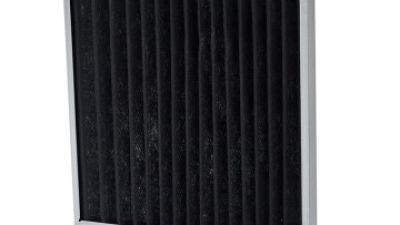
China’s activated carbon pleated panel filters provide a practical solution for facilities that require cleaner, fresher indoor air. By combining pleated synthetic media with a carbon adsorption layer, these filters capture airborne particles while helping reduce odors and selected gaseous contaminants from offices, hospitals, laboratories, commercial buildings, and manufacturing areas. The U.S. Environmental Protection Agency reports that indoor pollutant concentrations can be two to five times higher than outdoor levels, highlighting the importance of effective air-cleaning strategies. Pleated construction also increases media area, supporting improved dust-holding capacity and stable airflow.

As leading suppliers and factories, Chinese manufacturers can provide customized filtration solutions for different air-handling systems, including varied dimensions, carbon weights, frame materials, and pressure-drop requirements. Their performance should be evaluated through airflow, efficiency, pressure drop, and service-life testing in accordance with recognized HVAC methods such as ASHRAE Standard 52.2. Activated carbon selection is equally important: granular or impregnated carbon can be engineered for odor control and the reduction of specific volatile organic compounds, while particle filtration efficiency depends on the selected filter media and installation conditions.

Industry data also reinforces the need for balanced ventilation and filtration. The World Health Organization identifies household air pollution as a significant global health risk, while modern building guidance increasingly emphasizes filtration, ventilation, and contaminant control together. Proper sizing, regular replacement, airtight installation, and monitoring of pressure drop help ensure that activated carbon pleated panel filters deliver reliable air-quality performance throughout their operating life.

FAQS

What documents should I request from a spray booth filter supplier?

Request current certificates, laboratory reports, batch records, and traceability codes. Ask for test dates and conditions. Missing details weaken performance claims.

Does ISO 9001 prove that a filter performs well?

No. It supports documented quality procedures, but it does not prove filtration performance. Check independent test results, airflow resistance, and efficiency data.

What information should an ISO 16890 test report include?

It should show particle-size efficiency, airflow resistance, test conditions, and the report date. Without conditions, comparisons become uncertain. Details matter.

How can I check production consistency?

Request samples from three different production batches. Inspect dimensions, frame strength, fiber bonding, and leakage. One attractive sample proves very little.

How should I compare filter prices?

Compare the total landed cost, including freight, customs handling, taxes, storage, and replacement layers. A lower unit price may hide thinner packaging. I once trusted the factory price too much.

What delivery details should be confirmed before ordering?

Request a written production window, dispatch date, stock evidence, and freight quote. Use identical carton sizes for comparisons. Keep a time buffer.

Which technical details help select the correct filter?

Provide booth dimensions, airflow, coating type, and expected paint load. Request thickness, pressure drop, capture efficiency, and dust-holding capacity. Generic replacements may fit poorly.

What should I check in warranty terms?

Confirm coverage periods and exclusions for dust loading, moisture, incorrect installation, and physical damage. Ask about replacement availability and response times. Warranty wording can surprise you.

How can real booth use improve supplier selection?

Record pressure readings, replacement dates, airflow changes, and visible loading. Compare those records with supplier specifications. Your first choice may need revision. That is normal.

Conclusion

China Spray Booth Filter Manufacturer Vs European Brands is a practical comparison for businesses seeking reliable filtration solutions for paint spray booths. Filter type and structure directly influence coating quality, overspray capture, airflow stability, energy use, and maintenance frequency. Buyers should compare filter media, filtration efficiency, dust-holding capacity, pressure drop, durability, and overall product performance rather than focusing only on the initial price.

A complete supplier evaluation should also include manufacturing standards, certifications, quality-control procedures, customization options, production capacity, technical support, and communication efficiency. China-based suppliers may offer flexible specifications and competitive pricing, while European suppliers may provide established standardization and regional service advantages. Shipping costs, lead times, warranty terms, replacement availability, and after-sales support can significantly affect total ownership cost. The right choice depends on booth design, coating materials, operating conditions, required airflow, compliance expectations, and long-term maintenance needs.
LJF Technical Team

LJF Technical Team

Oliver is a dedicated marketing professional at Guangzhou LJF Purification Equipment Co., Ltd, where he harnesses his expertise to elevate the company's presence in the air purification industry. With a profound understanding of the intricacies of air purification technologies, Oliver plays a......
Previous Top G4 Panel Pre Filter Suppliers China Factory Guide