Picking a trustworthy DPA Paint Pocket Filter supplier in China for your coating needs isn’t just about low prices. Honestly, there’s a lot more to consider. Your coating workshop needs stable airflow, good overspray capture, and filters that actually match the existing air-handling gear. A solid supplier should really know how paint booths operate—so it’s not just about making fabric bags, y’know?
Paint booth Pocket Filters are pretty much the go-to in prep areas, spray booths, and finishing lines. But their effectiveness depends on things like pocket length, media setup, frame quality, and how well the airflow runs through. A well-designed filter plays a big role in protecting your fans, ducts, and the surfaces downstream from paint particles. Plus, it can help keep the workspace cleaner and give you more consistent coating results. Small stuff counts—like a loose frame might let paint bypass, and if the pressure drop is too high, that can crank up energy costs and mess with your booth’s performance.
Savvy buyers should ask for all the technical details—think about sample sizes, pressure-drop info, and anything else relevant—before hitting the buy button. Confirm the filtration grade, stitching quality, sealing methods, and how easy they say it is to replace filters. For example, DPA Filter Solutions should be able to back up their claims with clear specs and good support. You also want to see traceable production records, thorough inspection reports, and honest info about how long the filters will last—that’s how you know they’re reliable.
Of course, no filter is perfect. Real-world conditions—like paint viscosity, how busy your booth is, humidity levels, and maintenance routines—can all affect how things turn out. Going for the cheapest option might seem smart at first, but hidden costs down the line for replacements can add up. So, it’s worth doing some careful testing and vetting. This article is all about how to choose a pocket filter supplier from China for coating jobs, paying attention to performance, compatibility, durability, and making smart, responsible buying decisions.
Dpa Paint Pocket Filters: Definition and Role in Coating Systems
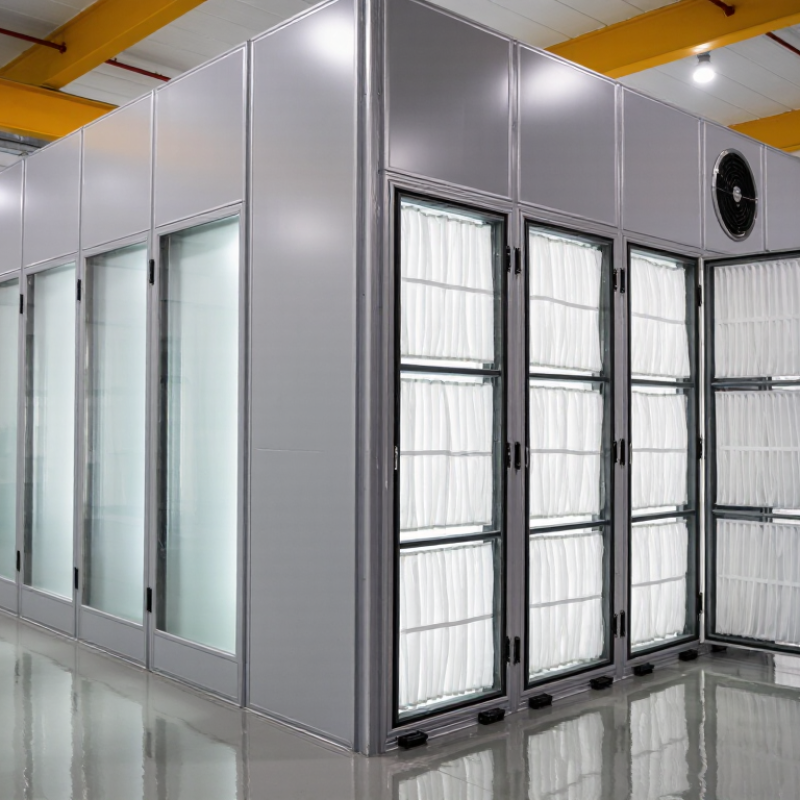
A paint Pocket Filteris a multi-pocket Air Filter used in coating ventilation systems. Its pleated fabric increases surface area inside a compact frame. The filter captures overspray dust, dried paint particles, and airborne debris before they reach fans or final filters.It does not remove VOC gases. That distinction matters.
The U.S. Environmental Protection Agency identifies coating operations as sources of particulate matter and VOC emissions in AP-42, Section 4.2. Meanwhile, Grand View Research valued the global paints and coatings market at about USD 206.56 billion in 2022. Larger production volumes create greater filtration pressure. A correctly selected Pocket Filter can protect downstream equipment and support steadier airflow. ISO 16890 testing also encourages evaluation by particulate-size efficiency, not by appearance alone. In my experience, a clean filter can still perform poorly when its pockets collapse or seal unevenly. Catalog numbers are not enough.
Tips: Check airflow, dust loading, humidity, and paint chemistry before ordering. Use a rigid support frame and inspect the gasket weekly. Replace the filter when pressure drop reaches the equipment maker’s limit. A pressure gauge helps. Do not judge service life by calendar days alone. Some coating lines load filters quickly, while others expose them to moisture and sticky particles. That variation deserves more attention.
How Paint Pocket Filters Work in Industrial Air Filtration
In coating plants, airborne paint mist, dust, and powder can move through ventilation systems quickly. A Pocket Air Filter uses several deep fabric pockets to slow the air stream. As air passes through the synthetic or fiberglass media, particles are captured by interception, impaction, and diffusion. Larger particles lodge near the surface, while finer particles collect deeper inside. The gauge tells the story. As dust builds, airflow resistance rises and fan energy increases.
Pocket filters usually serve as prefiltration or general ventilation control. They should not replace dedicated overspray arrestors or systems designed for volatile organic compounds. Correct selection depends on airflow volume, particle loading, temperature, humidity, and chemical compatibility. In practice, a filter that fits the frame may still perform poorly if its pockets collapse or the gasket leaks. Small details matter.
Installation crews should follow the airflow arrow and seat the frame evenly. Regular differential-pressure checks help identify loading before production airflow drops. Visual inspections can reveal wet media, torn seams, or bypass around the frame. Disposable pockets should not be shaken or washed, because damaged fibers may release captured dust. Field inspections often find premature loading caused by poor upstream separation. That is easy to overlook. A lower initial resistance can seem attractive, yet unstable media may shorten service life. The better decision considers measured pressure rise, replacement access, and consistent filtration performance.
Key Materials and Performance Features of Dpa Filter Media
Pocket filter media for coating lines must balance dust loading, airflow, and resistance to paint overspray. In practical installations, layered polyester is often selected for its strength and stable shape. Its progressive density helps capture larger particles near the outer surface. Finer inner layers retain smaller airborne dust.
Material choice matters.
Polypropylene can offer good chemical resistance and low moisture absorption. Fiberglass provides higher temperature tolerance, but it may require careful handling during installation.
For demanding air quality targets, a fine synthetic layer or electret treatment can improve particle capture. However, higher efficiency usually increases pressure drop. That trade-off should be measured, not guessed.
Reliable suppliers should provide media weight, thickness, temperature limits, and initial resistance data. I would also request airflow results at the booth’s actual operating volume. Laboratory figures alone can mislead. A filter that performs well at 500 Pa may behave differently in a busy coating room.
Look closely at the pocket seams and header connection. Weak stitching can cause bypass leakage before the media reaches its dust capacity.
Correct pocket depth also supports even airflow and prevents early collapse. In humid conditions, moisture resistance becomes important. In solvent-sensitive areas, compatibility data deserves extra review.
One point is easy to overlook.
Clean air does not always mean low operating cost. Replacing filters too early wastes material, while delaying replacement can overload fans and affect coating consistency. Records from pressure readings, replacement dates, and visible overspray provide better decisions than appearance alone.
Applications Across Automotive and General Coating Industries
Dpa Paint Pocket Filter Supplier China For Coating Industry?
In automotive coating lines, a reliable Filter Pocket helps capture paint particles before they reach spray booths, ducts, and exhaust equipment. It supports cleaner air movement and reduces deposits around vehicle bodies. Polyester and nylon options suit different coating conditions. The correct material depends on paint viscosity, solvent exposure, temperature, and airflow volume.
Automotive plants often replace filters when pressure loss rises, not only when the media looks dirty. A pocket filter with stable stitching and firm sealing can maintain airflow across long shifts. Small leaks around the frame may still cause uneven overspray collection. That detail is easy to overlook.
General coating workshops use pocket filters for metal parts, furniture panels, machinery, and building components. These applications may involve powder residue, water-based coatings, or solvent-based paints. Each process needs practical compatibility testing. A filter rated only by initial efficiency may disappoint after several hours. Real performance changes with humidity, particle size, and loading speed.
Measurements should be checked on site. Frame dimensions, pocket depth, airflow direction, and replacement access all matter. A supplier in China can provide customized sizes, but drawings must be confirmed carefully. One mistake in measurement can delay an entire maintenance schedule. Even experienced teams sometimes choose a denser media too quickly, creating unnecessary resistance.
How to Select a China-Based Dpa Filter Supplier
How to Select a China-Based Dpa Paint Pocket Filter Supplier
Selecting a China-based Dpa paint pocket filter supplier requires more than comparing quotations. Coating lines face overspray, fine particles, solvent vapors, and changing airflow. The filter must match the booth’s air volume, pressure limit, temperature, and installation space. Ask for the filter’s efficiency test method, initial resistance, final resistance, and pocket dimensions. The Pocket Filter Media should also suit the coating environment, not merely look dense.
Energy performance deserves close attention. The International Energy Agency’s Energy Efficiency 2023 report states that buildings use about 30% of global energy. Fan resistance can increase operating costs. A supplier should provide airflow curves and measured pressure-drop data, preferably under ISO 16890 conditions. Request samples before placing a production order. Test them beside your current filters for overspray capture, service life, and replacement time.
Factory experience matters. Review photographs of pleating, stitching, frame sealing, and packaging. Ask whether each batch receives dimensional and leakage checks. Traceable raw-material records are useful when coating quality changes unexpectedly. A supplier may promise high efficiency, yet ignore humid storage or damaged corners. That mistake is easy to make. I would also inspect communication speed, export documentation, and corrective-action records. A lower price can still become expensive when the pockets collapse early or the frame fits poorly.
How to Select a China-Based DPA Paint Pocket Filter Supplier
For coating applications, supplier selection should prioritize filtration performance, airflow stability, paint-loading capacity, dimensional compatibility, quality traceability, and export reliability. The chart presents a transparent 100-point procurement weighting model for comparing potential suppliers without using company or brand data.
Higher-weighted criteria have a greater effect on the final sourcing decision. Before ordering, request technical data sheets, pressure-drop test results, filter dimensions, media specifications, quality records, sample approval, and shipping documentation.
Quality Standards, Customization, and Production Capabilities
Dpa Paint Pocket Filter Supplier China For Coating Industry?
A dependable pocket filter supplier should understand coating environments, not only sell standard sizes. Paint particles can load unevenly, especially near spray areas. Quality checks should cover media weight, pocket depth, frame strength, stitching, and airflow resistance. Test reports should identify efficiency, pressure drop, and production batch details. Traceability matters when a filter fails during a busy coating schedule.
Customization begins with accurate operating data. Share airflow, filter dimensions, pocket quantity, installation direction, temperature, and expected dust concentration. A capable factory can adjust pocket length, sealing methods, frame materials, and media grades. Samples should be tested in conditions close to actual production. A clean sample may still perform poorly after solvent mist and paint dust exposure.
Production capability is visible in practical details. Look for controlled cutting, consistent ultrasonic or sewn seams, stable adhesive application, and final inspection records. Ask about daily output and how urgent orders are handled. A supplier should explain its quality process clearly. It should not promise everything. That is a good sign.
Factory audits, sample approval, and small trial orders reduce uncertainty. Some suppliers report impressive efficiency figures but provide limited testing evidence. That gap deserves attention. Check dimensional tolerances before approving mass production. Even a few millimeters can create bypass leakage inside a coating unit. Reliable cooperation depends on clear drawings, repeatable inspection, and honest communication when a specification needs revision.
Installation, Maintenance, and Replacement Considerations
In coating facilities, pocket filter installation begins with airflow control. Fit the filter in the correct direction. Seal every frame joint. Even a small bypass can carry visible overspray into the final air system. The U.S. EPA’s AP-42 guidance identifies spray coating as a particulate-emission source, so clean installation affects both air quality and housekeeping. Check the filter face for dents, moisture, or torn stitching before commissioning.
Maintenance should follow measured pressure drop, not an assumed calendar date. A differential-pressure gauge gives useful evidence. Record pressure, airflow, booth loading, and coating schedule in one log. ASHRAE Standard 52.2 evaluates filter performance using particles from 0.3 to 10 micrometres. ISO 16890 reports efficiency across PM1, PM2.5, and PM10 ranges. These classifications help compare products, but they do not replace site testing. Coating dust can load unevenly. That part is often underestimated.
Replacement becomes necessary when pressure reaches the equipment maker’s limit, airflow falls, or the media shows damage. Do not shake a loaded filter indoors. Bag it carefully according to the facility’s approved waste procedure. Verify the replacement size, gasket compression, pocket depth, and support position. Eurovent energy guidance treats pressure drop as a major operating-cost factor, because higher resistance demands more fan power. A practical improvement is to photograph the installed filter before removal. It sounds simple. It prevents mistakes. Yet rushed maintenance still causes them.
G4 Cardboard Pleated Pre-Filters from China: HVAC Insights from ASHRAE and Eurovent Reports
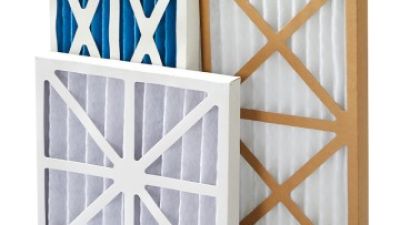
G4 cardboard pleated pre-filters from China are designed as the first protective stage in air-conditioning and ventilation systems. Their pleated structure increases effective surface area, helping capture dust, lint, and larger airborne particles before they reach finer filters, coils, fans, and other HVAC components. In practical operation, this can help reduce loading on downstream filters and support more stable airflow. The G4 designation comes from the former EN 779 framework; current European practice increasingly uses EN ISO 16890 to describe filtration performance by particle-size efficiency.
ASHRAE Standard 52.2 evaluates air filters through a particle-size efficiency test and assigns MERV ratings from 1 to 16, providing a structured method for comparing filtration performance. Eurovent guidance and certification reports likewise emphasize tested efficiency, pressure drop, dust-holding behavior, and correct filter selection rather than relying only on nominal labels. For this reason, purchasers should review laboratory data, dimensions, airflow volume, and initial resistance when specifying a G4 pre-filter for a particular system.
These paperboard pleated filters are suitable for commercial buildings, workshops, warehouses, and industrial ventilation equipment where economical pre-filtration is required. They can also be installed in dust collection systems to intercept coarse particles and help maintain cleaner operating environments. As China-based factory products, they can be supplied in customized sizes and configurations, supporting replacement programs for air-handling units while meeting project requirements for dependable construction, consistent fit, and practical maintenance.
FAQS
Layered polyester offers strength, stable shape, and progressive particle capture. Polypropylene resists chemicals and absorbs little moisture. Fiberglass tolerates higher temperatures but needs careful handling.
Outer layers catch larger particles first. Finer inner layers retain smaller airborne dust. Uneven loading can happen near spray areas. Real conditions matter.
Not always. Higher efficiency usually increases pressure drop. That can raise fan energy use and operating costs. Measure the trade-off with airflow data.
Request media weight, thickness, temperature limits, and initial resistance. Also ask for final resistance and airflow curves. Results should match the booth’s actual operating volume.
Inspect pocket seams, header connections, stitching, and frame sealing. Weak seams may cause bypass leakage. Check pocket depth and dimensional tolerances. A few millimeters can matter.
Provide airflow, filter dimensions, pocket quantity, installation direction, and temperature. Include expected dust concentration and available installation space. The supplier may adjust pocket length, sealing, frame, or media grade.
Test samples beside current filters under similar production conditions. Compare overspray capture, pressure drop, service life, and replacement time. Clean samples can mislead. They may perform differently after solvent mist exposure.
Review factory photographs and inspection records. Request dimensional and leakage checks for each batch. Use a sample approval and small trial order. My judgment could still be wrong, so keep pressure records.
Conclusion
Dpa Paint Pocket Filter Supplier China For Coating Industry solutions are designed to support efficient air filtration in industrial painting and coating systems. These pocket filters capture airborne particles, overspray residue, and other contaminants before they affect product quality or enter downstream equipment. Their multi-pocket structure provides a large filtration area, stable airflow, and reliable dust-holding capacity, making them suitable for automotive finishing, metal coating, furniture production, and general industrial applications.
When selecting a supplier, buyers should evaluate filter media, frame construction, sealing performance, pressure resistance, and compatibility with existing ventilation systems. A dependable China-based supplier should also offer consistent quality control, customized dimensions, material options, and scalable production capabilities. Proper installation, routine inspection, and timely replacement are essential for maintaining filtration efficiency, protecting coating equipment, and supporting a cleaner working environment. Supplier experience, testing procedures, packaging, and after-sales communication should also be considered before placing an order.