Leave Your Message
0%

Wondering how to figure out what you'll spend on HVAC filter replacements each year? Well, it all boils down to two things: what you pay for each filter and how often you need to swap them out. Before you set your replacement schedule, make sure to check the filter packaging, your HVAC manual, or the manufacturer’s recommendations—these will give you a good baseline. Keep in mind that factors like a home full of dust, pets, or heavy system use can speed up filter clogging, so don’t just go by the calendar alone.

Here’s a simple way to get an estimate: take the price of a single filter and multiply it by how many you’ll use in a year. For example, if one filter costs $12 and you change it every three months, you’re looking at roughly $48 a year. It adds up, right? To get a more realistic number, make sure you're including the right filter size and type, plus any delivery fees or discounts if you buy in bulk. Keep your receipts and note down each replacement date—doing that can actually help you track your real usage over time.

And heads up—filter prices can vary quite a bit, so don’t assume that a pricier filter is automatically better for your system. Always double-check the manufacturer’s specs before making a purchase. Remember, this is just for the cost of the filters themselves—labor or other maintenance costs aren’t included. Think of this as a handy starting point. It’s a good idea to review your actual expenses and habits after a year to see if anything’s changed, since things like prices and replacement routines can shift over time.
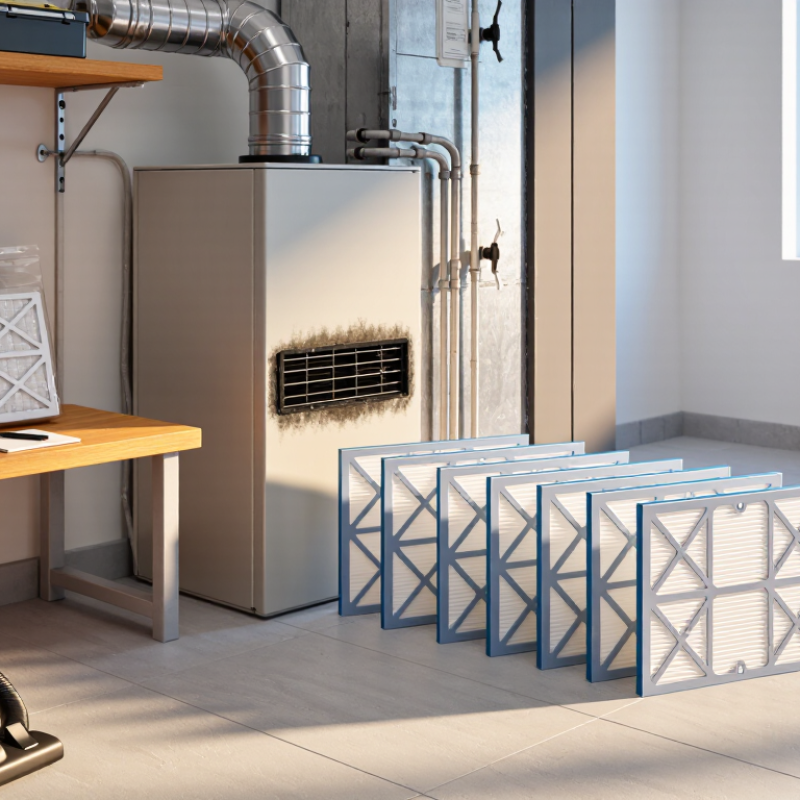
How To Calculate Hvac Filter Replacement Cost Per Year?

Identify the HVAC Filter Type and Required Size

Before estimating yearly replacement cost, identify the filter’s type and exact size. Check the frame for a printed dimension, such as 16 × 25 × 1 inches. If it is missing, measure the opening and filter depth; nominal labels may differ slightly from actual measurements. A loose fit can let air bypass the filter. That small gap matters.

Common options include basic fiberglass, Pleated Filters, and higher-efficiency media. ASHRAE Standard 52.2 rates filters by their ability to capture particles across three size ranges, from 0.3 to 10 micrometers. For example, MERV 13 filters must meet defined efficiency thresholds in each range. Higher resistance can affect airflow, so check the HVAC manual before choosing a higher rating. AHepa Hvac Filter is not automatically a suitable drop-in replacement; many systems need specific equipment to handle HEPA-level resistance. Easy to overlook.

Record the type, dimensions, and MERV rating, then check the system’s recommended change interval. The U.S. Department of Energy’s Energy Saver guidance suggests checking filters monthly and replacing them at least every three months, with conditions affecting the schedule. Multiply the price of one correctly sized filter by the number used annually. I would verify the fit in the unit itself, too; printed measurements alone are not always reassuring.

How to Calculate HVAC Filter Replacement Cost per Year

Identify the filter type and the exact size printed on the existing filter or specified by your HVAC system. Annual filter cost is estimated as price per filter × filters used per year.

Estimated annual filter costs by type and size

Estimates assume a 16 × 25-inch filter and typical replacement intervals: monthly for fiberglass, every two months for 1-inch pleated filters, and every six months for a 4-inch pleated filter. Actual costs and replacement frequency vary by filter dimensions, household conditions, and system guidance. Taxes, delivery, and labor are excluded.

Determine How Often the Filter Needs Replacing

A filter’s replacement interval depends on its material, size, and how long the system runs. Start with the equipment manual. Many standard filters need changing every one to three months, but that is only a starting point. Check the filter monthly, especially during heavy heating or cooling seasons. A gray surface, visible dust buildup, or reduced airflow can signal that it needs attention sooner.

Household conditions matter. Pets, nearby construction, frequent cooking, and dusty rooms can load a filter faster. A home with one cat may need more frequent checks than a quiet, lightly used apartment. Write the installation date on the frame; it is easy to forget. If you use a Hepa Air Filter For Hvac, verify that the system is designed for its airflow resistance. A high-efficiency filter that does not suit the equipment may strain airflow rather than improve comfort.

Once you know the interval, estimate yearly use by dividing 12 months by the number of months each filter lasts. Replacing one every two months means about six filters per year. Multiply that count by the price per filter to estimate annual cost. The schedule may still need adjusting. Check after a dusty renovation or a stretch of unusually heavy system use, and note what you find. My first estimate might be wrong; seasonal conditions change.

How To Calculate HVAC Filter Replacement Cost Per Year? – Determine How Often the Filter Needs Replacing

Annual filter cost = price per filter × number of replacements per year. The examples below use estimated U.S. consumer prices and common replacement schedules; actual costs and schedules vary by filter, system, home conditions, and usage.

Example Filter Estimated Price per Filter Example Replacement Interval Replacements per Year Calculation Estimated Annual Cost
1-inch Fiberglass Filter $3 Every month 12 $3 × 12 $36
1-inch pleated filter $10 Every 3 months 4 $10 × 4 $40
4-inch pleated media filter $35 Every 6 months 2 $35 × 2 $70
5-inch pleated media filter $45 Every 6 months 2 $45 × 2 $90

These are planning estimates, not fixed schedules. Check the filter and HVAC system instructions, and inspect the filter regularly. Homes with pets, more dust, or heavier system use may need more frequent replacements. Costs exclude taxes and any delivery charges.

Find the Cost of Each Replacement Filter

To find the cost of each replacement filter, start with the price on the receipt—not the package’s “lasts up to” claim. If a three-pack costs $27, each filter costs $9. Add delivery or sales tax if those apply. For a custom-cut Hvac Filter Media Roll, divide the roll’s total cost by the number of usable filters it produces; account for trim waste, too. Small scraps add up.

Compare like with like.

ASHRAE Standard 52.2 evaluates air-filter particle-removal performance using MERV ratings, so compare filters with the same dimensions and rating before judging price. A cheaper filter may not be an equivalent replacement.

The U.S. Department of Energy’s Energy Saver guidance recommends checking filters monthly and replacing them at least every three months, with more frequent changes sometimes needed. If your system uses four filters yearly at $9 each, the filter portion of annual cost is $36.

Not complicated. One weak spot: actual change frequency depends on system use, household conditions, and the filter manufacturer’s instructions, so a neat annual estimate can miss real-world variation.

Calculate Annual Filter Use and Material Cost

Annual filter cost starts with two numbers: how many filters your system uses and each filter’s price. Count every return grille and air handler that takes a replaceable filter. Then check the printed dimensions; Hvac Filter Sizes must match the slot, or air can bypass the filter. The U.S. Department of Energy’s Energy Saver guidance recommends checking filters monthly and replacing them at least every three months. That gives a practical baseline of four filters yearly, though pets, dust, and heavy system use may shorten the interval.

Use this formula: filters per year × filters per system × price per filter.

For one central unit using a single $12 filter every three months, the material cost is 4 × 1 × $12, or $48 a year. Two return grilles using the same schedule would cost $96. These are example prices, not a market average; record your own receipt prices for a reliable estimate. ASHRAE Standard 52.2 measures particle-removal efficiency using MERV ratings, which can help compare filter performance. Higher-rated filters are not automatically suitable for every system. Check the equipment manual, too. I have seen people budget for the filter but forget extra grilles. That small oversight can skew the annual total.

Add Any Related Labor or Delivery Costs

To estimate yearly HVAC filter costs, include more than the filters themselves. Add any service labor and delivery fees tied to replacement. A technician may charge a minimum visit fee even when changing a filter takes only a few minutes. If the visit also includes maintenance, count only the portion you reasonably associate with filter replacement.

Write down each expected change, the filter price, and any related fee. For example, four filters at $18 each cost $72 per year. If a technician charges $35 per visit and comes twice for filter changes, add $70. A $12 delivery fee on each order adds another $24, bringing the estimate to $166. Keep the receipt. Actual charges can vary with location, access, and service agreements.

Check whether delivery is charged per order or per filter; that detail changes the math. Combining several filters in one shipment may lower the annual total, while rush delivery can raise it. If labor covers several maintenance tasks, dividing the full fee by filter changes alone may overstate the filter cost. That estimate is imperfect. Note your assumptions, then compare them with a year of invoices and adjust the next estimate.

Compare Yearly Costs Across Filter Options

To compare yearly HVAC filter costs, multiply each filter’s price by how many you use in a year. A $7 filter replaced every month costs about $84 annually. A $20 filter changed every three months costs about $80. Check the replacement interval recommended for your system, then adjust it for pets, dust, or heavy use. A filter that looks inexpensive can cost more if it needs frequent replacement. It adds up.

Include the full cost of washable options, too. For example, a $45 washable filter plus $8 in annual cleaning supplies would cost about $53 in the first year, before considering replacement. Its lifespan can vary, and it must fit your HVAC system’s specifications. Not always. A filter with a higher efficiency rating may also restrict airflow if the system is not designed for it. Compare compatible options, record how often you actually replace or clean each one, and use those figures for a more realistic yearly estimate. Taxes and bulk discounts can shift the totals slightly. I would not treat the cheapest estimate as the best value without checking fit and maintenance needs.

H13 Mini Pleated HEPA Filters: Product Insights and Market Trends Informed by MarketsandMarkets’ Air Filter Market Report

The air-filtration market is being shaped by rising expectations for cleaner indoor air and more effective particle control. The *Air Filter Market* report by MarketsandMarkets projects the global market to grow from USD 14.3 billion in 2023 to USD 19.8 billion by 2028, a compound annual growth rate of 6.7%. This outlook highlights the growing relevance of high-efficiency filtration in ventilation equipment, dust-removal systems, and supply-air applications where dependable cleanliness is essential.

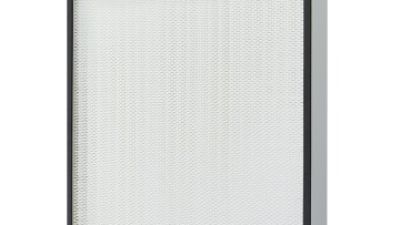
H13 mini pleated HEPA filters are designed for terminal filtration where space is limited but fine-particle capture matters. Under the EN 1822 classification system, H13 filters are associated with at least 99.95% efficiency at the most penetrating particle size when tested accordingly. Their compact pleated structure provides a large filtration area within a small footprint, making them suitable for installations that require careful attention to airflow and filter fit. Produced by experienced suppliers in China, these filters can be specified for air-handling equipment and other systems requiring high-efficiency filtration, with performance selected to match the operating conditions and cleanliness requirements of each application.

FAQS

How do I find the correct HVAC filter size?

Check the frame for printed dimensions, such as 16 × 25 × 1 inches. If none appear, measure the opening and filter depth. Actual measurements can differ slightly from the label. A loose fit lets air slip around the filter.

Does a higher MERV rating always work better?

Not necessarily. Higher-rated filters can restrict airflow. Check your HVAC manual before changing ratings. A filter that does not suit the system may cause problems.

How often should I replace an HVAC filter?

Check it monthly and follow your system’s recommended schedule. Many filters need replacement at least every three months, but dust, pets, and heavy use can change that. A calendar reminder helps.

How can I estimate yearly filter costs?

Multiply each filter’s price by the number used annually. For example, a $7 filter replaced monthly costs about $84 per year. Small costs add up.

Should I include labor and delivery in my estimate?

Yes. Add service fees and delivery charges related to filter changes. Two $35 visits add $70. Two $12 delivery fees add $24. Keep receipts; the estimate may still be imperfect.

How do I compare different filter options fairly?

Compare compatible filters using their yearly cost and actual replacement schedule. A $20 filter changed quarterly costs about $80 annually. A $7 monthly filter costs about $84. Check the fit, too.

Are washable filters always cheaper over time?

Not always. A $45 washable filter plus $8 in annual cleaning supplies costs about $53 in its first year. Its lifespan varies, and cleaning takes effort. I would track that honestly.

What details should I record for a better estimate?

Note the filter type, size, rating, price, replacement dates, labor, and delivery fees. Compare those notes with a year of invoices. My first estimate might be off; that is worth checking.

Conclusion

How To Calculate Hvac Filter Replacement Cost Per Year? Start by identifying the filter type and exact size required for your HVAC system, then check how frequently it should be replaced. Replacement intervals can vary depending on the filter and household conditions, so use the system’s guidance and your actual needs rather than assuming every filter lasts the same amount of time.

Next, find the price of each suitable filter and estimate how many replacements you will need over a year. Multiply the quantity by the per-filter price to determine the annual material cost. If applicable, include related expenses such as delivery or professional replacement labor. Finally, compare the yearly totals for different compatible filter options, considering both their prices and replacement schedules. This step-by-step estimate helps you understand the likely annual expense and choose an option that fits your system and budget.

Emma

Emma

Emma is a dedicated marketing professional at Guangzhou LJF Purification Equipment Co., Ltd. With a strong expertise in the air purification industry, she plays a pivotal role in promoting the company’s innovative products and services. Emma regularly contributes to the company’s blog, where she......
Previous Can I Get Custom Size Paint Booth Filters for My Booth?