Leave Your Message
0%

If you're sourcing laminated G3 and G4 air Filter Media from China, well, it's not just about comparing prices online—that's barely the starting point. You've really got to dig into the nitty-gritty: check out the fiber structure, see how evenly the adhesive is distributed, feel the roll density, and run some tests on filtration performance. The trick is finding material that keeps airflow steady without adding unnecessary resistance. And trust me, that's not just a nice-to-have. Where you really see this matter is in places like paint booths, ventilation units, and pre-filtration systems, where dust loading can change from one shift to the next—and that's exactly where I've seen filters go wrong when people skip these details.

So, you're wondering where to buy laminated air filter media rolls (G3 or G4) from China, right? Well, here's the thing—don't just jump at the first supplier who pops up with a flashy website. Start with manufacturers who actually share real technical data, not just marketing fluff. Ask for samples, and get the specifics: roll dimensions, basis weight, pressure-drop results, even their batch records—before you commit to any big order. And make sure you nail down what the media is made of—polyester, synthetic fiber, fiberglass, or a blend? It matters. Also, don't be shy to ask for actual production photos, packaging details, and proof of quality control. Honestly, a shiny brochure doesn't mean squat if the product doesn't hold up. The little things? They really count.

Here's the thing — a supplier worth its salt ought to give you the real scoop on how their media actually performs in the real world, not just trot out the same tired lines. I'd want to dig into the cutting accuracy, make sure the lamination is solid, ask about storage conditions, and double-check that it'll work with my frames. Oh, and don't skip the nitty-gritty business stuff either — like whether they'll slap your logo on it, what the minimum order is, how long the lead times run, and most importantly, if they can keep delivering the same replacement batch every time. Look, experienced suppliers can definitely help you pick the right thickness for your specific spray setup. But here's the thing – no supplier is perfect. You might get test results that vary from batch to batch, and sometimes the product descriptions just don't tell the whole story. That's exactly why you need to do your own sampling and get everything in writing. When you're choosing a partner, find someone who's actually willing to talk things through, doesn't mind a few technical questions, and can back up their claims with proper documentation. That's the kind of partner you want for a smooth, compliant purchase.
Where To Buy Laminated G3 G4 Air Filter Media From China?

Understanding Laminated G3 and G4 Air Filter Media

Where To Buy Laminated G3 G4 Air Filter Media From China?

Understanding Laminated G3 and G4 Air Filter Media

Laminated G3 and G4 media are coarse-stage materials for dust holding and equipment protection. G3 and G4 are legacy classifications under EN 779. Current projects often reference ISO 16890 instead, so the supplier should provide a clear comparison. The two systems are not exact equivalents.

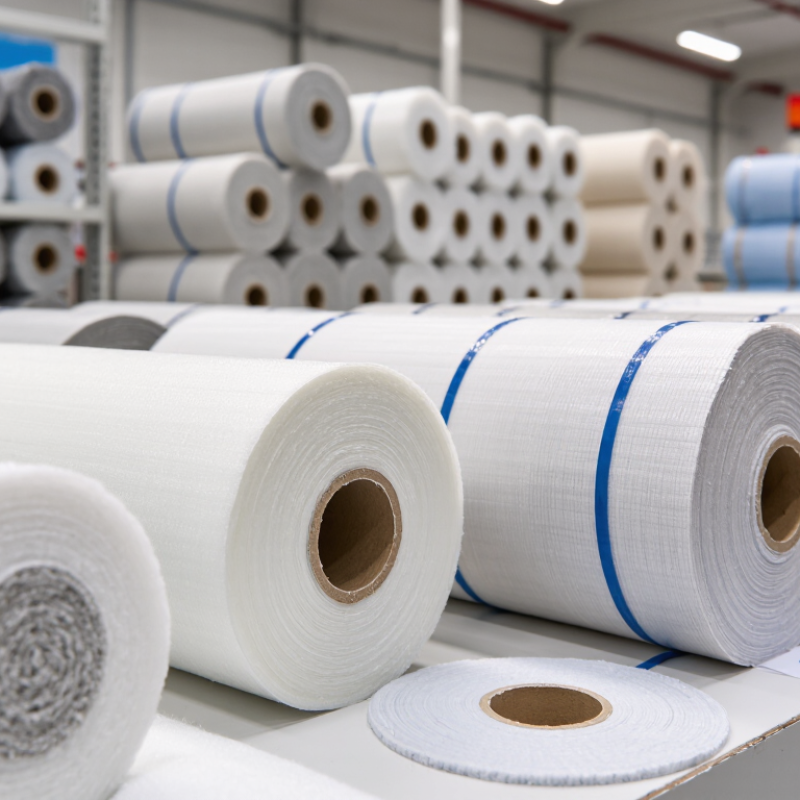
Lamination can add strength, improve pleat stability, and reduce fiber shedding. A typical roll may combine synthetic fiber, a supporting scrim, and a bonding layer. Check the thickness, roll width, basis weight, airflow, and initial pressure drop. These details matter more than appearance. Ask for laboratory test reports and production samples before placing a large order.

The WHO Global Air Quality Guidelines, published in 2021, set an annual PM2.5 guideline of 5 µg/m³. Coarse media cannot achieve that target alone. It usually protects finer downstream filtration. The IEA Energy Efficiency 2023 report states that buildings consume about 30% of global final energy. Excessive pressure drop can increase fan energy, so filtration efficiency is only part of the purchase decision.

For China sourcing, contact audited converters or industrial-material suppliers with export experience. Request batch traceability, technical data sheets, and inspection records. Confirm adhesive compatibility with humidity and temperature changes. One weakness remains: supplier test conditions may differ from field operation. Independent verification is worth the cost.

Key Specifications to Confirm Before Buying

Where To Buy Laminated G3 G4 Air Filter Media From China?

Key Specifications to Confirm Before Buying

When sourcing an Air Filter Media Roll from China, confirm the classification before discussing price. G3 and G4 refer to the former EN 779:2012 system. G3 indicated 80–90% average arrestance, while G4 exceeded 90%. However, EN 779 has been replaced by ISO 16890. Ask suppliers for current ISO 16890 test results, not only an old G-grade label. The report should identify airflow, test dust, pressure drop, and laboratory conditions.

Check thickness, width, roll length, basis weight, fiber type, and bonding method. For many intake systems, pressure drop matters as much as dust capture. ASHRAE Standard 52.2 uses defined airflow and particle-testing procedures, so request comparable data. A filter showing 60 Pa initial resistance may perform very differently at 1,000 or 2,000 m³/h. Small differences become expensive across thousands of operating hours.

Ask for dust-holding capacity, temperature range, humidity resistance, flame behavior, and edge stability. Inspect one sample physically: uneven lamination, loose fibers, or crushed roll edges can cause installation problems. Packaging also matters; moisture-proof wrapping and batch labels protect traceability during sea transport. Do not accept “equivalent to G4” without evidence. That shortcut looks efficient. It is not. Compare at least three batch reports, and verify whether the quoted specifications describe dry media or the finished laminated material.

Where Chinese Manufacturers and Suppliers Are Found

Where To Buy Laminated G3 G4 Air Filter Media From China?

Where Chinese Manufacturers and Suppliers Are Found

Chinese manufacturers of laminated G3 and G4 air filter media are concentrated in several industrial regions. Jiangsu and Zhejiang have many nonwoven and filtration material factories. Guangdong and Shandong also supply laminated rolls, synthetic fibers, and adhesive-backed media. These areas offer different production strengths. Some factories focus on high-volume rolls. Others handle smaller custom orders.

Suppliers are commonly found through industrial sourcing platforms, filtration exhibitions, and local manufacturing directories. Direct factory contact is valuable. It lets buyers ask about roll width, thickness, basis weight, packing, and monthly capacity. A serious supplier should provide a recent test report. Check air permeability, initial resistance, dust-holding performance, and flame behavior where relevant.

G3 and G4 classifications usually relate to the older EN 779 system. Many markets now use ISO 16890 instead. Ask the supplier to explain both ratings clearly. Do not rely on product photos alone. They can look convincing. Request samples from the actual production line, not only showroom material. Compare the sample’s fiber density, lamination strength, odor, and cutting performance.

Factory audits can reveal practical details. Look at roll storage, moisture control, inspection records, and label consistency. Confirm whether the supplier is a manufacturer or a trading company. Trading companies are not automatically unreliable, but their technical answers may be slower. I have seen buyers focus on price and overlook pressure drop. That mistake can increase operating costs later. A written specification reduces confusion, though it will not prevent every production variation.

How to Evaluate Supplier Quality and Certifications

When buying laminated G3 G4 air filter media from China, supplier quality starts with traceable evidence. The U.S. EPA reports that indoor pollutant levels can be two to five times higher than outdoor levels. Therefore, weak media can create real ventilation risks. Ask for the exact fiber composition, basis weight, thickness, pressure-drop curve, and dust-holding data. The report should match the Hvac Filter Media Roll you will receive, not a similar sample.

G3 and G4 classifications come from the older EN 779 system. Request updated ISO 16890 results, including ePM10 data where applicable. ISO 16890 measures particulate performance under defined laboratory conditions. A reliable supplier should provide test reports from an ISO/IEC 17025-accredited laboratory. Check the report number, test date, sample code, and factory address. Do not accept a certificate showing only a trading company. Small details matter.

Review ISO 9001 records, incoming-fiber inspections, lamination controls, and batch traceability. Ask for production photographs showing roll labels, sealed packaging, and moisture protection. A 1.6-meter roll with uneven edges may reveal poor tension control. I have seen attractive certificates fail during physical inspection. That lesson still matters. Request a pre-shipment sample and compare thickness at several points. Also test airflow resistance independently. Supplier claims are useful, but never complete. Your own verification may expose gaps.

Comparing Prices, Minimum Orders, and Custom Options

Where To Buy Laminated G3 G4 Air Filter Media From China?

Chinese suppliers usually quote laminated G3 and G4 media by roll, weight, or finished panel. Indicative export prices often range from US$1.20 to US$3.80 per square meter, depending on fiber type, thickness, and backing. Small trial orders may require 100–300 square meters. Larger contracts can reduce pricing, but the saving is not automatic. Small orders cost more.

MarketsandMarkets’ Air Filters Market report projected industry growth from about US$14.1 billion in 2023 to US$19.4 billion by 2028. This rising demand encourages suppliers to offer flexible production. Common custom options include 10–25 millimeter thickness, colored laminates, adhesive backing, slit widths, and moisture-resistant treatment. Ask for pressure-drop data at the intended airflow, not only the G3 or G4 label.

Check whether the supplier provides EN 779 historical classification data or ISO 16890 test results. G3 and G4 classifications are older references, so test conditions matter. A sample roll should show fiber structure, weight, dimensions, and packing details. One detail is often missed. “Hepa Filter Media Roll” is not equivalent to G3 or G4 pre-filter media; HEPA material requires far higher filtration performance and testing. Request a certificate from an independent laboratory when the application is critical. I would compare at least three quotations, because the cheapest roll may have higher pressure drop and shorter service life. Quantity discounts can hide quality differences.

Where To Buy Laminated G3 G4 Air Filter Media From China?

Comparing indicative wholesale prices, minimum order quantities, and customization options.

The chart compares typical China wholesale benchmarks for laminated synthetic filter media. Prices are shown in USD per square meter, while minimum order quantities are measured in rolls. Custom slit widths and adhesive-backed construction generally increase both the unit price and the minimum order requirement.

Ordering Samples and Verifying Filter Media Performance

When sourcing a laminated G3 or G4 Air Filter Material Roll from China, begin with samples, not bulk orders. Request several pieces from different production batches. Samples should show the actual laminate structure, fiber density, backing strength, and surface finish. Ask the supplier to label each sample with batch numbers and production dates.

Test the material under conditions close to your application. Measure initial pressure drop, airflow resistance, dust-holding capacity, thickness, and basis weight. G3 and G4 grades are commonly linked with older EN 779 classifications, so request the exact test standard and rating method. A supplier’s test report is useful, but it should not be your only evidence. An independent laboratory can confirm results using controlled airflow and defined dust loads.

Inspect the roll by hand. Check whether layers separate when bent, whether adhesive spots block air paths, and whether the edges remain stable during cutting. Compare sample results with the technical data sheet. Small differences matter. One sample may perform well while full-scale production varies. I have seen this happen when storage humidity changed the material’s feel and resistance. Ask for a pre-shipment inspection, retained samples, and clear tolerances for every key parameter. Do not approve the order too quickly. Supplier communication can look reliable, yet incomplete records may reveal weaknesses later.

Arranging Production, Inspection, and International Shipping

Where To Buy Laminated G3 G4 Air Filter Media From China?

Arranging Production, Inspection, and International Shipping

Buying laminated G3 or G4 air filter media from China requires more than comparing roll prices. EN 779 has been withdrawn, so suppliers should explain how their material relates to ISO 16890 testing. G3 and G4 descriptions may indicate coarse filtration, but they are not complete performance specifications. Request fiber type, basis weight, thickness, roll width, airflow resistance, and dust-holding capacity. The ASHRAE Handbook notes that pressure drop affects fan energy, so a cheaper media can create higher operating costs.
Production should begin with an approved specification and a physical sample. Check adhesive coverage, pleat stability, backing strength, and edge cleanliness during manufacturing. Independent inspection can verify dimensions, packaging, labeling, and random roll samples before dispatch. An ISO 16890 test report adds credibility, but test conditions must match the intended application. The International Energy Agency reported that buildings used about 30% of global final energy in 2022. Small pressure-drop differences deserve attention.
Tips: Put acceptance limits into the purchase contract. Photograph loaded pallets. Ask for moisture protection inside cartons. Confirm the Incoterm, port, HS classification, and document list before booking space. Sea freight is economical, but delays happen. I once treated a supplier’s visual inspection as sufficient; it was not. A simple third-party airflow test would have exposed inconsistent bonding before shipment.

Durable Paint Booth Intake Filters: Choosing High-Efficiency Air Filters from China Suppliers

Durable Paint Booth Intake Filters are essential for controlling dust, dirt, pollen, and other airborne particles before they enter HVAC or industrial ventilation systems. According to ASHRAE Standard 52.2, air-filter performance is evaluated across particle sizes from approximately 0.3 to 10 micrometers, making efficiency and pressure resistance equally important. ISO 16890 further classifies filters by their ability to remove ePM1, ePM2.5, and ePM10 particles. These professional testing frameworks help buyers compare high-efficiency intake filters from China suppliers using measurable performance criteria rather than appearance alone.

Our paint booth intake filter uses durable polyester fibers and a reinforced wire frame to provide strong dust-holding capacity with low airflow resistance. Its adhesive, or tacky, surface helps capture particles that may otherwise pass through a conventional dry filter, supporting cleaner incoming air and more stable booth operation. The panel-style design simplifies replacement and fits many HVAC and industrial systems. As an experienced factory and supplier, we can provide consistent manufacturing quality, practical filtration solutions, and product specifications suitable for different airflow requirements, filter dimensions, and maintenance schedules. Proper selection should consider the booth’s air volume, target particle range, pressure-drop limit, and the applicable MERV or ISO 16890 classification.

FAQS

Where are laminated G3 and G4 air filter media suppliers located in China?

Many suppliers operate in Jiangsu, Zhejiang, Guangdong, and Shandong. Some produce wide, high-volume rolls. Others accept smaller custom orders. Factory quality varies.

How can I find a suitable manufacturer?

Search industrial sourcing platforms, filtration exhibitions, and local manufacturing directories. Contact factories directly. Ask about width, thickness, basis weight, packing, and monthly capacity. Do not trust photographs alone.

What documents should a supplier provide?

Request a recent filtration test report and a clear product specification. Check air permeability, initial resistance, dust-holding capacity, and relevant flame behavior. The report must match the supplied material.

Are G3 and G4 classifications still sufficient?

Not always. These classifications relate to an older European testing system. Many markets now use ISO 16890. Ask for a clear comparison between both systems. Ratings alone are incomplete.

What should I examine in a physical sample?

Compare fiber density, lamination strength, odor, backing strength, and cutting performance. Check adhesive coverage and edge cleanliness. Use samples from actual production.

How can I check whether a supplier is a real manufacturer?

Visit or audit the facility when possible. Inspect roll storage, moisture control, inspection records, and labels. Ask whether the company manufactures or trades the material. Trading companies are not automatically unreliable.

Which technical details should appear in the purchase contract?

Include fiber type, basis weight, thickness, roll width, resistance, and dust-holding limits. Add acceptance limits for bonding, dimensions, packaging, and labeling. A written specification helps. It cannot remove every variation.

What should I inspect before international shipment?

Use independent inspection for dimensions, packaging, labels, and random roll samples. Photograph loaded pallets. Request moisture protection inside cartons. Confirm the Incoterm, port, HS classification, and required documents.

Why should pressure drop affect my buying decision?

Higher resistance can increase fan energy and long-term operating costs. A cheaper roll may become more expensive during use. I once focused too heavily on price. That judgment needed correction.

Conclusion

Finding Where To Buy Laminated Air Filter Media Roll G3 G4 From China requires a clear understanding of the material, filtration grade, structure, and intended application. Buyers should confirm key specifications such as roll width, length, thickness, airflow resistance, dust-holding capacity, bonding method, and whether the media is suitable for cutting, pleating, or panel filter production. Chinese manufacturers and suppliers can often be located through industrial sourcing platforms, trade directories, and regional manufacturing areas, but each supplier should be evaluated carefully through technical documents, factory information, quality procedures, and relevant certifications.

Before placing a large order, request samples to assess fiber bonding, uniformity, pressure drop, filtration performance, and dimensional stability. Comparing quotations should include minimum order quantities, customization options, packaging, tooling, and delivery terms rather than focusing only on unit price. After confirming the sample, agree on production standards, inspection procedures, labeling, and shipping arrangements. A reliable purchasing process combines technical verification, transparent communication, pre-shipment inspection, and suitable international logistics planning.

LJF Technical Team

LJF Technical Team

Oliver is a dedicated marketing professional at Guangzhou LJF Purification Equipment Co., Ltd, where he harnesses his expertise to elevate the company's presence in the air purification industry. With a profound understanding of the intricacies of air purification technologies, Oliver plays a......
Previous How To Properly Install Spray Booth Ceiling Filters?