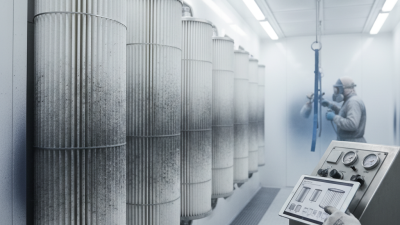
So, choosing the best paint Booth Filters for industrial coating? It’s not just about comparing prices from China-based suppliers. Filter performance touches everything—air cleanliness, coating quality, worker protection, and maintenance costs. A solid selection process should look at filter media, airflow resistance, capture efficiency, dimensions, and how often you’ll need to replace them. And don’t forget the coating material, spray equipment, booth design, and operating temperature either.
Now, what are the Paint Booth Filter Requirementsfor industrial coating? Honestly, it depends on each production environment. Dry spray booths might need layered intake, exhaust, and overSpray Filters. High-solids coatings can load filters up quickly. Powder coating may call for different media and cleaning methods. Fiberglass, polyester, paper, and synthetic filters all have their own strengths. For example, a properly fitted exhaust filter should keep airflow stable without excessive pressure buildup. Even small gaps around the frame can hurt real-world performance.
Paint Booth Filter Requirements should be confirmed through technical documents, sample testing, and actually talking with suppliers. Experienced manufacturers can give you pressure-drop data, filtration ratings, temperature limits, and customization options. But catalog claims alone? Not enough. Buyers should ask for batch records, material specs, and inspection evidence. A practical trial often uncovers problems that lab numbers miss. Filter life can also vary with operator habits and spray volume. This is where our expectations need a little review. The cheapest filter is rarely the most economical choice. Consistent quality, traceable production, and responsive technical support—that’s what creates stronger long-term value for industrial coating operations.
China Best Paint Booth Filters For Industrial Coating?
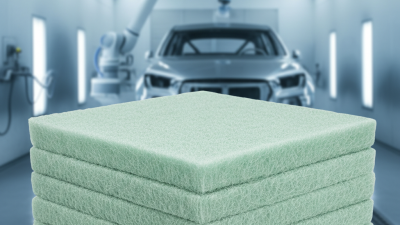
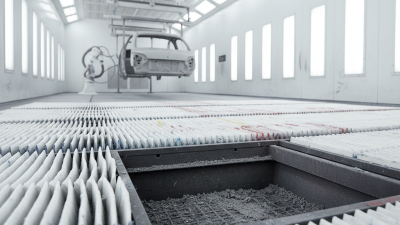
In industrial coating, filter selection depends on coating chemistry, airflow, and overspray volume. EPA AP-42, Fifth Edition, Chapter 4.2, describes dry-filter systems achieving approximately 95–99% particulate control under suitable operating conditions. Fiberglass and polyester arrestor pads are common exhaust filters. They capture wet paint particles before the booth discharge.
Intake filters protect the coating surface from dust. Disposable panel filters handle coarse particles. Pleated filters offer more surface area and longer service intervals. HEPA filters provide very fine filtration, with a rated efficiency of 99.97% at 0.3 micrometers under DOE/IEST test conditions. However, HEPA filtration may increase energy demand. It is not automatically the best option.
Filter choice needs measurement. Always check airflow.
Cartridge filters suit powder coating and high-loading applications, while pocket filters support larger air volumes with lower resistance. Wet scrubbers can manage heavy overspray, but they require water treatment and regular sludge removal. ASHRAE technical guidance emphasizes monitoring pressure drop because rising resistance reduces booth airflow and can affect finish quality. A filter may look clean. It may still be overloaded internally. Replacing media by calendar date alone is imperfect; differential-pressure readings, surface defects, and coating usage provide better evidence.
Matching Industrial Paint Booth Filters to a coating process requires more than checking filter dimensions. The coating chemistry, spray pattern, and overspray volume all matter. A water-based coating often produces moist, sticky particles that can block a low-capacity filter quickly. Polyester media may handle this load better than ordinary paper media. Dry powder overspray behaves differently. It needs media that captures fine particles without creating excessive airflow resistance.
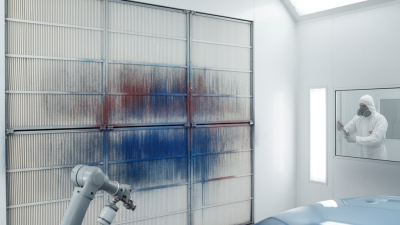
Start by reviewing the coating’s technical data sheet and observing the booth during a normal shift. Look at the filter face after two hours. Is the dust evenly distributed, or does it form a hard patch near the center? That detail reveals spray imbalance or unsuitable media. Track pressure drop with a gauge, not by appearance alone. A rising reading means the filter is loading and fan performance may be falling. It can also affect transfer efficiency and surface finish.
Experience still matters. A filter that works well for thin solvent coatings may fail with heavy, resin-rich materials. Choose media by particle size, moisture tolerance, holding capacity, and required airflow. Confirm the capture rating under real operating conditions. Do not rely only on a laboratory number. In practice, operators sometimes select the finest filter available, then discover unstable airflow and frequent replacement. That choice needs reconsideration. A balanced system usually performs better than the tightest filter.
| Filter Media | Typical Construction | Primary Capture Function | Suitable Coating Applications | Typical Position | Main Advantages | Limitations and Risks | Relative Dust-Holding Capacity |
|---|---|---|---|---|---|---|---|
| Synthetic Polyester Pad | Nonwoven polyester fibers, usually supplied as rolls, pads, or layered panels. | Captures overspray particles and coarse airborne contaminants before they reach the exhaust duct. | General solvent-based paint Waterborne paint Primer and topcoat spraying | Exhaust face of dry-filter spray booths; prefilter stage in multi-stage systems. | Lightweight, easy to cut and replace, good airflow, and widely adaptable to different booth sizes. | May load quickly during high-solids spraying; ordinary grades are not intended for direct flame, sparks, or uncontrolled solvent vapor exposure. | Medium |
| Fiberglass Paint-Arrestor Media | Progressively dense fiberglass strands, often formed into rolls or pads. | Provides high-efficiency capture of wet paint overspray and helps reduce coating buildup in exhaust systems. | Solvent-based coatings Automotive refinishing Industrial liquid paint | Exhaust filter bank of crossdraft or downdraft dry-filter booths. | Good overspray loading capacity, graded density, and effective wet-particle capture when correctly installed. | Requires correct airflow direction and secure retention; saturated media can increase pressure drop and should be replaced before excessive loading. | High |
| Pleated Polyester Panel | Pleated synthetic media mounted in a rigid frame to increase available filter area. | Captures paint mist and particulate while providing a larger surface area than a flat pad. | Medium-volume liquid coating Waterborne coatings Fine overspray control | Exhaust stage or secondary particulate stage in a dry spray booth. | More media area in a compact footprint, stable installation, and generally lower initial pressure drop than an equivalent flat panel. | More expensive than flat media; pleats can blind when exposed to heavy wet overspray or poorly atomized coating. | High |
| Bag or Pocket Filter | Multiple synthetic-fiber pockets supported by a rigid header and frame. | Removes fine particulate from booth make-up air or from a downstream exhaust air-cleaning stage. | Clean-room-type finishing areas Fine particulate control Pre-filtration before HEPA | Supply-air unit; occasionally used as a downstream exhaust prefilter when the system is designed for it. | Large dust-holding capacity and good service life when protected from liquid overspray. | Not a preferred first-stage filter for wet paint overspray; liquid coating can damage or rapidly block the pockets. | Very High |
| High-Efficiency Particulate Filter | Fine glass-fiber or synthetic media in a sealed, pleated rigid frame. | Captures very fine airborne particles after upstream overspray and coarse-dust filters have been removed. | High-quality finishing Controlled-environment coating Final air-cleaning stage | Final supply-air stage or engineered exhaust-polishing stage. | Very high fine-particle removal when correctly specified, sealed, and tested. | High cost and pressure drop; must be protected from wet paint, oil, and coarse loading. It does not remove solvent vapors. | Medium to High |
| Activated Carbon Media | Granular or impregnated activated carbon held in a panel, cartridge, or deep-bed module. | Adsorbs selected gaseous contaminants and odors; it is not primarily a particle filter. | Solvent-vapor odor reduction VOC control systems Post-filtration gas treatment | Downstream gas-treatment stage after particulate and overspray removal. | Can reduce certain solvent vapors when carbon type, bed depth, contact time, and replacement schedule are properly engineered. | Does not replace paint-arrestor media; adsorption capacity is finite, and performance depends strongly on solvent concentration, humidity, temperature, and airflow. | Not applicable for particles |
| Metal Mesh or Inertial Separator | Reusable woven mesh, expanded metal, or baffle-style separator. | Removes large droplets and coarse particles by impaction and changes in airflow direction. | Heavy overspray pre-separation High-solids coatings Protective coating lines | First-stage separator or overspray prefilter where the booth is designed for reusable components. | Washable or cleanable in some systems, durable, and useful for protecting finer downstream media. | Limited fine-particle efficiency; cleaning residues and collected coating must be handled according to local waste and fire-safety requirements. | Medium |
| Cartridge Filter for Powder Coating | Pleated cellulose, polyester, or nanofiber media in a cylindrical cartridge with a rigid support structure. | Separates airborne powder particles from booth air and supports pulse-cleaning in engineered powder systems. | Thermoset powder coating Electrostatic powder spraying Powder recovery systems | Powder booth exhaust and powder-recovery equipment. | Large filtration area, compact installation, and compatibility with pulse-jet cleaning when the system is properly designed. | Not intended for wet liquid paint overspray; combustible powder requires suitable grounding, explosion protection, housekeeping, and process controls. | Very High |
Paint booth filter quality depends on tested performance, not appearance or low price. ISO 16890 classifies air filters by particulate removal efficiency, including ePM1, ePM2.5, and ePM10. For final-stage protection, ISO 29463 and EN 1822 evaluate HEPA filters at their most penetrating particle size. An H13 Industrial Hepa Filter must achieve at least 99.95% efficiency, while H14 requires 99.995%. These figures describe laboratory conditions, not every working booth.
Overspray changes the situation. Paint particles can become sticky, quickly blocking a fine filter. A washable or disposable prefilter should capture larger droplets before the final filter. The U.S. EPA’s AP-42 Section 4.2 reports conventional spray transfer efficiency commonly around 20% to 40%, leaving substantial overspray for the booth filtration system. That detail matters.
Pressure drop also needs measurement. A filter may meet efficiency targets while restricting airflow and damaging booth balance. Field checks should record initial resistance, final resistance, airflow, leakage, gasket compression, and media condition. China-made filters should include batch traceability, test reports, and independent verification against ISO 16890 or ISO 29463. Numbers can mislead. A recurring weakness is comparing efficiency without comparing service life. In practice, a slightly less restrictive prefilter may protect the expensive final stage better. I would still require a site trial, because humidity, coating viscosity, and operator technique can change results.
China Best Paint Booth Filters For Industrial Coating?
Choosing paint booth filters for industrial coating requires more than comparing capture ratings. A filter may achieve high efficiency but restrict airflow too quickly. In field inspections, I check the pressure gauge before examining the filter surface. A steady rise often shows overspray loading, uneven distribution, or poor filter seating. Small details matter. Folded media should remain firm, without crushed pleats or visible gaps.
An Industrial Hepa Air Filter can support fine-particle control in selected stages, but it is not automatically the best choice for every booth. Filter efficiency should match the coating process, particle size, exhaust design, and required cleanliness. Higher efficiency can increase resistance. That resistance may reduce air movement across the work zone, affecting finish quality and operator comfort. Airflow readings at several booth points provide better evidence than one gauge reading.
Service life depends on coating volume, solvent or water-based material, humidity, and maintenance habits. I record initial pressure drop, then compare readings during production. A practical replacement point should reflect both airflow loss and surface loading. Some filters look usable but perform poorly after media becomes tacky. I have also seen operators replace filters too early, creating unnecessary waste. The process deserves review, not guesswork. Clear inspection records, verified test data, and consistent installation make filter performance more reliable.
Choosing the best paint booth filters for industrial coating requires more than comparing prices. When comparing leading Chinese suppliers, examine their filtration experience, material control, and technical support. In my experience, reliable suppliers explain how each filter handles paint solids, airflow, humidity, and operating temperature. Performance varies.
A serious supplier should provide clear data for filtration efficiency, pressure drop, dust-holding capacity, and service life. Request samples before placing a large order. Measure airflow across the booth after installation, not only in a laboratory.
Suppliers offering fiberglass, polyester, paper, or activated-carbon media should explain the correct application for each material. Details matter. A low-cost filter can increase energy use when resistance rises too quickly.
Supplier audits also reveal practical differences. Check cutting accuracy, frame strength, packaging, and batch consistency. Ask for inspection records and traceable production information. Export experience helps, but it does not replace technical evidence. Some suppliers respond quickly during sales discussions, then provide slower support after delivery. That risk deserves attention.
Customization can improve fit around doors, ceiling modules, and exhaust sections. However, unusual dimensions may increase waste and replacement costs. One overlooked issue is communication: a small misunderstanding about airflow direction can reduce capture efficiency. Request drawings, installation instructions, and replacement schedules in clear English. No supplier is perfect, and even experienced buyers can overvalue a polished catalog. Trial orders, factory documentation, and measured booth performance provide stronger evidence than promises.
China Best Paint Booth Filters For Industrial Coating?
Installation and Maintenance Practices for Reliable Filtration
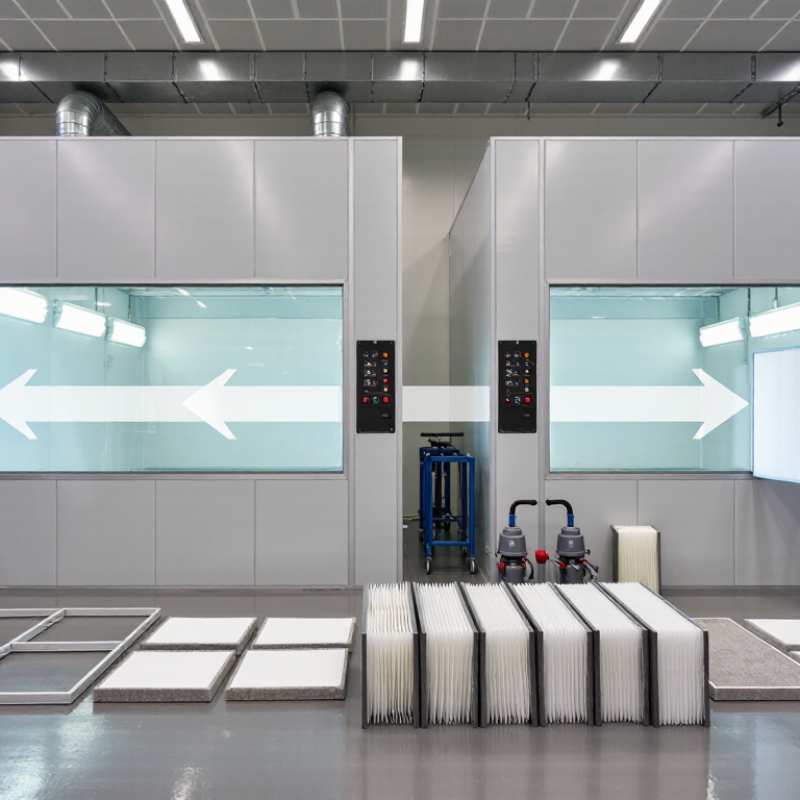
Reliable filtration begins with correct airflow, not filter thickness. Install paint booth filters in the marked airflow direction, with even support across the frame. A compressed gasket can create a hidden bypass. OSHA 29 CFR 1910.94(c) stresses mechanical ventilation and preventing contaminant escape during spray operations. Check the fan, ducts, and booth seals before changing filters.
Use a staged system. A coarse prefilter captures overspray and protects the final filter. A high-efficiency filter then handles finer particles. DOE-STD-3020-2005 defines HEPA performance at 99.97% removal for 0.3-micrometer particles. An Industrial Hepa Air Purifier may support air cleaning, but it cannot correct poor booth airflow or overloaded prefilters. That distinction matters.
Measure differential pressure with a visible gauge. Record readings at each shift, especially after heavy coating work. Replace filters when pressure reaches the manufacturer’s limit, not only on a calendar schedule. Dust buildup around the frame signals leakage. Stop and inspect it. A common field mistake is installing a new filter into a dirty housing. Clean the frame, check the gasket, and confirm airflow afterward. Maintenance logs should include pressure readings, replacement dates, and coating type. Small records prevent large guesses.
The chart shows representative initial and terminal pressure-drop values for common paint-booth filtration stages. Rising pressure drop indicates filter loading and increasing fan energy demand. Inspect filters regularly, keep seals tight, install media in the correct airflow direction, and replace each stage before its terminal pressure-drop limit is reached. Actual limits should be confirmed with the filter specification and booth airflow requirements.
Consider coating chemistry, spray pattern, overspray volume, particle size, moisture tolerance, and airflow needs. Dimensions alone are not enough.
They often create moist, sticky particles. These particles may clog low-capacity media within a short time. Polyester media can sometimes handle them better than ordinary paper.
Use media that captures fine particles without creating excessive airflow resistance. A very tight filter may reduce booth airflow too quickly.
Inspect it after about two hours. Even dust distribution suggests balanced spraying. A hard center patch may indicate spray imbalance or unsuitable media.
Use a pressure gauge, not appearance alone. Rising pressure drop shows loading and may indicate falling fan performance. The finish may suffer.
No. It may cause unstable airflow and frequent replacement. A balanced system often performs better than the tightest filter. This choice deserves review.
ISO 16890 evaluates particulate removal through ePM categories. ISO 29463 and EN 1822 assess high-efficiency filters at their most penetrating particle size.
Request batch traceability, test reports, efficiency data, resistance readings, and independent verification. Compare service life, not efficiency alone. Site conditions still matter.
A prefilter can capture larger droplets and reduce loading on the final stage. It may extend final-filter life. Results vary.
Record initial and final resistance, airflow, leakage, gasket compression, and media condition. Also observe humidity, coating viscosity, and operator technique. Small details matter.
Selecting the right paint booth filter is essential for stable airflow, clean finishes, worker protection, and efficient industrial coating operations. What Are The Paint Booth Filter Requirements For Industrial Coating? The answer depends on the coating type, spray volume, booth design, and required emission control. Common options include intake filters, exhaust filters, pocket filters, panel filters, paint arrestor media, and high-efficiency final filters. Filter media should be matched with coating characteristics such as solvent content, viscosity, overspray load, and particle size.
China-made paint booth filters should be evaluated according to filtration efficiency, airflow resistance, dust-holding capacity, structural strength, and service life. A reliable comparison of suppliers should consider material consistency, manufacturing quality, testing documentation, customization capability, delivery stability, and technical support rather than price alone. Proper installation is equally important: filters must be sealed correctly, airflow direction must be observed, and pressure drop should be monitored regularly. Timely replacement, booth cleaning, and routine inspections help maintain performance, reduce energy consumption, and support dependable long-term filtration.