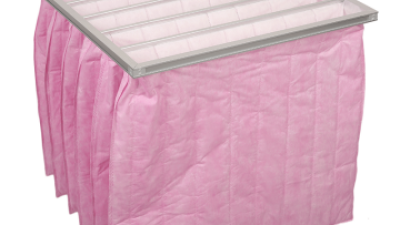
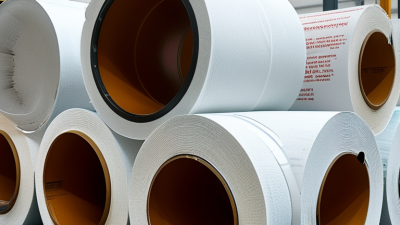
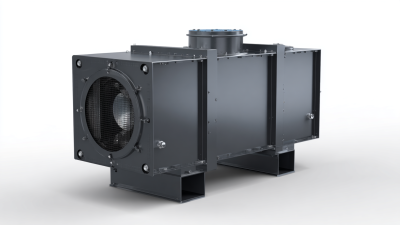
You know, air filtration is quickly becoming a top priority when it comes to procurement — it’s no longer just a detail in maintenance anymore. According to Grand View Research, the global market for Hvac Air Filters is still on the rise, mainly because everyone’s pushing for better indoor air quality and there’s a lot more commercial construction happening. MarketsandMarkets adds that industrial filtration, energy savings, and pollution control are big drivers of demand. The numbers they cite can vary quite a bit, though — those differences really do matter when you're making decisions.
When it comes to making Bag Filters, the media roll you choose plays a pretty huge role. It impacts how well dust gets captured, the pressure drop, how stable the sewing is, and how long the filter lasts. A good supplier should be able to provide consistent fiber distribution, predictable basis weight, steady roll width, and test results you can trace back. You can actually see these details on the factory floor — uneven rolls can cause wrinkles, weak seams, or air resistance issues. Plus, tiny defects? They might not seem like a big deal at first, but when you’re scaling up production, those little problems can turn into real costly headaches.
In this guide, I’ve rounded up five well-known Chinese suppliers for anyone comparing the best air filter media rolls for bag filter production in China. We looked at different material options like polyester, polypropylene, fiberglass, and needle-punched felt. We also considered how customizable their products are, whether they have detailed lab documentation, their export experience, and how responsive they are during production. Of course, it’s always smart to verify product claims through samples and independent tests — no one’s perfect.
When evaluating suppliers, pay close attention to parameters like air permeability, tensile strength, filtration efficiency, moisture resistance, and operating temperature data. Keep in mind that EN 779 is no longer the standard; many now follow ISO 16890 for classification, though some industrial bag filters might need additional tests tailored to specific applications. It's really important to confirm which standard applies before placing your order — overlooking even one detail can really change the game.
Finally, these suppliers might fit different needs depending on your factory setup, budget, and the kind of dust you're dealing with. The key is not just picking the one with the most attractive catalog but making a decision based on real evidence and performance data.
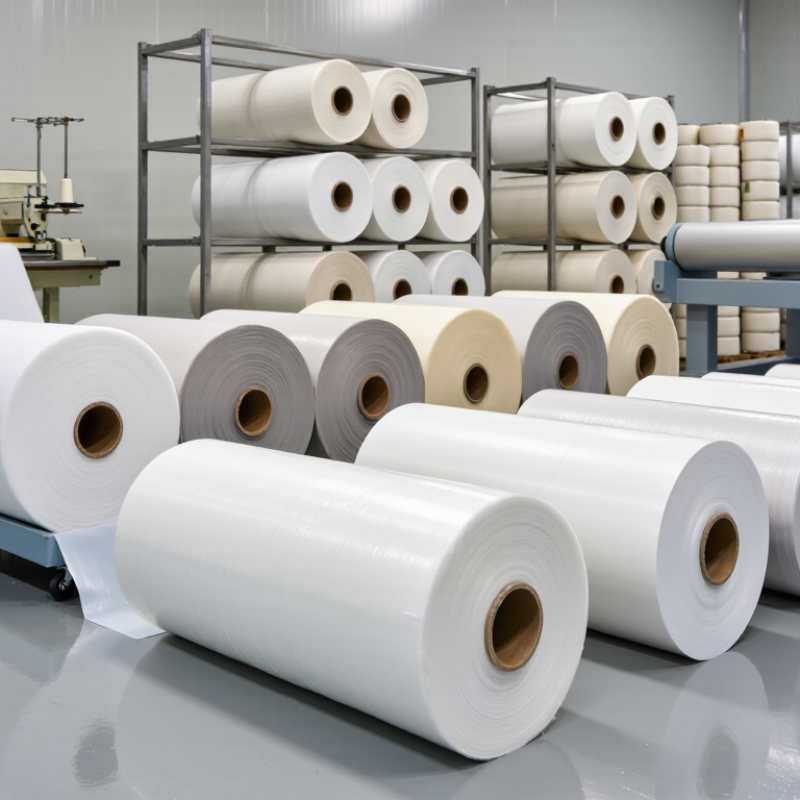
Air Filter Media Roll Types: Synthetic, Fiberglass, Cotton, and Melt-Blown Media
Choosing among China’s air filter media roll suppliers requires more than comparing prices. The media type determines airflow, dust holding, service life, and installation behavior. Synthetic media is widely used in HVAC systems because it is lightweight, flexible, and resistant to moisture. It suits routine dust filtration, but low-density grades may load quickly in busy buildings. Fiberglass offers strong particle capture and stable structure. However, its brittle fibers require careful cutting and handling.
Cotton media provides good dust retention and can support washable or reusable designs. Its performance depends heavily on fiber density and treatment. Damp environments need closer inspection, since moisture can reduce durability. Melt-blown media uses very fine fibers and often creates a tighter filtration layer. It can capture smaller particles effectively, but excessive resistance may increase fan energy use. A suitable Hvac Filter Media Roll should balance efficiency with pressure drop, not chase the highest rating alone.
When assessing suppliers in China, request roll width, thickness, basis weight, initial resistance, and tested efficiency. Ask for batch records and samples from actual production. Check whether the roll unwinds evenly without crushed edges or loose fibers. A sample may perform well in a clean workshop but behave differently after hours of dust loading. No media is perfect. I still recheck test conditions, because inconsistent airflow can make excellent material look ordinary. Supplier communication matters too, especially when specifications change during repeat orders.
Air Filter Media Roll Types: Typical Particle Filtration Efficiency
The chart compares representative mid-range filtration efficiencies for common air filter media used in HVAC and industrial applications. Actual performance varies by fiber diameter, media density, basis weight, airflow rate, and filter construction. Melt-blown media generally provides the highest fine-particle capture, while fiberglass is commonly used in economical, low-resistance filters.
Supplier Ranking Criteria: ISO 16890, MERV 13, and EN 779 Performance Data
When ranking air filter media roll suppliers in China, performance data matters more than polished catalogs. I examine test reports, production records, and batch traceability. A supplier should clearly state whether results follow ISO 16890, MERV 13, or EN 779 methods. These standards are related, but they are not interchangeable.
ISO 16890 measures filtration across particulate matter size ranges, including ePM1, ePM2.5, and ePM10. MERV 13 evaluates removal efficiency through a different testing framework. EN 779 data remains useful for older specifications, but it should not replace current ISO 16890 evidence. Ask for laboratory conditions, airflow, pressure drop, and media thickness. Missing details are warning signs.
Pressure drop deserves equal attention. A roll may achieve strong initial efficiency but restrict airflow after pleating. During sample checks, I compare clean-air resistance, dust loading, fiber uniformity, and roll winding quality. A Hepa Filter Media Roll also requires careful classification, because “HEPA” performance cannot be assumed from a high-efficiency claim.
My scoring is not perfect. Supplier evaluations can change after seasonal humidity, new equipment, or material substitutions. I prefer factories that disclose these limitations and provide recent, lot-specific reports. A reliable supplier should also support independent retesting. Small inconsistencies should be investigated, not quietly ignored.
Supplier Profile 1: ePM10–ePM1 Efficiency, Airflow, and Pressure-Drop Ratings
Supplier Profile 1: ePM10–ePM1 Efficiency, Airflow, and Pressure-Drop Ratings
A capable air filter media roll supplier should publish ePM10, ePM2.5, and ePM1 efficiency data. These values indicate how effectively the media captures different particle sizes under defined test conditions. Look for reports aligned with ISO 16890, not vague claims such as “high efficiency.” Ask for proof.
Airflow performance matters as much as particle capture. A media roll may show strong ePM1 efficiency, yet restrict air movement in a compact HVAC unit. The supplier should provide airflow results in m³/h or m/s, together with initial pressure drop in Pa. For example, a test sheet might record 0.25 m/s airflow and a 75 Pa initial drop. That detail supports practical equipment selection.
Pressure drop often rises as dust accumulates. Reliable suppliers should explain the test method, media weight, thickness, and conditioning process. They should also clarify whether results apply to the full roll or a small laboratory sample. That difference can matter.
I would compare several batches, not one attractive report. Numbers matter. Manufacturing variation can affect fiber density, pleating behavior, and service life. A supplier that shares traceable batch records, sample data, and realistic operating limits demonstrates stronger technical credibility. Still, no rating replaces a site trial. Dust conditions differ widely, and published performance may not match every installation.
Supplier Profile 2: 0.3 μm Capture Efficiency and H13 HEPA Media Compliance
Supplier Profile 2: 0.3 μm Capture Efficiency and H13 HEPA Media Compliance
A reliable air filter media roll supplier should provide more than a printed efficiency figure. Supplier Profile 2 focuses on media tested around 0.3 μm, where fine particle filtration becomes especially demanding. Request the test standard, airflow rate, face velocity, pressure drop, and sample size. These details show whether the result reflects real performance or only a controlled laboratory condition.
H13 HEPA compliance requires careful verification. The supplier should provide current certificates, traceable laboratory reports, and production-batch records. Do not treat a 0.3 μm result as automatic proof of H13 status. HEPA classification depends on the applicable standard and its specified test method. In practice, ask for media weight, fiber structure, roll width, thickness, and resistance at the intended airflow. A clean sample may perform differently after pleating, sealing, or storage.
Tips: Ask for a recent roll sample and test it at your operating speed. Check whether the media stays stable during cutting and pleating. Inspect the roll edges for crushed fibers, uneven winding, or moisture marks. Small defects matter. I have seen impressive laboratory data become less useful when pressure drop rises sharply in finished filters. Suppliers should explain this gap honestly, even when the answer is inconvenient. Reliability comes from repeatable data, not impressive claims.
Supplier Profile 3: Dust-Holding Capacity, GSM, Roll Width, and Length Options
Supplier Profile 3: Dust-Holding Capacity, GSM, Roll Width, and Length Options
A reliable air filter media supplier should explain dust-holding capacity with test conditions, not only impressive numbers. Airflow, dust type, humidity, and pressure-drop limits can change the result. Ask for sample reports and production-batch records. In practical factory inspections, I check whether the tested media matches the shipped roll. It sounds basic, yet mismatches happen.
GSM affects fiber density, stiffness, and filtration stability. A heavier roll is not automatically better. Confirm the target GSM and acceptable tolerance before ordering. Roll width and length also deserve close attention. Standard cutting sizes may reduce waste for an Air Filter Bag , while uneven edges can slow stitching and assembly. Measure twice. Cutting losses are real.
Tips: Request a trial roll before committing to a large order. Check the core diameter, outer wrapping, label details, and actual roll length. A supplier should provide clear options, such as 1.0, 1.2, or 2.0-meter widths, when production needs vary. Also ask how rolls are stored during humid months. I would not rely on a neat brochure alone. One overlooked detail is winding tension; loose layers may deform during transport. Small defects become expensive after installation.
Supplier Profile 4: ISO 9001 Quality Control, Testing Methods, and Certifications
A credible Chinese air filter media roll supplier should show more than an ISO 9001 certificate on a wall. The certificate should identify the audited site, approved scope, and current validity period. ISO 9001 supports process control, but it does not automatically prove filtration performance. Ask for batch records, raw material specifications, and corrective-action reports. These documents reveal how the supplier handles variation.
Testing should match the intended Filter Bag application. Common checks include air permeability, pressure drop, dust-holding capacity, tensile strength, media weight, and particle-release performance. A qualified laboratory should record equipment numbers, test conditions, sample sizes, and results. Factory technicians may also inspect roll width, winding tension, surface defects, and moisture levels. Small details matter.
Request samples from different production batches. Compare them under identical airflow and dust-loading conditions. One sample can look excellent. It can still hide unstable production. An independent laboratory review adds useful confidence, especially for large orders. However, even third-party testing has limits when sampling is too narrow. I would examine calibration records and traceability before trusting polished reports. Suppliers with experienced quality teams usually explain failed tests openly and document the adjustment, rather than deleting uncomfortable results.
Supplier Profile 5: MOQ, Lead Time, Export Markets, and Cost per Square Meter
Supplier Profile 5 stands out for flexible air filter media roll production. Its typical MOQ ranges from 500 to 1,000 square meters, depending on fiber type, width, and treatment. Standard orders usually ship within 10 to 20 working days after artwork and specifications are approved. Custom density or laminated structures may require extra time. Do not trust a fast promise without checking production capacity.
Its export markets include Southeast Asia, the Middle East, Europe, and North America. The supplier can usually provide technical sheets, sample rolls, and basic quality records. Cost commonly falls between USD 0.35 and USD 2.80 per square meter. The final price depends on filtration grade, roll length, packaging, and shipping terms. A lower price may hide thinner material or weaker tensile strength. Ask for test data, not only a quotation.
Tips: Request a 10-meter sample roll. Measure thickness, weight, and pressure drop locally. Confirm the MOQ in writing. Also ask whether replacement batches match the original specification. In our review experience, communication is generally practical, but response times can slow during peak seasons. That detail is easy to overlook. Build a small time buffer before scheduling container loading.
F7 M7 Bag Filters: Performance, Applications, and Buying Guide from China Suppliers and Factory
F7 and M7 bag filters remain widely selected for commercial buildings, clean production areas, hospitals, and general industrial ventilation because they balance particle removal, airflow, and operating cost. Under the former EN 779 classification, F7 filters were tested at 0.4 micrometers, typically achieving an average efficiency of 80–90%. The newer ISO 16890 standard evaluates performance against PM1, PM2.5, and PM10, so buyers should request the declared ePM rating rather than relying on an F7 label alone. In many applications, an F7 product corresponds broadly to the ePM1 50–65 range, depending on media and construction.
China suppliers and factories offer bag filters with synthetic or glass-fiber media, galvanized or stainless-steel frames, multiple pocket depths, and customized dimensions. A practical purchasing review should compare initial pressure drop, recommended final resistance, airflow capacity, pocket stability, fire classification, and test documentation. ISO 16890 and ISO 29463 reports can help verify filtration performance, while factory quality records should confirm batch consistency and sealing integrity. For humid environments, buyers should also check moisture resistance and frame protection.
Direct sourcing from established Chinese manufacturers can provide competitive pricing, flexible minimum order quantities, and OEM customization. Before placing an order, request samples, inspection photos, material specifications, and independent performance data. Selecting a supplier with controlled production, traceable testing, and export experience helps ensure that F7 or M7 bag filters deliver stable performance throughout their service life.
Conclusion
Choosing the right air filter media roll supplier in China requires more than comparing prices. This guide reviews common media types, including synthetic, fiberglass, cotton, and melt-blown materials, while explaining how ISO 16890, MERV 13, and EN 779 data can support a practical supplier evaluation. Key performance factors include ePM10–ePM1 efficiency, airflow, pressure drop, 0.3 μm particle capture, and H13 HEPA media compliance where applicable.
The comparison also considers dust-holding capacity, GSM, roll width and length, ISO 9001 quality systems, testing procedures, certifications, minimum order quantities, lead times, export experience, and cost per square meter. By balancing filtration performance, production consistency, customization options, and purchasing requirements, manufacturers can identify the Best Air Filter Media Roll Supplier For Bag Filter Production China and select media that supports reliable bag filter quality, stable operating costs, and long-term application performance.