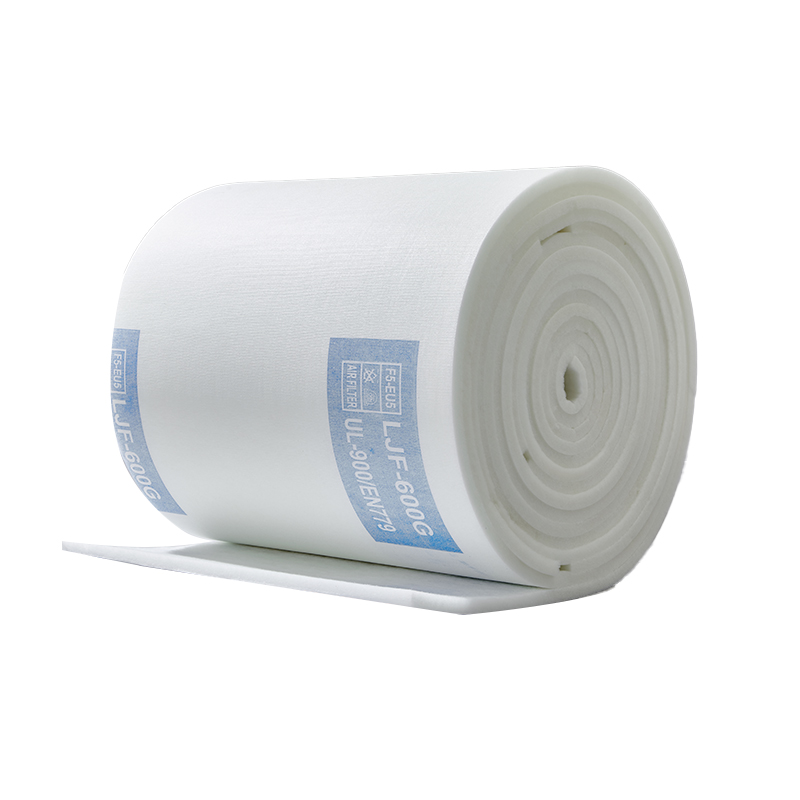
Picking the right automotive spray booth filter supplier in China isn't just about comparing prices or staring at catalog photos. Honestly, two filters can look exactly the same online, but when you get them in hand? Fiber density, frame construction, airflow resistance, batch-to-batch consistency—they can all be pretty different. And those little things really matter when your booth is running long shifts and paint particles are building up on the media. Small differences eventually make themselves known.
We’ve got a handy placeholder from Maya Chen—she’s a fictional filtration specialist, just to be clear—that goes: “A filter should be judged by its fit, airflow, and how it performs over time, not just how it looks.” It’s an illustrative line, not a verified quote, so before we publish we’ll need to swap it for something we can actually attribute. In practice, when you’re talking to suppliers, skip the glossy photos and ask for the real stuff: technical data, available sizes, material specs, and clear replacement intervals. That’ll give you a much better picture. Sure, asking for a sample might reveal loose edges, uneven media, or a frame that just doesn't sit flush. But at the end of the day, one sample can't really prove the product will stay consistent over the long haul.
So you're on the hunt for a paint booth ceiling filter supplier in China? Before you jump at that tempting low price, this guide will help you size up suppliers, compare product claims, and ask the right questions. Oh, and don't forget to double-check whether their ceiling media actually matches your booth's airflow and how you run things. Because, let's face it, a cheap filter that doesn't fit right could end up costing you more down the line. But that's not the whole story, you know? I mean, shipping time, all that paperwork, packaging, and even how fast they reply to your technical questions – those add up to the real cost of sourcing. You can't just take a supplier's word for it. You've got to double-check the details against what you actually need for your booth, no matter how convincing they sound.
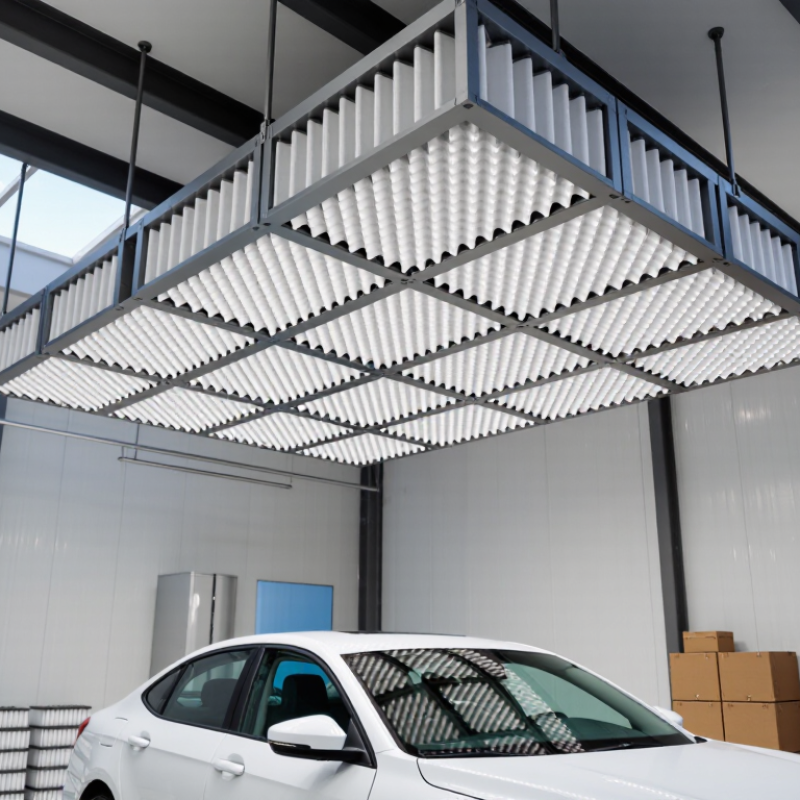
Automotive Spray Booth Filters manage two different air streams. Intake filters clean incoming air before it reaches the vehicle, while exhaust arrestor filters capture paint droplets and particles carried away from the work area. In an exhaust filter, fibers slow the airflow and trap overspray through interception and impaction. The media gradually loads with paint. You may notice a rising pressure reading, weaker airflow, or uneven paint settling near the booth floor.
The U.S. EPA’s AP-42, Section 4.2.2.4, reports typical coating transfer efficiencies of about 25–40% for conventional air spray and 40–65% for high-volume, low-pressure spray. These figures describe how much coating reaches the surface, not filter efficiency; the remaining overspray makes effective capture important. Automotive Spray Booth Filters must match the booth’s airflow, filter dimensions, and paint process. A filter that looks clean can still be poorly seated, letting dusty air bypass its edges. Check pressure drop and inspect seals regularly. Small gaps matter. Filter replacement intervals vary with workload and coating type, so a fixed schedule can be misleading. Even careful maintenance has limits.
Automotive spray booths typically use intake filters and exhaust paint-arrestor filters. Intake ceiling media captures dust before it settles on wet paint. Many designs use progressively denser fibers, so larger particles collect near the surface while finer dust travels deeper. A coarse prefilter can protect the ceiling filter and extend its service life. Small details matter: a loose edge can let unfiltered air bypass the media.
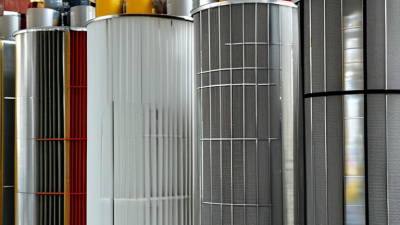
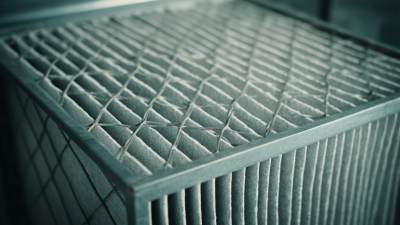
Exhaust filters capture overspray before air leaves the booth. Fiberglass or synthetic pads are common; folded cardboard arrestors use a maze-like path to trap paint droplets. Choose a type that suits the coating, airflow, and expected paint load. Fit matters more than appearance. A filter can look clean yet show rising pressure drop, so check it with a gauge and follow the booth maker’s replacement limits. Bag filters may serve as an additional stage in some systems, while activated carbon is used for specific odor-control needs. It is not a substitute for particle filtration. One trade-off is easy to miss: finer media may capture more dust but can restrict airflow sooner.
A Spray Booth Filter should be judged by measured performance, not appearance alone. Check its initial pressure drop at a stated airflow, such as 0.5 metres per second. A lower starting resistance can support steady airflow and reduce fan strain. But it is not the whole story. Ask how pressure drop changes as the filter loads with overspray.
Capture efficiency and dust-holding capacity also matter. For exhaust filters, request test results for paint-particle capture under clearly described conditions. Compare results only when airflow, test method, and filter dimensions match. A thick-looking pad may hold more paint, yet restrict airflow sooner than expected. That trade-off deserves attention.
For a supplier in China, request batch records, material details, and dimensional tolerances. Confirm that the filter fits the booth frame without gaps or loose edges. Ask for testing that reflects actual booth conditions, not just a laboratory headline figure. Fire behaviour and resistance to moisture may also matter, depending on the process. Some specifications are easy to overlook. I would still verify them against the booth manual, because one filter cannot suit every paint system or airflow setup.
Best Automotive Spray Booth Filter Supplier China Guide
How to Evaluate a Chinese Spray Booth Filter Supplier
Evaluate the supplier’s test evidence, not only its catalogue. Ask for the test method, airflow, initial pressure drop, and dust-loading results for each Spray Booth Paint Filter. These figures help you compare products under similar conditions. Confirm that sample dimensions match your booth, including frame depth and edge sealing. Paper claims are easy. Batch traceability and consistent inspection records matter more.
The US EPA’s AP-42 surface-coating chapter reports dry-filter overspray control efficiencies in the approximate 90–99% range, depending on system design and operating conditions. Treat this as context, not a guarantee for a specific filter. Request the underlying test conditions and clarify whether efficiency was measured on new media or after loading. A supplier should also explain how rising pressure drop affects airflow and when replacement is recommended. If answers stay vague, pause. That is worth questioning.
Tips: Request a sample and compare its fit, media uniformity, and pressure drop with your current filter. Ask for recent quality records, material specifications, and a written lead-time range. Check how the supplier handles damaged shipments and repeat orders. A low quote may look attractive, but freight, inconsistent batches, and unplanned downtime can change the real cost.
Suggested buyer-defined weights for comparing suppliers. These are planning recommendations, not market-survey results.
Request filter test reports and pressure-drop data for the intended operating conditions. Also check quality-control records, production lead times, and export documentation before making a decision.
China’s spray booth filter suppliers should show how materials move from incoming inspection to finished rolls. A typical line checks fiber density, thickness, basis weight, and bonding before cutting. Operators should inspect pleats for gaps and uneven edges. Small defects can let overspray bypass the media. That matters.
Ask for batch records, not just a polished sample. ISO 16890-1:2016 classifies filters by measured particle removal; its ePM1 group requires at least 50% efficiency for the relevant test conditions. This is useful context, but it does not predict paint-booth performance by itself. The U.S. EPA’s AP-42 surface-coating guidance also treats control performance as dependent on process and equipment. A Filter For Spray Booth should therefore be tested in the intended airflow and loading conditions, with pressure drop and dust-holding results documented.
Customization works best when the buyer shares booth dimensions, airflow, paint type, and replacement interval. Suppliers can then adjust roll width, thickness, density, or layered construction. Request samples from the actual production batch. Check fit against the frame, seal, and airflow direction. A rushed custom order may look right on paper and still leave edge gaps; I would not treat that risk as trivial.
Best Automotive Spray Booth Filter Supplier China Guide
Ordering filters from China starts with booth measurements, not a price list. Share the required length, width, thickness, airflow direction, operating temperature, and filtration purpose. Ask for media specifications and a sample before approving a bulk order. A filter that fits the frame but restricts airflow can disrupt booth performance. This detail is easy to miss.
Shipping needs planning, too. UNCTAD’s Review of Maritime Transport 2024 notes that over 80% of world merchandise trade by volume moves by sea. Sea freight often suits larger orders, while air freight can help with urgent replacements at higher cost. Confirm packing dimensions, carton counts, gross weight, lead time, and who handles export and import charges. Request commercial and packing documents early, then check your country’s customs requirements and product classification with a qualified broker. Small paperwork gaps can delay delivery.
Tips: Photograph the booth’s filter frame and label each measurement. Confirm the sample before production, and keep a modest spare stock. I have seen buyers focus on unit price, then overlook freight and fit. That calculation deserves a second look.
| Stage | Item to Consider | Practical Details | Recommended Buyer Action |
|---|---|---|---|
| Identify filter type | Intake pre-filter | Captures larger airborne particles before air reaches the booth’s finer filtration stages. Common formats include rolls, pads, and cut-to-size panels. | Specify the required dimensions, thickness, media type, and whether the filter must be supplied as rolls or finished pieces. |
| Identify filter type | Ceiling or supply-air filter | Installed in the clean-air path to help limit dust reaching the spray area. Performance depends on the media, installation, airflow, and sealing. | Provide the booth model or a dimensional drawing, along with the operating airflow and any required filtration test data. |
| Identify filter type | Exhaust paint-arrestor filter | Designed to capture overspray in the exhaust stream. Media may be fiberglass, synthetic, or a layered construction; suitability depends on the coating process and booth design. | Confirm the filter’s intended position, airflow direction, dimensions, and compatibility with the paint or coating being used. |
| Optional filtration | Activated-carbon filter | May be used for certain odor or vapor-control applications, but it is not a substitute for the booth’s required particulate filtration or ventilation controls. | Ask for the media specification and application limits. Check local environmental and workplace requirements before relying on carbon filtration. |
| Prepare specifications | Dimensions and construction | Filter dimensions, thickness, frame or backing material, edge finish, airflow direction, and packing format can affect fit and performance. | Send a drawing or sample and state the permitted dimensional tolerance. Confirm whether measurements refer to the nominal or finished size. |
| Compare performance | Efficiency and pressure drop | Efficiency and initial pressure drop should be tied to a stated test method and test conditions. Results from different methods or airflow conditions may not be directly comparable. | Request the test method, test report, airflow or face velocity, initial pressure drop, and any available dust-loading or service-life data. |
| Request quotations | Complete request for quotation | A useful enquiry includes filter type, dimensions, quantity, media requirements, destination city or port, packaging needs, and requested delivery date. | Ask suppliers to quote the same specification and to separate product cost, packaging, inland transport, freight, and other charges where possible. |
| Check order terms | Minimum order quantity and production time | Minimum quantities and production lead times vary by supplier, filter construction, customization, and order volume. They should not be assumed from a general catalogue listing. | Obtain written confirmation of the minimum order, production schedule, sample availability, and the date from which lead time is calculated. |
| Approve before production | Samples and quality checks | A sample can help verify fit, workmanship, labeling, and packaging. A sample alone does not establish consistent performance across a full production batch. | Approve a pre-production sample where practical and agree on inspection criteria, batch identification, and the documents to be provided with the shipment. |
| Plan packaging | Protection during transport | Filters should be packed to reduce crushing, moisture exposure, contamination, and deformation. Bulky filters may have significant volume relative to their weight. | Confirm carton or pallet dimensions, gross and net weight, pallet requirements, and whether the packing is suitable for the selected freight method. |
| Choose trade terms | Incoterms and cost responsibility | Incoterms define key delivery responsibilities and cost allocation. The named place or port and the chosen Incoterms rule should be stated precisely in the sales contract. | Compare quotations on the same basis and confirm who arranges export clearance, main carriage, insurance, and import clearance. |
| Select shipping method | Air freight | Often suited to urgent or smaller shipments. Transit time and total cost depend on route, capacity, handling, and customs processing; bulky filters can be expensive by chargeable volume. | Request the chargeable weight and a route-specific estimate. Confirm whether the quoted transit time is airport-to-airport or includes collection and delivery. |
| Select shipping method | Ocean freight | Often considered for larger or less urgent orders. Port-to-port schedules vary by route and carrier, and door-to-door delivery takes additional time for handling and customs. | Compare full-container and consolidated options where available. Check destination charges, estimated sailing schedule, and any delivery or storage fees. |
| Prepare import paperwork | Commercial invoice and packing list | These documents generally describe the goods, quantities, values, packages, and shipment details. Requirements can vary by destination country. | Check that product descriptions, quantities, weights, and consignee details match across the invoice, packing list, and transport document. |
| Prepare import paperwork | Bill of lading or air waybill | The transport document records shipment details for ocean or air freight. The document type and release process depend on the shipping arrangement. | Review the draft document promptly and confirm the consignee, notify party, destination, and release instructions before issuance. |
| Check customs requirements | Tariff classification and duties | HS classification, duty rates, taxes, and admissibility requirements depend on the product and the importing country. Classification should not be assumed solely from a supplier’s suggested code. | Ask a licensed customs broker or the relevant customs authority to verify classification, duty, tax, and any required import permits before ordering. |
| Receive and inspect | Arrival checks and claims | Damage, shortages, or incorrect dimensions are easier to investigate when packaging and goods are checked promptly and records are kept. | Photograph the shipment on arrival, compare quantities and dimensions with the purchase order, and report discrepancies within the contract or carrier claim deadlines. |
| Plan replacement cycles | Operating and maintenance records | Filter replacement intervals vary with booth airflow, coating use, operating hours, and pressure drop. A fixed interval is not reliable for every installation. | Follow the booth manufacturer’s instructions, monitor pressure drop where applicable, and keep filter specifications and purchase records for repeat orders. |
Ask for initial pressure drop at a stated airflow, such as 0.5 metres per second. Request dust-loading results too, since resistance can rise as overspray collects.
Lower starting resistance can help maintain airflow and reduce fan strain. But it does not tell you how the filter performs after loading.
Compare results only when airflow, test method, and filter dimensions match. Ask whether testing used new or loaded media.
Not necessarily. A thick pad may hold more paint but restrict airflow sooner than expected.
Match the sample’s dimensions to your booth frame, including depth and edge sealing. Gaps or loose edges can affect performance. Fit matters.
Ask for material details, batch records, inspection results, and dimensional tolerances. I would still verify these against the booth manual.
No. That range is general context for dry-filter systems, not a promise for one filter. Actual results depend on system design and operating conditions.
Test a sample for fit, media uniformity, and pressure drop. Ask about lead times, damaged shipments, and repeat-order consistency. A low quote may not reflect freight or downtime costs.
This guide explains how automotive spray booth filters capture overspray and help maintain clean airflow during vehicle finishing. It introduces common filter types used at different stages of a booth system and outlines the performance factors buyers should compare, including filtration efficiency, airflow resistance, dust-holding capacity, durability, and fit. Understanding these basics helps readers select filters suited to their equipment and operating conditions.
The guide also describes how to evaluate a Chinese supplier by reviewing manufacturing capabilities, quality-control processes, testing information, and options for customized dimensions or materials. It offers practical considerations for requesting samples, confirming specifications, planning orders, and arranging shipping and importing. By comparing product performance, service, and delivery requirements, buyers can make a more informed decision when searching for the Best Automotive Spray Booth Filter Supplier China.