Picking out the right HVAC filter for a commercial building isn’t just about chasing the highest MERV rating. There’s a lot more to consider—like how air flows through the system, what the equipment can handle, how many people are in the space, how dusty it gets, and how often you can maintain the filters. Sometimes, a filter that looks super impressive on paper might actually end up blocking airflow, wasting energy, or overworking an older air handler.
Dr. Joseph G. Allen from Harvard’s T.H. Chan School of Public Health pointed out something pretty important: “Ventilation isn't a magic fix.” It’s a good reminder that while filtration helps improve indoor air quality, it’s just one piece of the puzzle. You still need to control outdoor air, keep humidity in check, reduce pollution sources, and do regular inspections. All these systems need to work together to really make a difference.
So, how do you pick the right HVAC filter for a commercial space? Well, it’s best to start by looking at what’s actually happening in your building. Check the manufacturer’s recommended pressure drop, and review the filter size, fan capacity, and past replacement records. Keep an eye out for signs like darkened Filter Media, rising static pressure readings, or complaints about stuffy rooms—these small things can point to bigger issues.
For environments like healthcare, labs, or areas with high infection control needs, a Commercial HEPA filter might be necessary. But for a normal office with limited fan power, that could be overkill—and that’s easy to miss. You really need to think this stuff through.
When comparing filters, look beyond just the marketing buzz. Focus on verified performance data—things like efficiency, proper sealing, and whether you can reliably get replacements. Reputable brands like Camfil often publish solid technical info, but don’t forget to consider your local conditions. Even the perfect specs can fall flat if your staff can’t keep up with timely filter replacements. That practical, day-to-day factor should definitely be part of your decision-making process.
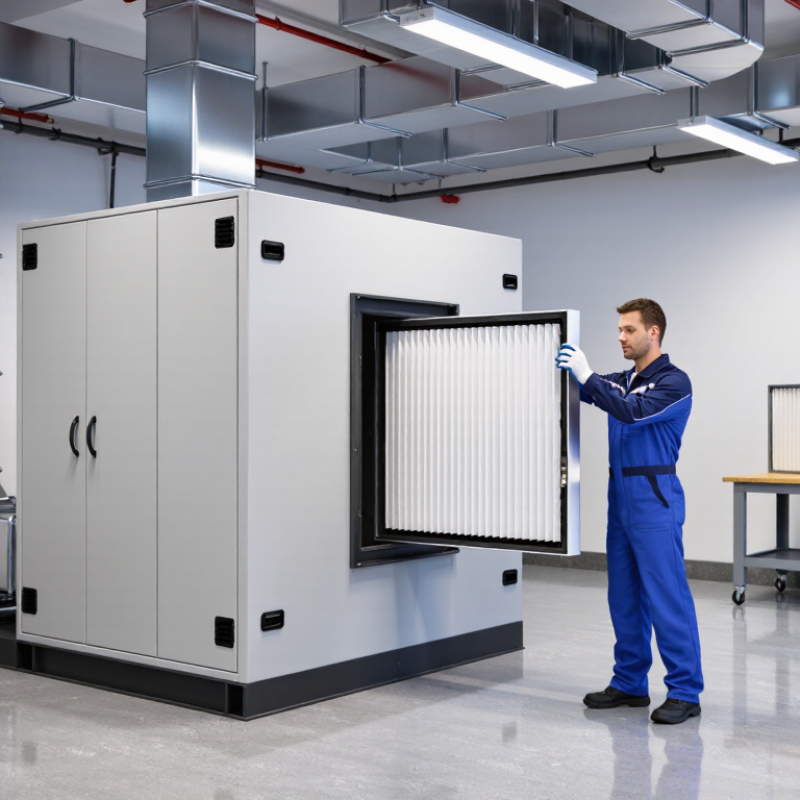
Choosing an HVAC filter starts with its function, not its appearance.A filter captures airborne particles before air reaches the blower and indoor rooms. Basic Fiberglass Filters catch larger dust but allow many fine particles through. Pleated filters use more surface area, so they usually trap smaller particles more effectively. Electrostatic filters attract particles through an electrical charge, although performance can change as they collect dust. AHepa Hvac Filter targets very fine particles, including much of the dust, pollen, and smoke-sized material in the airflow. However, high filtration can restrict airflow when the system is not designed for it. That matters.
Check the existing filter size, airflow arrow, and equipment instructions before buying. MERV ratings offer a useful comparison, but the highest number is not automatically best. In a home with pets, a medium-to-high rated pleated filter may balance particle control and airflow. Allergy concerns may justify a finer filter, but a technician should confirm system compatibility. I once replaced a filter late because it looked clean from the doorway. The inner folds were gray and packed with dust. That mistake reminded me to inspect it under bright light. A qualified professional can test static pressure if the blower sounds strained or rooms feel weak. Replace filters based on condition, season, and manufacturer guidance. Humid rooms, renovation dust, and frequent heating can shorten filter life. Washable filters need complete drying. Small details matter.
Choosing the right HVAC filter begins with the filter compartment, not the product label. Turn off the system, open the access panel, and read the size printed on the frame. Measure the old filter’s length, width, and depth with a tape measure. Nominal sizes can differ from actual measurements by several millimeters. A snug fit matters.
Check the HVAC system’s manual for approved filter dimensions and airflow ratings. A filter that fits the slot can still restrict airflow if it is too dense. This is especially important when considering a Hepa Air Filter For Hvac, because some systems need stronger fans or modified cabinets. HEPA filtration may not be compatible with a standard residential return grille. Ask a qualified technician when the manual is unclear.
Inspect the filter’s arrow before installation. It should point toward the blower or air handler. I have seen filters installed backward, leaving dust on the wrong side and reducing performance. Replace a damaged filter immediately. Do not force a filter into a tight opening. I once trusted the size printed on a package and ignored the deeper frame; the door would not close properly. That mistake was avoidable. Check the seal around the edges, listen for unusual airflow, and record the installation date near the access panel.
How To Choose The Right HVAC Filter: 5 Tips
MERV ratings show particle-capture performance, but they do not tell the whole story. ASHRAE Standard 52.2 tests filters across three particle-size ranges. A MERV 13 filter must capture at least 50% of 0.3–1 micron particles, 85% of 1–3 micron particles, and 90% of 3–10 micron particles. Lower ratings may capture less. Check the test data, not only the number printed on the frame.
Airflow matters just as much. The U.S. Department of Energy warns that restricted airflow can reduce HVAC efficiency and increase operating strain. A thick filter can look impressive while starving the blower. Measure the filter slot, inspect the return grille, and check pressure drop when possible. A technician should compare the filter’s resistance with the system manufacturer’s limit. Small details matter.
For replacement projects, an Hvac Filter Media Roll can provide flexible sizing and lower waste. However, cutting media incorrectly may create bypass gaps around the frame. Dust can then travel around the filter, not through it. The EPA recommends using MERV 13, or the highest rating the system can handle safely. That advice needs testing in older homes. I have seen homeowners choose the highest rating, then notice weak airflow and warmer rooms. Better filtration is not automatically better performance. Recheck the filter after several weeks, especially near construction, pets, or heavy outdoor pollution. Some assumptions fail in real rooms.
| Filter Selection Factor | What to Compare | Practical Guidance | Potential HVAC Impact | Recommended Action |
|---|---|---|---|---|
| 1. MERV Rating | Minimum Efficiency Reporting Value, rated from 1 to 20. | Higher MERV ratings generally capture a greater percentage of smaller particles under standardized test conditions. Residential filters commonly fall between MERV 5 and MERV 13. | Higher-efficiency filters may create more resistance to airflow, especially when they become dirty or are unusually thin. | Start with the highest rating recommended by the HVAC manufacturer or system documentation. Do not select a higher rating solely because the number is larger. |
| 2. Particle Filtration | Performance against particles such as dust, pollen, mold spores, and fine airborne particles. | MERV 8 filters are commonly used for basic dust and pollen control. MERV 11 to MERV 13 filters generally provide stronger capture of fine particles when the HVAC system can handle the added resistance. | Filtration performance depends on the complete filter assembly, including its actual size, seal, pleat design, and condition. | Choose a pleated filter with a secure fit and a suitable MERV rating rather than relying on the rating alone. |
| 3. Airflow and Pressure Drop | Filter resistance, system airflow, and the pressure drop specified by the filter manufacturer. | Two filters with the same MERV rating can have different pressure drops. A larger, deeper, or more heavily pleated filter may offer more media area and lower resistance than a thin filter of the same rating. | Excessive resistance can reduce airflow, increase blower workload, reduce comfort, and contribute to coil or heat-exchanger problems. | When upgrading filtration, verify airflow or static pressure with a qualified HVAC professional, particularly for older or marginally sized systems. |
| 4. Filter Size and Fit | Nominal dimensions, actual dimensions, thickness, and the quality of the perimeter seal. | A filter that fits properly prevents unfiltered air from bypassing the filter. Small gaps can substantially reduce real-world filtration performance. | An incorrectly sized or poorly seated filter can allow dust to enter the equipment and may produce rattling or whistling noises. | Use the size printed on the existing filter or equipment specification, and ensure the airflow arrow points toward the air handler or furnace. |
| 5. Replacement Schedule | Filter condition, household activity, system runtime, pets, renovation work, and indoor-air-quality needs. | A filter should be replaced when visibly loaded, damaged, damp, or at the interval recommended for the specific system. A heavily loaded filter causes more airflow resistance than a clean filter. | Long replacement intervals can reduce airflow and filtration effectiveness, while unnecessarily frequent replacement increases operating cost. | Inspect the filter monthly at first and adjust the replacement interval based on its condition and the manufacturer’s instructions. |
| Key takeaway: The best HVAC filter is the highest-efficiency filter that fits correctly and maintains the airflow required by the system. MERV ratings describe tested particle-capture performance, but real-world results also depend on filter thickness, pressure drop, sealing, maintenance, and HVAC system compatibility. | ||||
Choosing an HVAC filter starts with household health, not a shiny rating. The U.S. Environmental Protection Agency reports that indoor pollutant levels can be two to five times higher than outdoors, and sometimes far higher. Dust, cooking smoke, pet dander, and pollen may collect in rooms with closed windows.
Match the filter to your family. Someone with asthma or seasonal allergies may benefit from a higher-efficiency filter, but only when the HVAC system can handle its airflow resistance. ASHRAE Standard 52.2 measures particle removal through MERV ratings; a higher number does not automatically mean better comfort. Check the manufacturer’s manual and measure the slot carefully. Hvac Filter Sizes are not interchangeable, even when they look almost identical. A loose filter can let air bypass the media.
Airflow matters. A filter that whistles, bends, or becomes gray within days may signal poor fit, heavy pollution, or an overloaded system. The U.S. Department of Energy identifies HEPA filtration as highly effective, with 99.97% efficiency at 0.3 microns, but many household systems cannot support it without modification. That detail is easy to miss. No filter removes every indoor pollutant, and filtration cannot replace source control or ventilation. The practical choice may be less impressive, yet safer for the blower and more consistent for daily air quality. Check it monthly during smoky or dusty seasons, then replace it according to actual condition rather than a rigid calendar.
Choosing an HVAC filter means balancing cleaner air with energy and maintenance costs. A higher-efficiency filter can capture smaller particles, but it may also create greater airflow resistance. Airflow matters more. Your system’s approved filter rating should guide the decision, not marketing claims. A qualified HVAC technician can measure pressure and confirm whether the blower can handle a denser filter. Never assume a thicker filter fits safely.
Check the filter’s condition every month, especially during heating or cooling seasons. A dusty home, pets, renovation work, or nearby construction can shorten its useful life. Replace it when the surface looks heavily coated, even if the calendar says otherwise. A clogged filter makes the system work harder, increases electricity use, and may cause uneven room temperatures. Small warning signs matter. Listen for unusual airflow noise and inspect vents for weak output.
I once assumed the most efficient filter was automatically the best choice. That was too simple. A moderately efficient filter changed regularly may protect airflow better than an overly restrictive filter changed late. Compare purchase prices with replacement frequency and expected energy use. Keep the filter dry, install it in the correct airflow direction, and record replacement dates. If indoor dust remains high after proper maintenance, investigate duct leakage, humidity, or ventilation instead of continually upgrading the filter.
A replacement schedule should follow your home, not a generic calendar. The U.S. Environmental Protection Agency recommends checking residential filters every month and replacing them when they become visibly dirty. Many systems need service every one to three months, but pets, renovation dust, and continuous fan operation can shorten that period. Mark the installation date on the filter frame. Set a recurring calendar reminder for 30 days later.
Monitor performance between replacements. Look for gray loading, dust streaks around the grille, weaker airflow, or a new whistle near the return vent. These clues matter. A filter can look acceptable while airflow is already restricted. ASHRAE Standard 52.2 evaluates filters by their ability to remove particles across tested size ranges, but laboratory ratings cannot predict every household condition. Check the filter’s MERV rating, then confirm that your HVAC system can handle it.
Record simple observations in a notebook. Note the filter size, installation date, indoor dust, and heating or cooling hours. A basic pressure measurement from a qualified technician can reveal rising resistance more reliably than appearance alone. The U.S. Department of Energy identifies airflow problems as a major cause of inefficient HVAC operation, so a denser filter is not automatically better. My first replacement plan was too rigid; one month was excessive during mild weather, yet insufficient during a dusty repair. Adjust the schedule after reviewing real evidence.
Use these typical starting intervals for common residential conditions. Inspect the filter monthly and replace it sooner if it is visibly dirty, airflow decreases, or the HVAC system manufacturer specifies a shorter interval.
Monitoring tip: A clean filter supports airflow and efficient system operation. Record the installation date, check the filter every month, and compare airflow and system noise over time. Actual replacement timing depends on filter size, system design, runtime, indoor particles, pets, and local conditions.
It shows how well a filter captures particles in tested size ranges. A MERV 13 filter captures at least 50% of 0.3–1 micron particles. It also captures 85% of 1–3 micron particles and 90% of 3–10 micron particles. The number is useful, but incomplete.
No. A higher rating can restrict airflow in some HVAC systems. The blower may work harder, and rooms may feel warmer or cooler. Check the system’s permitted pressure drop before upgrading. More filtration is not automatically better.
A higher-efficiency filter may reduce pollen, dust, and pet particles. Use it only when the HVAC system can handle its resistance. Check the manual and measure the filter slot carefully. Comfort matters too.
A loose filter can leave gaps around the frame. Air then travels around the filter instead of through the media. Measure the slot, frame, and return grille before purchasing. Measure twice.
Flexible media can support custom sizing and reduce waste. However, inaccurate cutting may create bypass gaps. A visible gap near the frame is a warning sign. The cut looked fine, but it was not perfect.
Watch for weak airflow, whistling, bending, or unusually warm rooms. A filter that turns gray within days may indicate heavy pollution or system strain. Dust streaks around the grille can also reveal bypass or loading. Do not ignore noise.
Check residential filters every month. Replace them when visibly dirty, or sooner during renovations, smoky weather, or heavy dust. Many homes need replacement every one to three months. A fixed calendar can fail.
Write the filter size and installation date on the frame. Record indoor dust, heating hours, cooling hours, and airflow changes. A qualified technician can measure pressure more accurately than appearance alone. Review the evidence.
Choosing the right HVAC filter begins with understanding the main filter types and their functions, then confirming the correct size and compatibility for your system. Compare MERV ratings carefully, since higher filtration can improve air cleanliness but may also restrict airflow if the HVAC unit is not designed to handle it. When considering How To Choose The Right Hvac Filter For Commercial Buildings?, evaluate the building’s occupancy, indoor air quality goals, and the needs of people who may be sensitive to dust, allergens, or other airborne particles.
A suitable filter should balance filtration performance with energy use, equipment strain, and maintenance costs. Filters that are too restrictive may increase operating expenses, while low-efficiency options may require more frequent cleaning or fail to control indoor contaminants effectively. Establish a replacement schedule based on usage, environmental conditions, and manufacturer guidance, and monitor airflow, pressure, visible dust, and system performance to determine whether the chosen filter continues to work efficiently.