Leave Your Message
0%

Finding a reliable supplier isn’t just about comparing prices—that’s actually the easy part. A slick-looking website? Honestly, it doesn’t tell you much. What really matters are their factory capabilities, testing discipline, and how well they communicate. That’s why so many buyers end up asking, “How do I find trustworthy Air Filter manufacturers in China?” The truth is, it all comes down to solid evidence, not empty promises.

Li Wei, who’s an air-filtration engineering consultant based in China, puts it simply: “A supplier is dependable only when its test data matches the actual filter in your hands.” And you know what? That’s a super practical way to look at it. So, ask for current reports based on standards like ISO 16890, EN 1822, or ASHRAE 52.2—just depending on what kind of application you’re dealing with. And don’t forget to check if the report actually names the factory where the testing took place. Make sure the tested model, media, size, and efficiency levels match what you’re ordering. If the certificate is kinda generic or vague? That’s a red flag.

Whenever possible, try to visit the production site. Take a look at the pleating machines, see how they apply sealants, and ask about leak testing and final inspections. Find out how they trace each batch—seriously, a professional manufacturer should be able to explain their quality controls clearly, without a bunch of vague jargon. And always ask for samples before you commit to a big order. Test how they perform—measure airflow, pressure drop, frame strength, and how well everything fits. Even a small order of an air filter can reveal issues like poor sealing or inconsistent materials.

I remember once chasing a really low quote, thinking it was a sweet deal. Turns out, it caused delays and ended up costing me more in extra testing. That was a lesson learned the hard way. Good partners might not always give you the rock-bottom price, but they’ll offer stable specs, transparent documentation, and reasonable lead times. Don’t forget to check references too—chat with other buyers who’ve used the same filters, if you can. Reliable suppliers earn your trust through consistent results, not just fancy claims. Brands like Camfil China and Guangzhou Xinchangda definitely set some good benchmarks for quality, but no matter what, always verify things independently to be sure.

Hope that helps make the process a bit clearer!
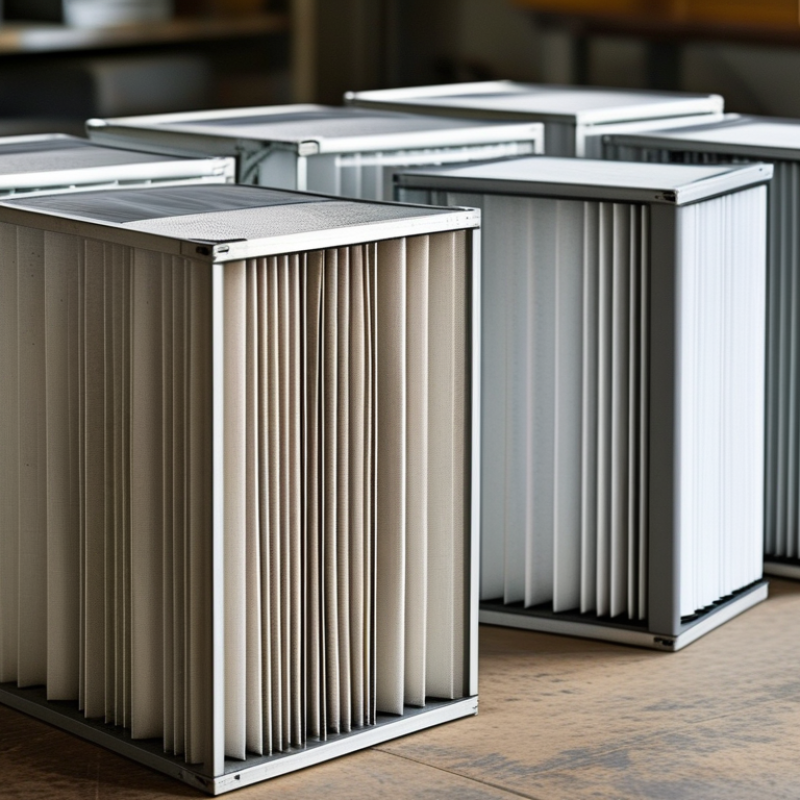
How To Find Reliable Air Filter Suppliers In China 3 Tips?

Define Your Air Filter Requirements and Supplier Criteria

Finding a reliable air filter supplier in China starts with a clear requirement sheet. Define the filter type, dimensions, frame material, filtration grade, airflow, and pressure-drop range. Include the working environment, such as dust levels, humidity, temperature, or chemical exposure. A warehouse filter may fail quickly in a hot production room.

Request measurable evidence, not broad claims. Ask for test reports, material specifications, quality-control procedures, and sample records. Confirm which testing method supports the quoted efficiency. Check whether the supplier can produce consistent results across repeated batches. A low price is not useful if the filter blocks airflow or needs early replacement.

Your supplier criteria should cover communication, production capacity, minimum order quantity, lead time, packaging, and after-sales handling. I once focused too heavily on unit cost and overlooked carton strength. Several filters arrived with bent frames. That mistake changed my evaluation process. Now, I request a pre-production sample, inspect the seal, and compare dimensions with the installation space. Visit the factory when possible, or arrange a live video inspection. Small details matter.

Do not accept every document without checking it. Test a sample in realistic operating conditions, record pressure readings, and ask clear questions when data conflicts. A dependable supplier should explain limitations honestly. Perfect promises can be a warning sign.

Research China’s Air Filter Manufacturing Regions and Supplier Types

China’s air-filter production is concentrated in several practical manufacturing regions. Jiangsu and Zhejiang have strong HVAC, nonwoven, and injection-molding supply chains. Guangdong offers faster access to electronics, packaging, and export logistics. Shandong is also important for industrial filtration and dust-control equipment. China Customs trade statistics show sustained growth in filtration-related exports, while a 2024 market report by Grand View Research estimates the global air filtration market will continue expanding through 2030. These figures suggest opportunity, but they do not prove every supplier is reliable.

Supplier type matters as much as location. Integrated manufacturers usually control pleating, frame assembly, testing, and packaging. OEM factories may offer lower prices and flexible designs, but their quality systems need closer checking. Trading companies can simplify communication, yet they may hide the actual production site. Ask for factory videos, recent test reports, material specifications, and batch records. For an Air Filter Carbon Filter, verify carbon weight, iodine value, leakage resistance, and odor-removal testing. Ask whether HEPA performance follows EN 1822 or another recognized standard.

I once trusted a polished catalog. It was a mistake. A factory in a well-known cluster still delivered uneven pleat spacing and weak seals. Request samples from two production batches, not one. Compare pressure drop, dimensions, sealing quality, and packaging damage. Public data is useful, but supplier documents can be outdated. That detail deserves careful reflection before placing a large order.

Verify Supplier Qualifications, Certifications, and Production Capacity

Reliable sourcing starts with evidence, not a polished website. Request business registration, factory address, ownership details, and recent production photos. Verify documents with issuing bodies where possible. A certificate alone is not proof. ISO 9001 supports process control, while ISO 16890 classifies filter performance by ePM particle fractions. For an Air Filter Pre Filter, ask for the test standard, airflow, pressure drop, and removal results. Avoid vague claims such as “high efficiency.”

Check whether each certificate covers the actual factory and product family. Request reports from an accredited laboratory, rather than a supplier-made sheet. HEPA testing under EN 1822, or an equivalent method, should state leakage, efficiency, and scan conditions. ASHRAE Standard 52.2 defines a test method for MERV ratings. Different methods should not be compared casually. The U.S. EPA reports that indoor pollutant levels can be two to five times higher than outdoor levels. Traceable performance matters.

Capacity needs physical proof. Compare monthly output, machine count, shifts, raw-material stock, and lot records. Ask for a live factory walkthrough. Inspect cartons, labels, sealant, and frame joints. The World Bank’s 2023 Logistics Performance Index shows clear differences in shipment reliability across markets, so request recent lead-time records. Order a trial batch first. It may feel inefficient, but it can expose weak sealing or uneven media. One caution remains: an impressive audit may miss night-shift problems. Recheck critical claims.

How to Find Reliable Air Filter Suppliers in China

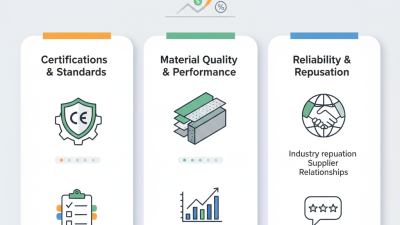
Use this 100-point due-diligence scorecard to compare suppliers without relying on company names or brand claims. Verify certificates, audit production capacity, and request supporting records before placing an order.

Recommended priority: Supplier qualifications and certifications should be checked first, followed by production capacity, quality controls, testing traceability, and export documentation.

Assess Product Quality Through Samples, Testing, and Factory Audits

Finding reliable air filter suppliers in China requires more than comparing online prices. When sourcing a Furnace Air Filter, request production samples before discussing large orders. Check the frame for straight edges, sealed corners, and clean adhesive lines. Examine the Filter Media under bright light. Uneven pleats or visible gaps may signal weak quality control. Small details matter.

Ask the supplier for test data covering airflow resistance, particle capture, and dust-holding capacity. The report should identify the sample, test date, method, and laboratory. Compare these results with your actual equipment requirements. A sample can perform well in a short test but fail after continuous use. That risk is easy to overlook. I would also repeat testing on samples from different production batches, because one excellent sample proves very little.

A factory audit adds evidence that documents cannot provide. Inspect raw-material storage, cutting equipment, pleating lines, sealing stations, and final inspection areas. Check whether workers record dimensions and pressure-drop results for each batch. Review calibration records and corrective-action reports. Ask how rejected filters are separated from approved stock. Honest answers are useful. Perfect answers may deserve more questions. Photos, batch labels, and traceable records can connect the tested sample to future shipments. Remote audits help, but an independent local auditor may notice details that a video call misses.

How To Find Reliable Air Filter Suppliers In China 3 Tips? - Assess Product Quality Through Samples, Testing, and Factory Audits
Assessment Area What to Check Practical Benchmark or Standard Evidence to Request Risk Signal Suggested Rating
Filter dimensions, frame squareness, gasket continuity, media pleat spacing, adhesive coverage, and overall workmanship. Dimensions should match the approved drawing and agreed tolerance. The frame should not be visibly warped, and the gasket should form a continuous sealing surface. Approved sample, dimensional inspection report, product drawing, and photographs of the finished filter. Uneven pleats, loose media, missing adhesive, damaged corners, or inconsistent dimensions between samples. Pass when all critical dimensions and sealing surfaces conform.
Initial resistance, airflow capacity, particle removal efficiency, and dust-holding behavior. Performance values should meet the purchase specification and remain within the declared class under the applicable test method. Sample test report containing airflow, pressure drop, efficiency, test conditions, and specimen identification. Reports omit test conditions, use unclear methods, or show results that cannot be traced to the supplied sample. Pass when performance is repeatable and traceable.
Whether the supplier uses a recognized method for general ventilation filter classification. ISO 16890 is commonly used for general ventilation air filters. The report should identify the applicable ISO 16890 ePM class and test conditions. Complete laboratory report, laboratory credentials, report number, test date, sample code, and declared filter class. Only an internal certificate is provided, or the report lacks laboratory identification and test parameters. High confidence when results come from a competent independent laboratory.
Efficiency classification for filters used in applications requiring higher particle removal, such as cleanroom or critical HVAC systems. For Hepa Filters, EN 1822 and ISO 29463 are widely recognized references. The required grade and leakage performance must be stated in the specification. Individual filter test record, scan-test data where applicable, certificate of conformity, and serial-number traceability. Supplier provides only a generic “HEPA certificate” without filter grade, leakage data, or individual identification. Pass only when the declared grade matches the intended application.
Filter media, frame material, sealant, gasket, separator, and protective coating. Materials should match the approved bill of materials. Moisture resistance, temperature suitability, and chemical compatibility should be appropriate for the operating environment. Bill of materials, material declarations, incoming inspection records, and supplier batch documentation. Material substitutions are made without approval, or the supplier cannot identify raw-material batch numbers. Conditional pass if documentation is complete and substitutions are controlled.
Production capacity, process controls, calibration, quality inspection, and worker training. The factory should demonstrate controlled incoming, in-process, and final inspections. Measuring equipment should have valid calibration records. Factory audit checklist, process flow chart, inspection records, calibration certificates, training records, and corrective-action reports. No documented inspection plan, expired calibration, poor housekeeping, or dependence on final visual inspection only. High confidence when process controls are documented and consistently followed.
Ability to trace finished filters back to production date, raw-material batch, operators, and inspection results. Each production lot should have a unique lot number linked to material records and final test results. Lot labels, production records, inspection forms, packing lists, and retention-sample procedure. Products are shipped without lot identification or records cannot be retrieved promptly. Pass when one shipped lot can be reconstructed from records.
Protection against moisture, compression, contamination, and deformation during international transport. Packaging should prevent filter media damage and maintain frame integrity. Export cartons should identify quantity, orientation, lot number, and handling requirements. Packaging specification, carton photographs, drop or compression test records where relevant, and loading inspection report. Wet or crushed cartons, insufficient corner protection, or unsealed packaging in humid conditions. Accept only after packaging is validated for the shipping route.
Quantity, dimensions, appearance, labeling, packaging, and random performance checks before dispatch. Use an agreed inspection level and acceptance criteria. Critical defects should have zero acceptance, while major and minor defect limits should be defined in advance. Signed inspection report, sampling plan, defect photographs, packing list, and approved release record. Inspection occurs only after shipment, or acceptance criteria are changed after production. High confidence when shipment release is based on documented inspection.
Combine sample results, independent testing, factory-audit findings, and delivery controls into one decision. Approve the supplier only when critical quality requirements pass and open corrective actions have owners and deadlines. Supplier evaluation scorecard, corrective-action plan, signed technical agreement, and approved product specification. Price is the only selection factor, or unresolved critical defects are accepted without written mitigation. Recommended: approve, conditionally approve, or reject using documented evidence.

Compare Pricing, Minimum Orders, Lead Times, and Shipping Terms

Finding Reliable Air Filter Suppliers in China: 3 Tips

Price should never stand alone. For a Paint Booth Air Filter , request quotes by material, filtration grade, dimensions, frame type, and packing method. A cheaper filter may use thinner media and create faster pressure loss.

The U.S. Department of Energy notes that clogged HVAC filters can increase energy use by 5–15%. Compare the delivered cost, not only the factory price. Ask for sample results and pressure-drop data.

Tip 1: Compare minimum orders and lead times.

Some suppliers accept 100 pieces, while others require 1,000. Confirm whether samples count toward the first order. Request production timing for both standard and custom sizes. A written schedule is more useful than a friendly promise.

Tip 2: Check shipping terms carefully.

UNCTAD’s Review of Maritime Transport reports that more than 80% of global merchandise trade moves by sea. Compare EXW, FOB, and DDP quotations, including export handling, freight, insurance, and destination charges. Ask how filters are protected from moisture inside the carton.

I once overlooked pallet dimensions; the freight bill changed sharply. That mistake still matters.

Tip 3: Test reliability before scaling.

Review factory inspection records, batch labels, replacement policies, and payment milestones. Request two samples from different production batches. One sample can mislead. A supplier with clear documents, realistic lead times, and consistent communication usually deserves more trust than the lowest bidder.

Confirm Contracts, Quality Control, Communication, and After-Sales Support

How To Find Reliable Air Filter Suppliers In China: 3 Tips

Confirm the contract before discussing price. Specify filter dimensions, media type, efficiency, pressure drop, packaging, delivery terms, and warranty periods. Require batch records and a clear remedy for failed goods. The U.S. EPA reports that indoor pollutant levels can be two to five times higher than outdoor levels. Therefore, vague performance claims create real operational risks. Ask whether testing follows ISO 16890, EN 1822, or another relevant standard. Include the exact test method in the contract. Small details matter.

Quality control should include pre-production samples, in-process checks, and final batch testing. Request particle-efficiency and pressure-drop results from an independent laboratory when the application is critical. The World Health Organization’s 2021 air-quality guidelines set annual PM2.5 guidance at 5 μg/m³, showing why filtration data must be measurable. Keep samples, photographs, and lot numbers for traceability. Communication needs structure. Set response times, approved contacts, and written change-control procedures. After-sales support should cover replacement filters, claim evidence, technical guidance, and corrective-action reports. A reliable supplier explains failures instead of hiding them. That is not always comfortable. It is useful. One practical weakness remains: remote inspections can miss packaging damage or inconsistent assembly. Combine video checks with random third-party inspections before shipment.

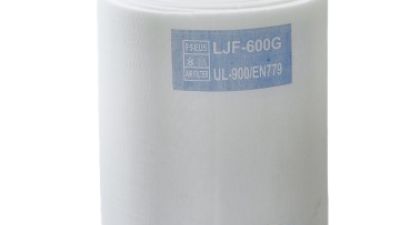
China LJF-600G Ceiling Filter Media: Efficient Spray Booth Filtration from Trusted Factory Suppliers

China LJF-600G Ceiling Filter Media is a high-performance filtration solution developed for industrial painting operations and spray booth installations. Manufactured by experienced factory suppliers, this ceiling filter media is designed to support stable airflow while capturing airborne paint particles and other fine contaminants. Its polymer-based filter material is processed through thermal bonding technology, creating a strong and uniform structure that helps maintain reliable filtration performance throughout demanding production cycles.

With excellent particle retention, the LJF-600G media helps protect freshly coated surfaces from airborne dust and supports cleaner working conditions inside spray booths. Its durable construction provides a long service life, reducing the need for frequent replacement and helping improve maintenance efficiency. The media can be selected for various industrial booth configurations and is suitable for applications that require consistent air cleanliness, dependable operation, and practical installation. Factory-direct supply also allows users to obtain tailored sizes, stable quality, and responsive technical support for different painting environments.

FAQS

What details should I define before contacting an air filter supplier?

Specify filter type, dimensions, frame material, filtration grade, airflow, and pressure-drop limits. Describe dust, humidity, temperature, and chemical exposure. A warehouse filter may fail in a hot production room. Small details matter.

What evidence should a supplier provide?

Request test reports, material specifications, quality-control procedures, and sample records. Confirm the testing method behind the quoted efficiency. Reports should identify the sample, date, method, and laboratory. Broad promises are not enough.

How should I inspect an air filter sample?

Check straight frame edges, sealed corners, clean adhesive lines, and even pleats. Hold the media under bright light. Visible gaps can indicate weak control. Inspect the seal carefully.

Why should I test samples from different batches?

One excellent sample proves very little. Request samples from at least two production batches. Measure airflow resistance, particle capture, and dust-holding capacity. A short test may hide long-term failure.

What should a factory audit examine?

Inspect material storage, cutting equipment, pleating lines, sealing stations, and final inspection areas. Ask whether workers record dimensions and pressure-drop results. Review calibration records and corrective-action reports. Rejected filters should remain separated from approved stock.

How can I compare supplier prices fairly?

Compare delivered cost, not only the factory price. Include materials, filtration grade, dimensions, frame type, packaging, freight, insurance, and destination charges. A cheaper filter may use thinner media. Low price can mislead.

What should I confirm about minimum orders and lead times?

Ask whether the minimum order is 100 or 1,000 pieces. Confirm whether samples count toward the first order. Request schedules for standard and custom sizes. Get the timing in writing.

How can I prevent shipping damage?

Ask how cartons protect filters from moisture and pressure. Confirm pallet dimensions before approving freight. Bent frames can make installation impossible. I once missed this detail. The freight cost changed sharply.

Conclusion

How To Find Reliable Air Filter Manufacturers In China? Start by clearly defining your requirements, including filter type, application, dimensions, materials, performance standards, order quantity, and delivery expectations. Then research major manufacturing regions and compare different supplier types, such as specialized factories, integrated manufacturers, and trading companies. A reliable supplier should provide verifiable business information, relevant certifications, quality records, and clear evidence of suitable production capacity.

Before making a decision, request samples and evaluate them through performance testing based on your specifications. When possible, arrange a factory audit to review equipment, production processes, inspection procedures, and traceability systems. Compare quotations carefully, considering minimum order quantities, lead times, packaging, shipping terms, and total purchasing costs rather than price alone. Finally, confirm all product standards, quality-control responsibilities, payment terms, communication procedures, warranty conditions, and after-sales support in a written contract. This structured approach can reduce purchasing risks and help you establish a stable, long-term manufacturing partnership.

Emma

Emma

Emma is a dedicated marketing professional at Guangzhou LJF Purification Equipment Co., Ltd. With a strong expertise in the air purification industry, she plays a pivotal role in promoting the company’s innovative products and services. Emma regularly contributes to the company’s blog, where she......
Previous What Type Of Hepa Filter Is Used In Lcd Manufacturing?